Charlottesville is a locality where many express their desire for local spending to combat social problems. As City Manager, Sam Sanders is charged with translating public sentiment into government action.
On May 19, he provided City Council with an update on how the city’s surplus from Fiscal Year 2024 might be used to fund new and ongoing initiatives. (view the presentation)
“Back in October, I came before you council to share with you a series of recommendations that I categorized for things that we just need to seriously take a hard look at,” Sanders said. “They were aimed at being things focused on setting a new standard and managing expectations.”
For some of the details of what was said then, go back and take a look at two stories I wrote on what Sanders labeled
- Charlottesville City Manager Sanders announces upcoming “community interventions” including $5 million for the Salvation Army, October 23, 2025
- Sanders briefs Council on other community interventions such as purchase of portable restrooms, November 1, 2025
Many of the items had expensive price tags and Sanders did not seek final approval.
“We didn’t have our surplus figure at that time,” Sanders said. “We have since, of course, learned that we had a very healthy surplus.”
That surplus amounted to $22.4 million and Sanders told Council in late January that he wanted to keep that funding on reserve until more information was available about how the second presidency of Donald Trump would affect the role of the federal government.
Sanders gave Council a preview of recommendations for how to use some of that funding before they’ll take a vote on June 2.
“We’re looking at community safety, homeless intervention and quality of life items,” Sanders said.
The first category of projects related to infrastructure. Last October, a woman was killed crossing Elliott Avenue after sunset while inside of a poorly lit crosswalk. Sanders said that prompted an effort to review projects that could address safety concerns across the city. Staff in both the Department of Public Works and the Department of Neighborhood Development Services have been working on a list.
“A lot of effort has been put by the transportation planning team to come up with 34 projects that they have identified for me that will be done by the end of this year,” Sanders said.
Several of these projects have already been completed, though there is no list available on the city’s website. Sanders said the list of recommendations will include $500,000 for the urgent infrastructure category.

That list does not contain work to build a second crosswalk on Elliott Avenue as requested by some in a petition last fall. On May 21, Charlottesville police arrested Kevin Cox for allegedly painting a crosswalk at the location in protest. He is charged with a Class 1 misdemeanor for intentional defacement of public property under §18.2-137 of Virginia Code. He will have a hearing in Charlottesville General District Court on May 27.
“Mr. Cox turned himself into CPD in reference to a warrant that was issued in connection with property damage on Elliot Avenue,” said Afton Schneider, Charlottesville’s Director of Communications and Public Engagement. “As this matter is now pending before the court, we will not be commenting further on the specifics of the case. We are committed to ensuring that the legal process proceeds fairly and respectfully for all parties involved.”
On May 19, Sanders said other projects are in the works but the 34 projects represent ones that could be accomplished in the short-term.
For more information on this urgent infrastructure initiative, here are three previous stories.
- City Council discusses pedestrian safety in wake of pedestrian death on Elliott Avenue, October 12, 2024
- Charlottesville to make plans to improve pedestrian safety on Elliott Avenue, November 1, 2024
- Charlottesville City Council briefed on “Safer Streets Strategy” projects, January 31, 2025
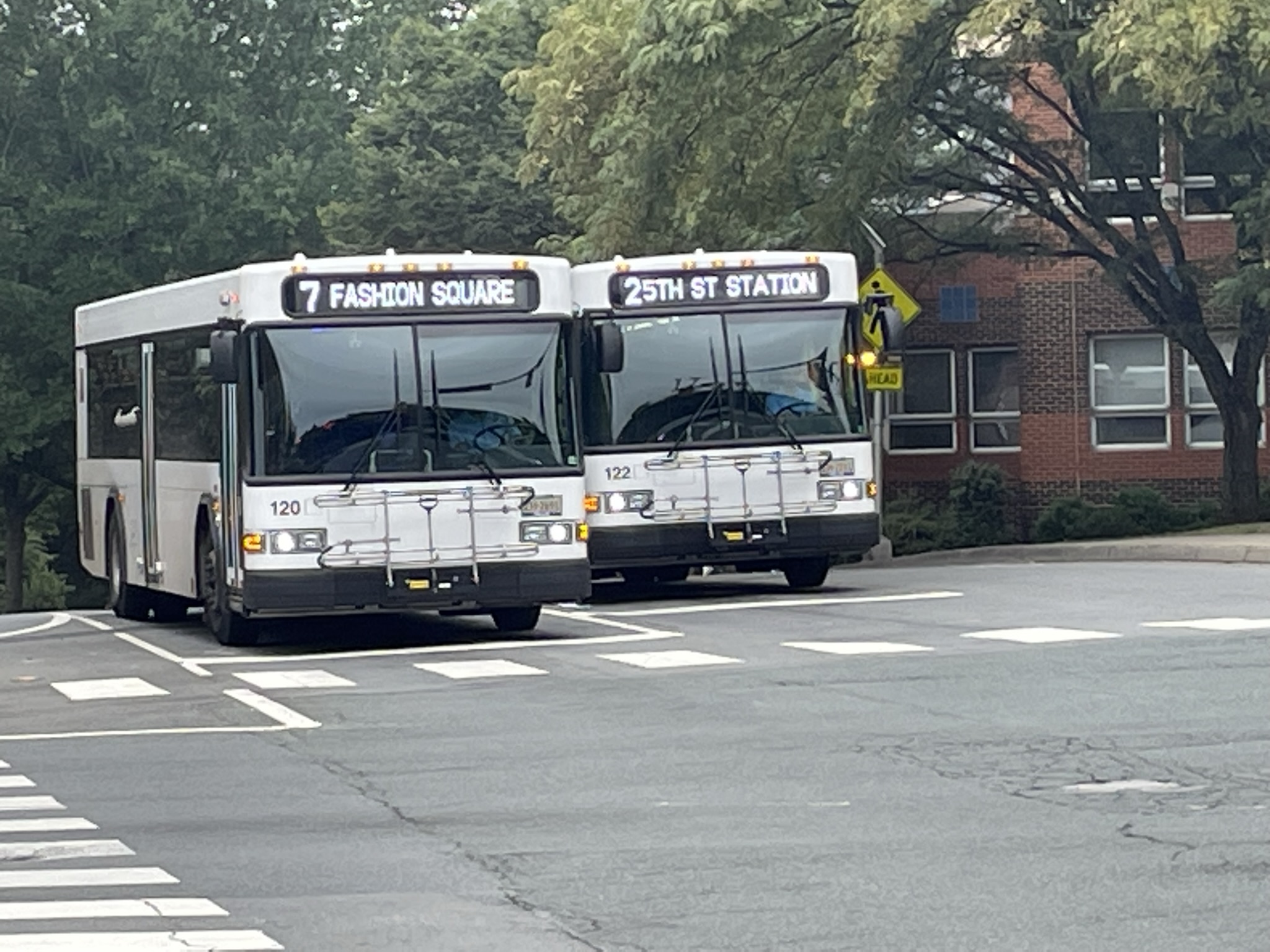
Sanders will also recommend $250,000 on improvements to bus shelters with five of those in the city and seven of those in Albemarle County. Three of the shelters in Albemarle are funded through development projects.
Sanders also recommends $750,000 towards the planned Meadowcreek Trail which continues to have cost overruns as well as $350,000 towards improvements for the Downtown Mall in conjunction with its 50th anniversary next year.
The next category of projects fell under the Emergency Management umbrella, an area Sanders described as a place where the city has fallen behind.
“This is the first time I’m coming to you asking for emergency management funds,” Sanders said. “This is something that we should have spent some significant money on. I think 2017 should have taught us a lesson to do some things differently and I feel like it’s now time for us to deliver on that.”
Sanders wants $100,000 to pay for a generator for the Key Recreation Center, a space designated as a shelter in the case of a major emergency. The Charlottesville Fire Department wants $75,000 to pay for two drones.
He also wants $600,000 to pay for temporary barriers to block city streets during major events. These were recently tested at the Tom Tom Festival.
“We still have some questions about exactly which versions of the barriers that they have available that we should get, but I’m identifying a use for funds to be able to do that,” Sanders said.

Next up Sanders detailed specific items related to addressing the needs of the unhoused. This part of the meeting took place after a work session earlier in the day which I’ll report in a future edition of the newsletter.
“As you heard earlier, a lot of the work that’s being done with our providers, we’re not yet at a place that we can say that we have an overnight shelter year-round as a low barrier shelter, but that work is still going on,” Sanders said.
In the meantime, Sanders is seeking to use $425,000 for a two-year pilot to hire two city employees who would be sent out to work in the field on direct cases in collaboration with nonprofit groups.
“I think that there is an opportunity for us to maybe work with them in ways that we can manage the situation so that everyone is handled with kid gloves,” Sanders said. “But we can actually move people where we need them to be in less invasive manners and hopefully learn some things and support them as we try to move them along that ladder to self-sufficiency where possible.”
Sanders also wants to acquire three modular housing units that could be used for transitional housing. He showed slides from a company called Pallet, but the city is still exploring options.
“The goal is to figure out how do we do this in a way that we can ensure that wraparound services are met at each one of those doors,” Sanders said.
The cost for this would be $375,000 but the ones from Pallet would not include plumbing so a portable toilet would need to be nearby.

The final category was under the heading of Quality of Life. Sanders is suggesting $235,000 for mall lighting improvements, $280,000 to identify a long term solution for a public restroom, and $260,000 to create the position of “mall manager.”
“What we are hoping to do is to establish a mall manager so there’s a dedicated person who is responsible for all things on the Mall,” Sanders said.
Sanders also wants to allocate $1.2 million over two years for a pilot project to clean the Mall each day.
“We need to make sure that we are caring for this amenity on a daily basis all day long into the evening, because people are using it that much,” Sanders said.
Accessibility issues also fall under the category of Quality of Life. Sanders is recommending funding to purchase software to assist the ANCHOR mental-health intervention team as well as other programs to assist with efforts to implement the Americans with Disabilities Act Transition plan.
In all, Sanders will seek $5.4 million in surplus funds for these projects, and hinted there may be others added between now and June 2.
City Councilor Michael Payne was skeptical about both the clean team project as well as the two-year pilot of hiring employees to assist with unhoused individuals.
“I still have a lot of questions around spending that amount of money on the clean team on the Downtown Mall,” Payne said.” Does that really pass a cost benefit analysis of solving what the real issues on the Mall are or, or is it more spending that amount of money to try to make people feel more comfortable?”
Payne suggested he would rather the $425,000 go toward more permanent supportive housing.
Sanders said the clean team is not intended to remove people from the Mall but to provide additional cleaning support to augment what Parks and Recreation staff currently do. He added Council has already committed funds to a low-barrier shelter.
“It is not here only because of the state that we’re in with the partners that we’re working with to give them time to determine what an operating plan could look like,” Sanders said. “I will still be coming back to you looking at investing further, if it is necessary, based on those proposals.”
Council has committed up to $500,000 over five years to help the Salvation Army recoup lost revenue from their thrift store on Cherry Avenue if that site does become the low-barrier shelter. He said if another site winds up being the donation, that half-million would be transferred to the new idea.
Before you go: This story was first published in the May 22, 2025 edition of Charlottesville Community Engagement and was posted here a day later. This will also be in the next podcast if that sort of thing is of interest to you. If you’re interested in supporting this work, check out the top of the website!
Discover more from Information Charlottesville
Subscribe to get the latest posts sent to your email.