(First of two parts)
Charlottesville City Manager Sam Sanders is recommending spending over $5 million in various programs to address homelessness in the community including the hiring of two new staff members to serve as a street outreach team. The initiatives were announced Monday during a special work session on “community interventions.” (download the presentation)
Sanders has been Charlottesville’s City Manager for just under 15 months and has been with the city now for just over three years. On Monday, he had planned to give a quarterly update on his work plan at the 4 p.m. work session but instead gave a presentation with the title “Setting a New Standard and Managing Expectations.”
“I decided to flip that a little bit and mess with you all and what you might expect, and instead use this time to bring some attention to a series of community matters that have come up,” Sanders said.
Sanders organized his presentation into three categories: Community Safety, Homeless Intervention and Quality of Life. He wanted to give a broad overview of much of what the city is planning to do but will need support from Council.
“Everything that is on the list comes at a huge cost, huge in that simply, it means that you have to make this decision over another decision,” Sanders said.
Sanders said the conversation was also meant to set up a decision on how to use remaining federal funds that came through the American Rescue Plan Act for COVID relief.

Community safety
Sanders reminded Council of the formation of the Community Safety Working Group by University of Virginia President Jim Ryan in the wake of a series of violent shootings and the murder of three UVA football players. A report was issued in September 2023 and Sanders said Police Chief Michael Kochis and Human Services Director Misty Graves have been charged with implementation in the city. (read the report)
One program is a pre-arrest diversion program intended to help those at risk.
“The goal would be to intervene in moments, keep an individual who find themselves in an arrest situation, not wrecking their lives forever,” Sanders said. “The goal would be to intervene, try to do what we can as an interdiction and then maybe change the course of their lives before they become someone who finds themselves locked up for a long time.”

Another is a further investment in the city’s new ANCHOR program that responds to public safety service calls where someone involved is experiencing a mental health crisis. The program is currently not operating overnight but the police have identified a need. Sanders said he had no specific financial request for additional funding at this time. For perspective, the current fiscal year includes $720,787 in funding for the program including funding for four full-time officers.
Sanders said his administration is working to improve pedestrian safety by building more sidewalks, a task he said was difficult because there was no organized list until his transportation planning manager Ben Chambers put one together. Now that can inform the city’s capital improvement progr am (CIP).
“We want to make progress, we want to move forward every single year,” Sanders said. “I’ve added a category called urgent infrastructure. And it doesn’t mean that anything else is not important. But this urgent infrastructure are just the things that we know we can do right now.”
For instance, Sanders said the city has already taken some steps to address safety concerns at the crosswalk on Elliot Avenue at South First Street where a woman was killed by a motorist on October 3.
“Yes, we did that after we had a loss of life and we should not ever wait for that,” Sanders said. “But in that moment, we were able to figure out what we could do and we got out there and did it. That says to me, I have a team that can do the work. It’s us just being able to figure out how to prioritize that work and get it done.”
Sanders has also directed staff to study the lowering of the city’s speed limit to 25 miles per hour except the U.S. 250 bypass. Sanders also has directed staff to come up with more places where traffic calming initiatives like speed bumps and speed humps could be installed.
“Can we do any of this stuff?” Sanders asked. “Cause I know we say we can’t do it, but do we know we can’t do it, and why we can’t do it?”
For more information on the city’s transportation efforts, take a look at this recent story.
Homeless intervention: Salvation Army offers to turn Cherry Avenue thrift store into a shelter
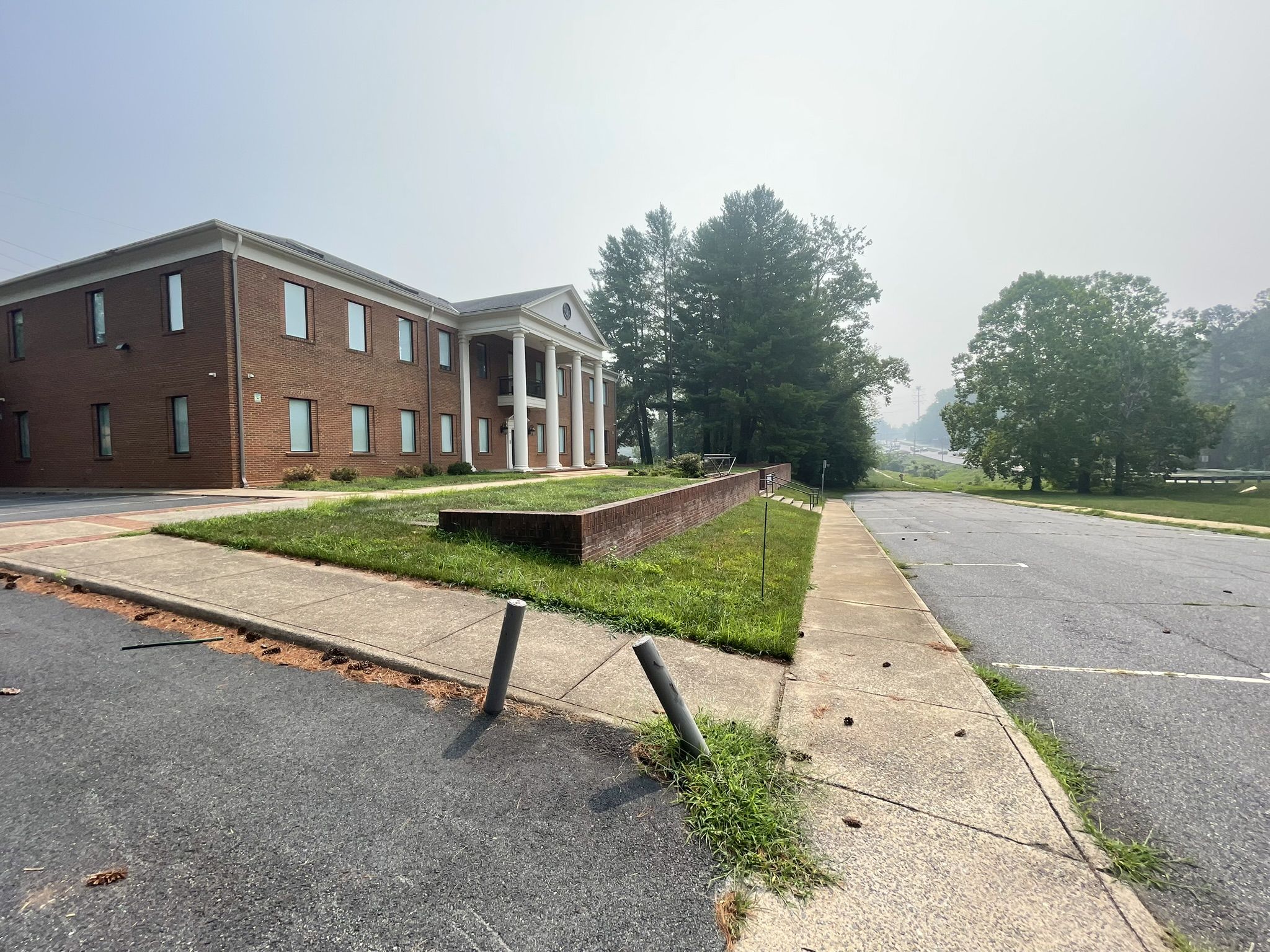
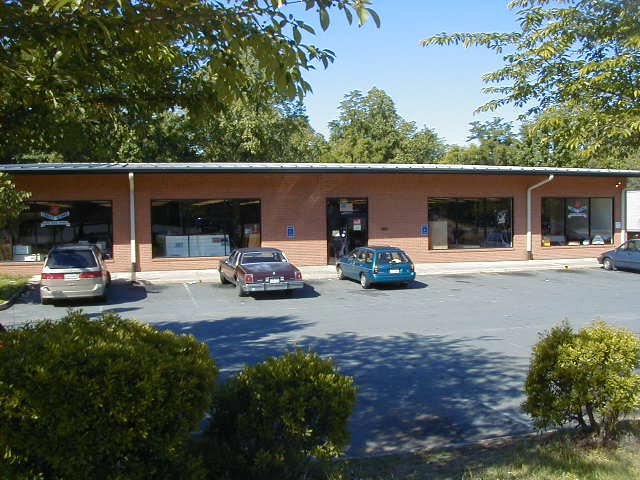
Sanders also briefed Council on a plan to work with the Salvation Army both at their expanded facility on Ridge Street as well as an additional location at 604 Cherry Avenue.
“The goal has been to shutter the current Cherry Avenue thrift store and convert it to a low barrier shelter,” Sanders said. The question is how much is it going to cost and who’s going to run it? And those are the things that we’re still working on.”
Sanders is proposing using $1.5 million of the remaining ARPA funds to the Salvation Army’s capital campaign for their new Center of Hope as well as an additional $2.5 million from the city’s expected budget surplus for the fiscal year 2024.
“The new Center of Hope will be a four-story, approximately 47,000 square feet [building] and increase capacity by nearly 15,000 square feet,” reads an overview of their capital campaign.
This will increase the number of homeless beds from 55 to 114 and will add seven more two-bedroom apartments used as transitional housing.

In addition, Sanders suggests spending another $1 million to replace the five years of revenue that the Salvation Army would make from the thrift store if it were to remain open.
The Salvation Army’s facility at 207 Ridge Street is considered a high barrier shelter as explained by Major Mark Van Meter. He said more scrutiny is needed at this site because there are children present in transitional housing.
“So individuals who come in, we do a background check, we do sex registry checks to make sure that legally we can have children and guests on site,” Van Meter said.
Those who make it in are enrolled in a program to obtain paperwork and identification followed by other programs to get them ready for their own place to live.
“This last month, we saw eleven individuals leave our shelter stabilized out of homelessness now as productive individuals in our community, so it is a stopgap that we’ve created to help give an opportunity for individuals to step into productive living in the community,” Van Meter said.
In contrast, a low-barrier shelter is one where people can get off the street overnight. Van Meter said there is space for 100 beds at their building on Cherry Avenue. The city is currently anticipating 50.
Sanders is suggesting spending $250,000 in ARPA funds to help equip the site and will seek the remaining $500,000 necessary from Albemarle County and other partners. The Salvation Army might not operate the facility but that detail has not yet been worked out.
“We need to dedicate an annual contribution towards the operations of the shelter facility as well, and that is at $500,000 a year,” Sanders said.
Sanders is also proposing hiring two city staff members to run a homeless outreach program. Currently those services are outsourced to nonprofits but Sanders said the city wants to understand more about why people find themselves unhoused. Some of those nonprofits do not have the capacity.
“And I am proposing that we do that in the way of a street outreach team,” Sanders said. “So that would be two staff members who would have the job of just constantly being out and about and interacting and engaging and finding out information to bring back that can be processed and synthesized by the city government.”
Sanders said the city is also investigating purchasing its own micro-shelters from a company called Pallet.
“We have found communities across the country that are doing micro communities where they are finding a location, and they’re adding these units in the form of single and double occupancy spaces,” Sanders said. “It gives you the ability to be inside versus outside. There are some facilities that have a restroom inside, and then there’s separate restroom facilities. So that you truly can make the micro community happen.”
Sanders is suggesting the city spend $600,000 in ARPA money to purchase six of the units. He added the City of Birmingham, Alabama is planning on installing a hundred of them and these six would be a test to see if they could be installed near services.

There was no mention of the $4 million in ARPA money the city paid the Charlottesville Redevelopment Housing Authority for their property at 405 Avon Street, a property they still use rent-free from the city.
As for quality of life, that will be a story in the next edition of Charlottesville Community Engagement with the second part of this story.
Before you go: The time to write and research of this article is covered by paid subscribers to Charlottesville Community Engagement. In fact, this particular installment is from the October 22, 2024 edition of the newsletter. To ensure this research can be sustained, please consider becoming a paid subscriber or contributing monthly through Patreon.
Discover more from Information Charlottesville
Subscribe to get the latest posts sent to your email.