The six people elected to represent the residents of Albemarle had their chance to weigh in on major changes that have been proposed to the way the county’s Comprehensive Plan is being updated. For extensive background, take a look at a story I wrote from the Planning Commission’s work session on July 9.
Tonya Swartzendruber is a long-range planning manager recently hired by the county. At the beginning of the presentation, she had two questions for Supervisors.
“Are there aspects of the Comprehensive Plan structure that are missing,” Swartzendruber asked. “Do the expected features for the development areas and rural areas match up with your expectations?”
In 1980, Albemarle County Supervisors adopted a new zoning code that downzoned the vast majority of land into a rural area with rules that discouraged dense residential development outside of a designated growth area. Since then, conversations about expanding those areas mostly happen when the Comprehensive Plan is being updated.
The last such plan was adopted in June 2015 and has been under review since late 2021 when Supervisors kicked off the process that has become known as AC44. Since then there has been turnover on the county’s planning staff while the first two phases were conducted. Both Swartzendruber and new planning director Michael Barnes have been hired since last December and have brought fresh eyes to the process.
The six elected officials were last briefed in April, as I reported at the time.
“You’ll recall earlier this spring, we were here to discuss the goals and objectives,” Swartzendruber said. “Throughout Phase 2, we received extensive input and feedback from you, [the Planning Commission], the public, and other community stakeholders. We spent the next few months reviewing everything that we gathered and built on the existing document structure and nomenclature.”
Swartzendruber assured the board that none of the existing feedback and work to date has been thrown out and that public engagement will be a key part of the plan’s completion.
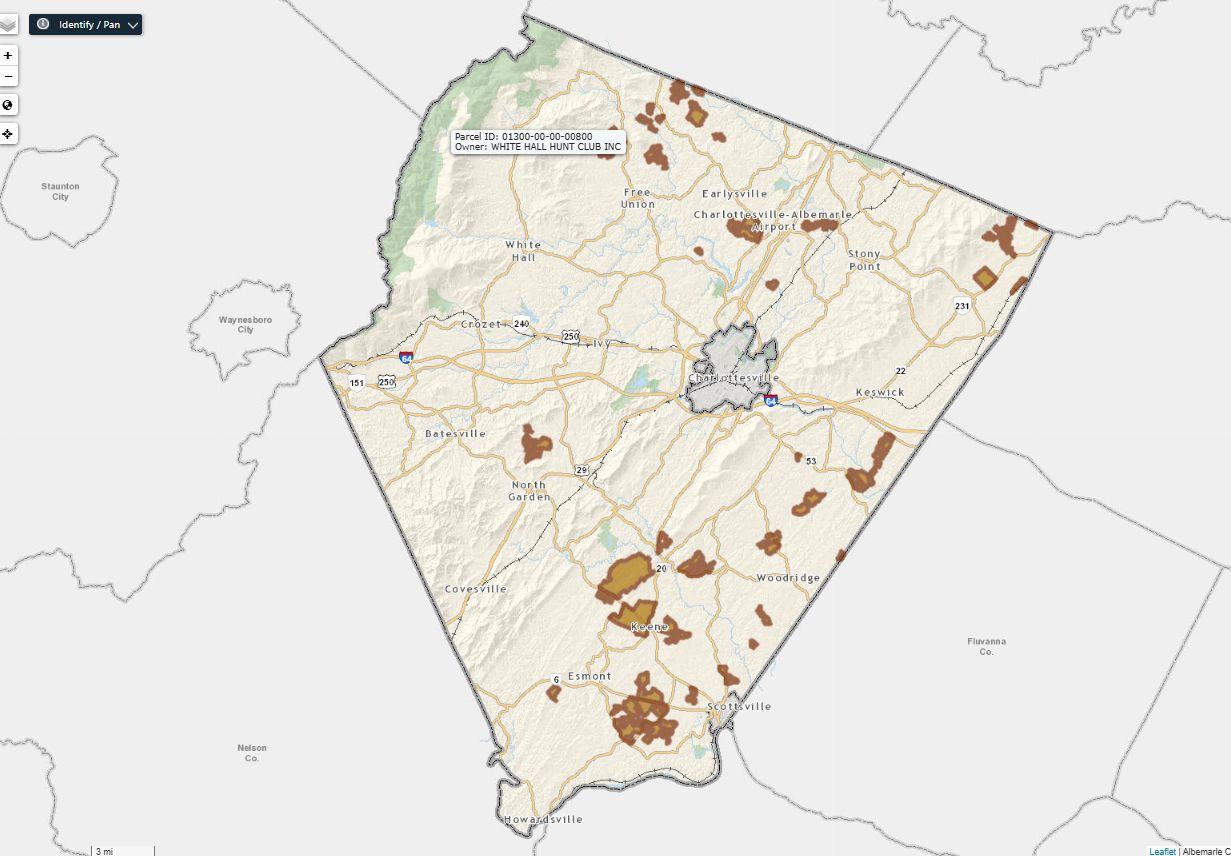
Under the proposed restructuring of the document, the finished product would be split into four sections. The first part is the “plan context” and contains the county’s vision and what used to be called the Framework for an Equitable and Resilient Community. The second part is called the “area framework” and this is where the conversation about how the county uses its 726 square miles will be embedded.
“[In] the second part of the document , we will set our intention for where growth and protection occurs geographically,” Swartzendruber said. “The growth management policy establishes the development areas and rural area and we will use that as a framework for this part of the document.”
The third part is the “plan implementation” and presents a major shift in how the plan is structured. Since 1980, the plan has included chapters for various topics. These would be replaced with eight “elements” which would have one goal a piece.
“As we synthesize the feedback on goals and objectives, we need to normalize the level of details,” Swartzendruber said. “The goals we discussed over the past several months are drafted into goal statements and objectives are combined and clarified. Additionally, some of these objectives have turned into actions as we realized that they fit better at the action level of detail and were more oriented toward implementation rather than measuring plan progress.”

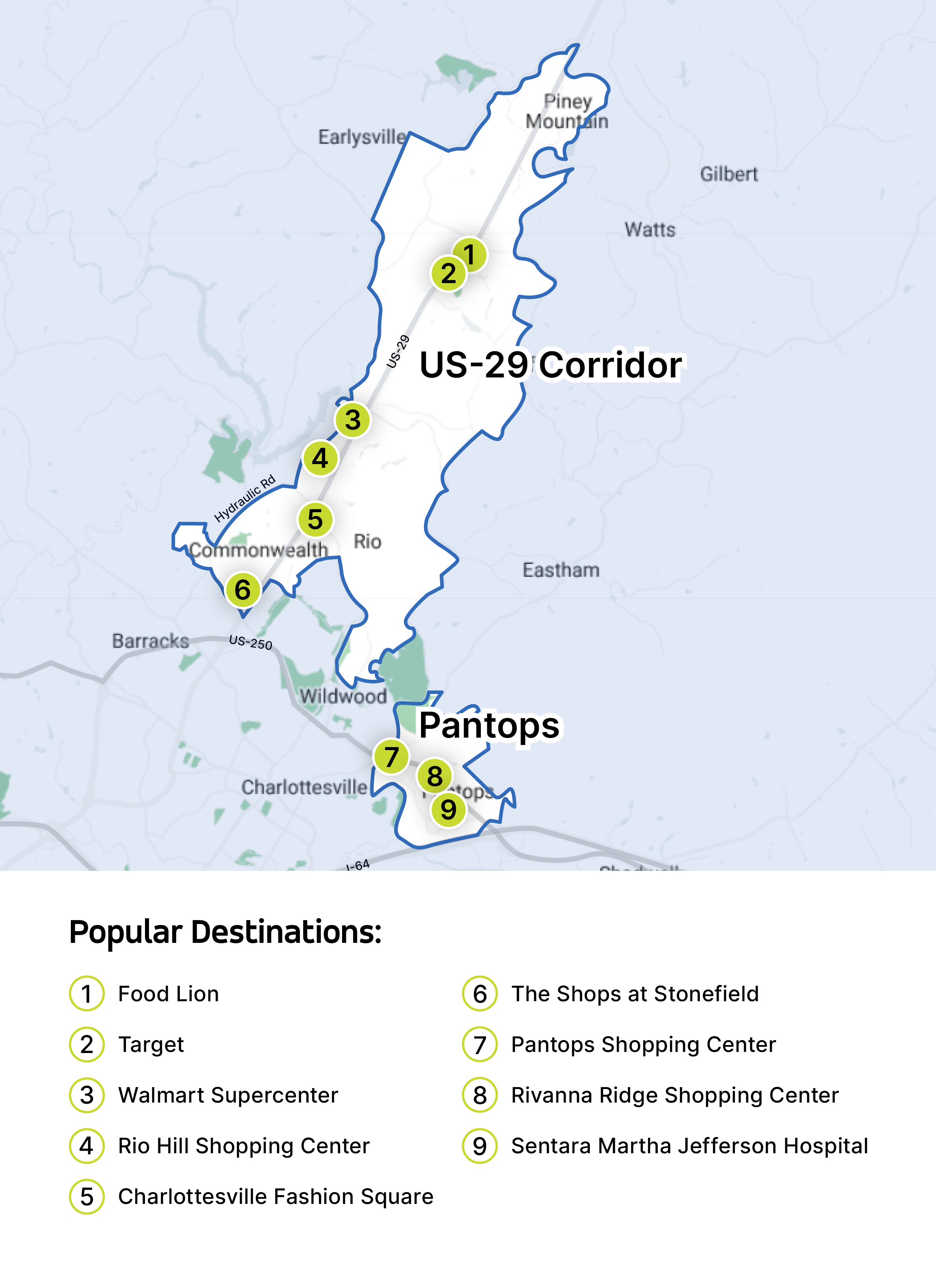
The third section will include a list of priority actions that staff refer to as “catalyst projects.” As an example, it may be beneficial to review the Rio / 29 Small Area Plan adopted in December 2018 and listed six such projects to work on in the first five years.
These included a library plaza, an extension of the shared-use path on Berkmar Drive, a natural area in Woodbrook, an improved streetscape on Rio Road, an extension and realignment of Hillsdale Drive, and a commuter bus station.
To my knowledge, only one of those projects has moved forward. Similar catalyst projects are included in updates of the Pantops Master Plan and the Crozet Master Plan. How often are these plans audited for progress, and whose role is that to play?
The new Comprehensive Plan will conclude with an appendix.
The presentation on the plan’s changes was altered between the July 7 Planning Commission meeting and the July 17 meeting of the Board of Supervisors.
Under “AC44 Next Steps”, the Planning Commission presentation reads as such:
“AC44 team drafts Comp Plan document and finalizes draft Plan recommendations. AC44 team publishes draft Comp Plan document.”
The Board of Supervisors’ presentation reflects a decision to involve the public more up front.
“Community engagement and Planning Commission and Board work sessions focused on Catalyst Projects and land use/ transportation framework.”


Jodie Filardo, the county’s director of community development, said one of the goals is to make the Comprehensive Plan easier to read and understand. She explained the county’s new strategy is designed to make a more streamlined document.
“Rather than just kind of pushing on along through our regular routine, we decided, let’s take a pause, let’s get the structure right and then we’ll pick back up again,” Filardo said.
Supervisor Diantha McKeel (Jack Jouett District) watched the presentation to the Planning Commission and said the one given to Supervisors was a lot more clear.
“In listening to the Planning Commission I must admit that I was a little confused,” McKeel said. “This presentation has really explained it much better.”
McKeel said she would be glad to get rid of what she described as “lawyerly and attorney jargon” in the document and she supported reducing the size of the Comprehensive Plan.
“I don’t think large and larger and larger necessarily means it’s better,” McKeel said. “At the same time we don’t want to lose the focus of what we think is important in this county and I think you’re getting at that.”
Supervisor Mike Pruitt (Scottsville District) said he wanted a more direct focus on the biggest topic in the overall plan.
“The real locus of our Comprehensive Plan does center around our growth management policy,” Pruitt said. “It is the heartbeat at the core of every piece of county policy. I think we also don’t talk about it or deal with it in a very direct way.”
However, Filardo said staff has already made an interpretation of what elected officials want to happen in this review cycle.
“The direction we believe we have received from the Board thus far is that you all are were not interested in realigning or expanding the development area into the rural area so we have taken that as our course of action,” Filardo said.
However, Filardo said there may be further discussion on allowing additional uses in the rural area based on lessons learned during the county-led rezoning of land purchased by the county around Rivanna Station.
“We intend to identify and of course bring to you in draft and you can tweak those items that you may wish to hear from us on whether its density, intensity, population growth, all of those things that may inform a different decision but thus far we have heard loud and clear from both you and the community as well that you are not interested in expanding the development area at this time,” Filardo said.
Supervisor Ned Gallaway (Rio District) said he would find it easier to review the work if he could see the draft in progress.
“It’d be like doing the budget in piecemeal by each department without seeing the bigger budget,” Gallaway said. “It’s just difficult based on the policy work that we tend to go from the top down, not from the bottom up.”
As such, Gallaway reserved judgment on the structure but added the visionary documents should not be an aspirational wish list but a plan for how to accomplish those goals. He quoted a conversation with his Planning Commissioner, Nathan Moore.
“He had said ‘I’m struck by the framing that people some are bringing that long-term planning should be about where we want growth and how dense,’” Gallaway quoted. “‘I really think that’s the secondary question. The primary question ought to be how do we make an actual community where people can work here, live here, and flourish here.”
Gallaway also pointed out that there were no members of the media in attendance and there is an information gap caused by the retreat of legacy media and Albemarle becoming a news desert. Into that desert, advocacy groups fill the vacuum with their messaging.
“It used to be, and I know when you guys did the Comprehensive Plan the last time, there were two or three cameras set up in here as well as a radio reporter that everybody listened to,” Gallaway said. “That’s not our fault. That’s not the public’s fault. That’s the sense of what media is going to be right now but it does put us in a point where if it’s not coming into your social media or hitting your device in some way, even despite our best efforts, folks have to pay more attention to us.”
Supervisor Ann Mallek (White Hall) disagreed with Gallaway’s interpretation and said the plan context should contain a wish list of what the county aspires to be.
“Natural resources protection was the overarching everything for 80 years here and because in my mind, without clean air and clean water, nothing else really matters,” Mallek said. “
Mallek said the plan adopted in 2015 was a streamlined document but was intended to serve as a history of why Albemarle opted to create a growth management policy. She pushed back on eliminating technical language from the document.
“This is really serious stuff and we need to use serious words to describe what’s going on,” Mallek said. “There will be people who will want to avoid accountability for anything, any rules that we have, so my concern about lumping a lot of criteria together into one sentence is that it doesn’t work because then there’s nothing to point to.”
Supervisor Jim Andrews (Samuel Miller District) called for more transparency and for staff to release as much as they can while it is still in process and to have a sense of how the goals and objectives that have already been discussed will be incorporated into the draft.
“Obviously agree that we want to engage the public as much as possible,” Andrews said. “People are interested.”
As I conclude this story, I want to point out a key component of why Charlottesville Community Engagement exists is to continue coverage of these topics.
What other information-based organizations do is up to them but I’m continuing a process I’ve followed since my first story on planning in Albemarle from way back in 2005 when the Pantops Master Plan was in development.
Here’s one from 2006, before I began work for Charlottesville Tomorrow.
Since going independent, I’ve written over two dozen articles on AC44 and you can see those on Information Charlottesville. I’ve also been able to get a couple of articles in C-Ville Weekly. I am not a non-profit and based on prior experience, I never will be. There are many ways to support this work if you’d like to keep it going. See below.
Before you go: The time to write and research of this article is covered by paid subscribers to Charlottesville Community Engagement. In fact, this particular installment is from the August 2, 2024 edition of the newsletter. To ensure this research can be sustained, please consider becoming a paid subscriber or contributing monthly through Patreon.
Discover more from Information Charlottesville
Subscribe to get the latest posts sent to your email.