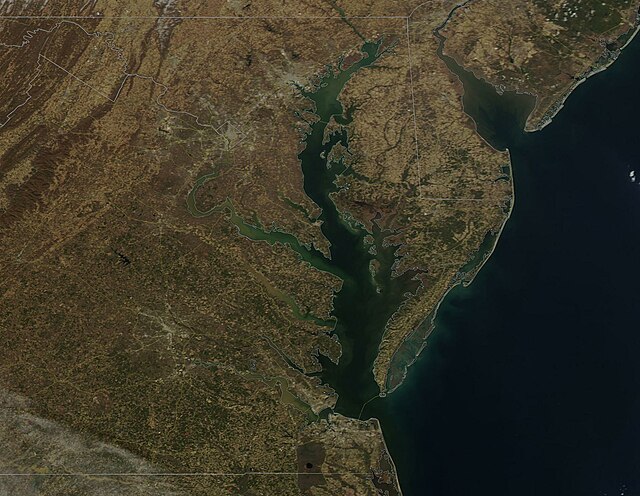
Many local and state regulations about water quality are directly related to improving the watershed of the Chesapeake Bay, the largest estuary in the United States.
At least two groups issue annual report cards to give the public a sense of the environmental health of a body of water that drains 63,299 square miles across multiple states. One of them is the University of Maryland’s Center for Environmental Sciences which has done this now for five years.
“This report card provides a transparent, timely, and geographically detailed assessment of Chesapeake Bay and its Watershed,” reads the website for this year’s report card. “Watershed health includes traditional ecological indicators, but also economic and societal indicators.”

This year the center has awarded a C to the Chesapeake watershed based on 12 indicators and a C+ to the bay itself based on 7 indicators. Digging a little deeper, someone looking at the report would see there are individual scores for each subsection of the watershed. For instance, the James River is depicted as having a C+ with a trend toward “significantly improving.”
The James River Association is an organization that works to improve the health of that waterway. They sent out their own press release.
“The James River saw signs of improvement in the 2023 report, including reduced levels of algae, increased underwater grasses and continued high dissolved oxygen levels, which scored 100%,” reads their response. “However, the overall James River score dropped by 3 points due to a decline in water clarity and benthic community.”
There is also a focus in this year’s report on agricultural practices in Bay’s eastern shore where hundreds of millions of chickens are raised each year and 842,000 acres are under crop production.
“The effects of these industries are important to monitor and manage because they directly impact smaller tributaries that flow into the Chesapeake Bay,” the report states. “Managing the impacts of agricultural runoff is only possible by collaborating with agricultural communities.”
Another organization that releases a report card on the estuary’s health is the Chesapeake Bay Foundation who released their last update in October 2022.
Before you go: The time to write and research of this article is covered by paid subscribers to Charlottesville Community Engagement. In fact, this particular installment is from the July 11, 2024 edition of the newsletter. To ensure this research can be sustained, please consider becoming a paid subscriber or contributing monthly through Patreon.
Discover more from Information Charlottesville
Subscribe to get the latest posts sent to your email.