Both Albemarle County and the City of Charlottesville have planning visions that call for dense urban neighborhoods connected by public transportation that allows people to get around without a car. To what extent should those visions extend to routes that let people who live in rural areas commute in and around?
In late 2024, both jurisdictions joined a new regional government body intended to find new funding sources to implement recent studies overseen by the Thomas Jefferson Planning District Commission.
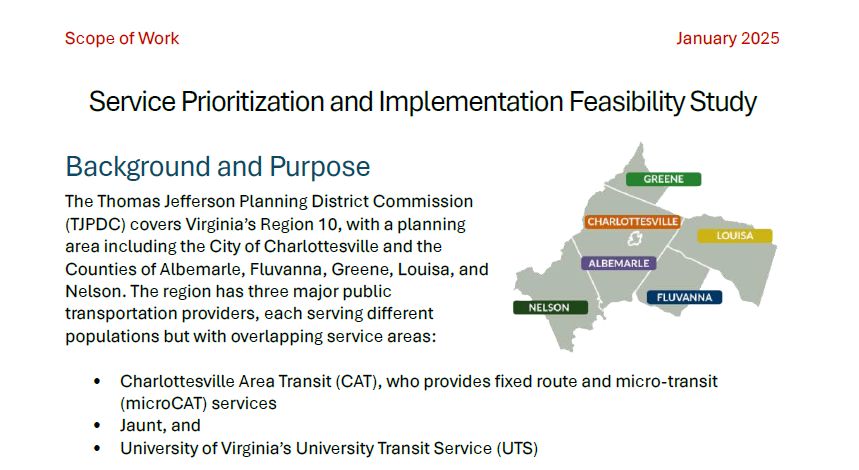
On May 28, the Charlottesville Albemarle Regional Transit Authority met and got an update on a review of previous plans to determine next steps for action. The TJPDC has hired the firm RK&K to go through a series of previous studies such as:
- The November 2022 Regional Transit Vision Plan
- The 2023 Regional Transit Governance Study
- Charlottesville Area Transit’s 2024 Transit Strategic Plan
“Where we will ultimately end up is with an implementation plan that’s going to give you kind of a glimpse into what you can do based on the cost of those services in short, medium and long term timelines,” said Jennifer DeBruhl, director of rail and transit for the firm RK&K.
One of the initial products is a spreadsheet that lists all of the existing and proposed fixed-route services offered by either CAT or Jaunt. Each one is ranked by how well additional frequency would improve intensity of service and how well it increases the overall geographic scope served by transit.
- Presentation on Transit Prioritization Analysis for Charlottesville Albemarle Regional Transit Authority made on May 26, 2026
- CARTA Draft Transit Prioritization Projects
Formulas that power the list’s rankings can be adjusted by assigning different weights to different desired outcomes. Additional factors included serving older populations, households with low-incomes, and whether “activity centers” are served.

The top service identified is an enhanced version of Jaunt’s Buckingham CONNECT Service which currently provides two routes a day between Dilwyn and Charlottesville. The spreadsheet analyzed what would happen if the two were combined into one with buses running 18 times each weekday.
“This has a really large geographic area. It extends pretty far across the study region,” said Scott Boone of Cambridge Systematics, another firm hired as part of the study. “It does have a lot of connections to density areas as well as areas in need of areas that are highly weighted for equity issues.”
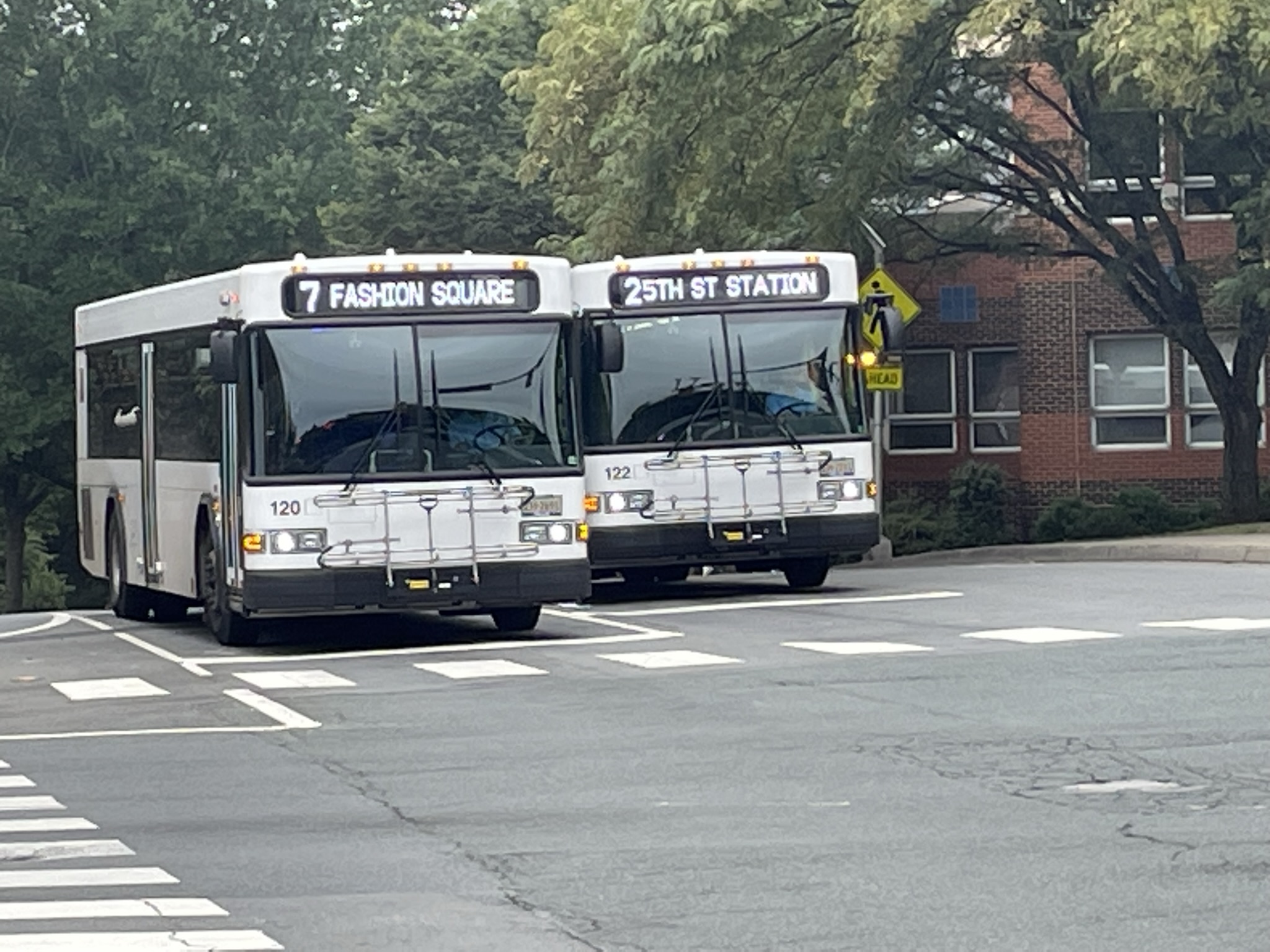
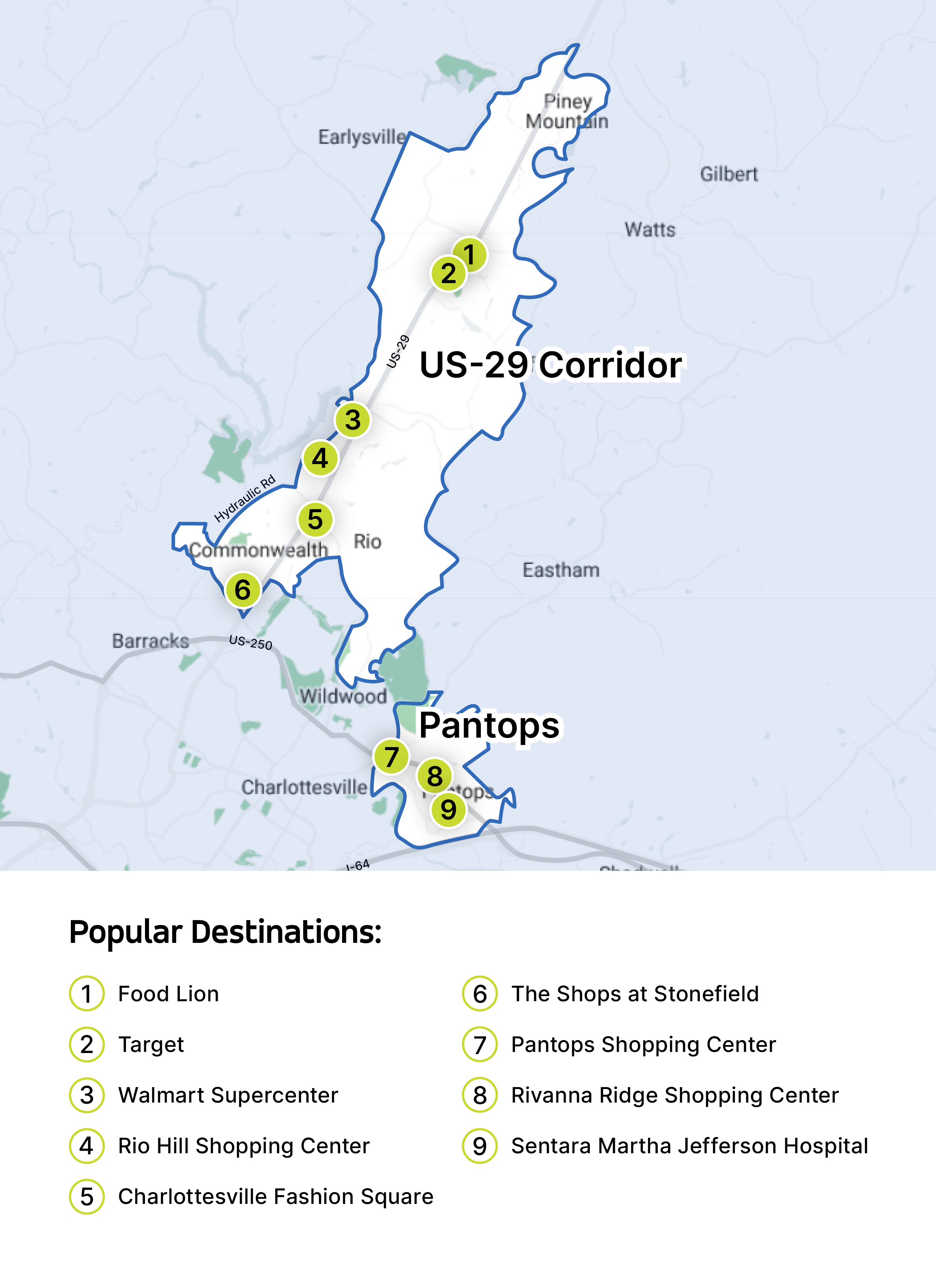
The next two are expansions of CAT’s Route 7 and the Trolley route that come from CAT’s Transit Strategic Plan. The 7 service would be expanded north to the Walmart with 15-minute headways from 6 a.m. to 6 p.m. The Trolley would keep the same alignment but frequency would be increased to 15-minute headways.
The fourth highest route would be a new U.S. 29 Connect from Stanardsville into Fashion Square Mall. The fifth would be a new link that would connect Gordonsville to Louisa.
DeBruhl asked CARTA members for feedback on the tool and what parameters should be emphasized as the study approaches a September completion date.
Both City Councilor Natalie Oschrin and Albemarle Supervisor Mike Pruitt were surprised to see the Buckingham County route at the top of the initial prioritization.
“Buckingham is not in CARTA’s potential jurisdiction,” Pruitt said. “We can add Greene, we can add Louisa, we can add Nelson. We can’t add Buckingham.”
DeBruhl pointed out that Buckingham County is included within the scope of the Regional Transit Vision and that study recommended increased commuter services. Pruitt said he could see the value of the entire route.
“It is not lost on me that the improved intensity on the Buckingham route specifically benefits my constituents more than anyone in the room representing the Scottsville district, which includes Pantops and Scottsville.”

Mike Murphy, Jaunt’s executive director, said he was also surprised to see the Buckingham route top the list. He said the county partners with Jaunt for this route but the locality otherwise has no transit service.
“They’re trying to get people in and out of the urban core of Charlottesville and Albemarle for the purposes of accessing medical and employment,” Murphy said. “And we’re running up two buses each day in the morning and in the evening. And they’re relatively well utilized because people are riding basically a full hour for free.”
Murphy said there is demand for a third bus but funding may not be there. He said even if additional money were to come from the state, Buckingham County might not be able to fund it. He said other investments might be more practical such as a full Greene County route.
DeBruhl said the Buckingham route may not remain on top because the final report will take funding feasibility into account.
“When you pull the money together with priorities, some things are going to start to kind of somewhat naturally filter,” DeBruhl said.
The study is still in development and a public survey will be conducted this summer. Materials included in the CARTA packet but not discussed included several changes to existing routes.
Albemarle Supervisor Sally Duncan was not present at the meeting.

Before you go: The goal of Town Crier Productions is to increase awareness about what is happening at the local, regional, state, and federal government levels. Please share the work with others if you want people to know things. Paid subscribers cover the cost of conducting research for this article which was originally published in the June 2, 2026 edition of Charlottesville Community Engagement. You can either subscribe through Substack or make a charitable contribution.
Discover more from Information Charlottesville
Subscribe to get the latest posts sent to your email.