

Many similarities come to mind when you think of Charlottesville and Chapel Hill. Both are home to flagship institutions of higher education. A man named Maurice Jones served as the chief executive of both the Virginia city and the North Carolina town.
What can be learned from the different ways each does things? That was part of the reasoning behind a recent delegation from this area to that area arranged by the Charlottesville Regional Chamber of Commerce.
“There have been activities to learn about different things that they’re working on like planning and design and they have a tech hub and parking regulations,” said City Councilor Natalie Oschrin at the May 28 meeting of the Charlottesville Albemarle Regional Transit Authority (CARTA).
Oschrin joined that meeting from Chapel Hill and reported the group had just left a presentation on transit. Rivanna District Supervisor Bea Lapisto-Kirtley was a member of the county’s delegation and gave her report at the June 3 meeting of the Albemarle Board.
“They have frankly a transportation system that really works and it’s very well and all the buses are full so it’s a lot we can learn from them,” LaPisto-Kirtley said.
A major difference is that there is one transit agency that serves the Town of Chapel Hill, the Town of Carrboro, and the University of North Carolina. Chapel Hill Transit has contractual agreements with all three to provide service with the UNC-Chapel Hill kicking in about a third of the current year’s budget of $36,481,975.
The service had a daily ridership of 18,800 in the first quarter of the year according to a recent ridership report from the American Public Transportation Association. There were over 4.3 million rides in 2025 according to another APTA report.
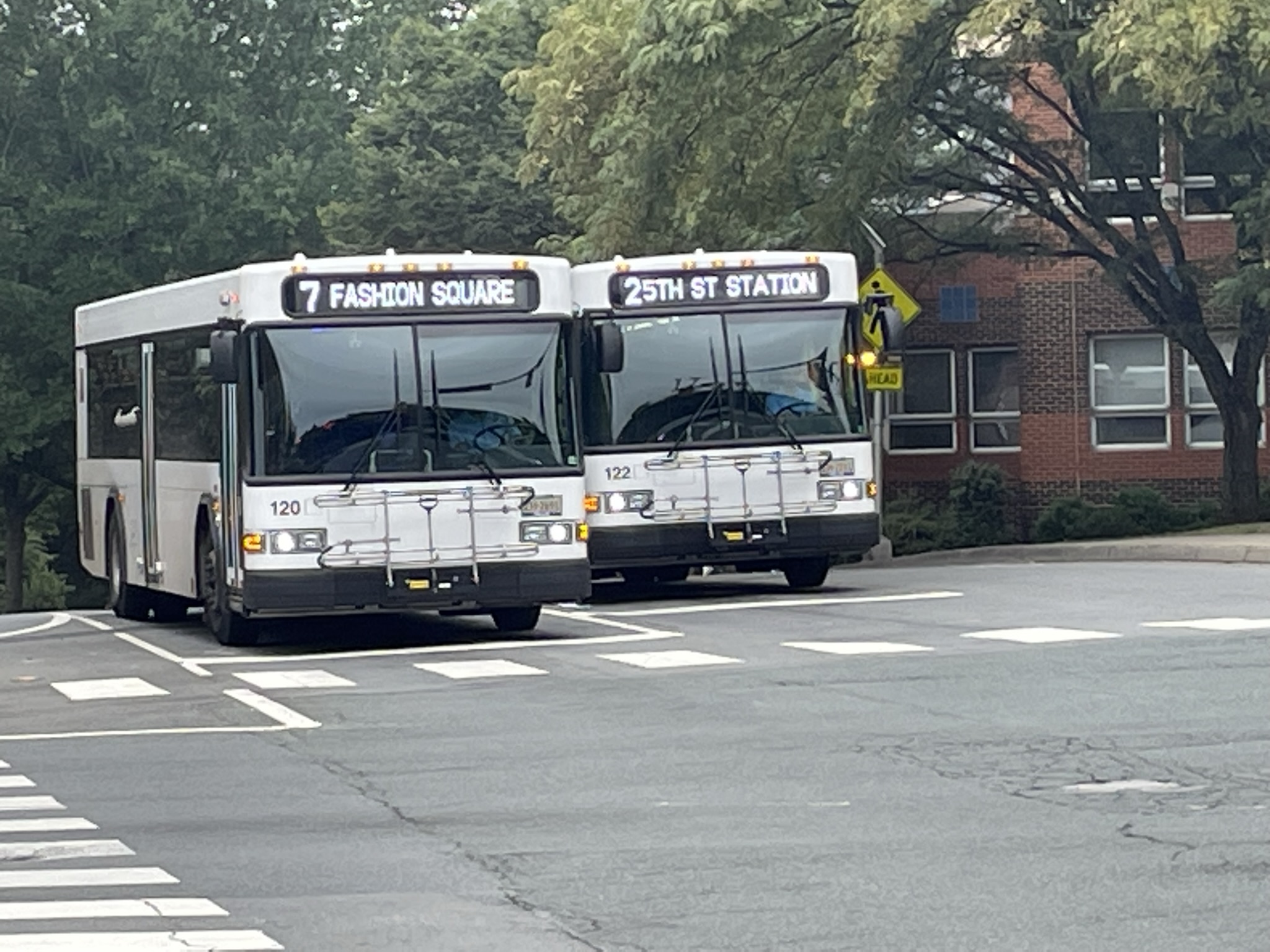
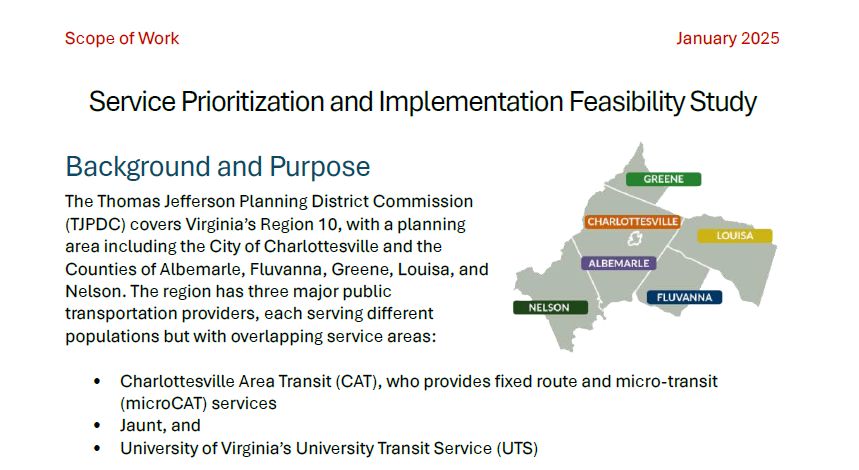
In contrast, the University of Virginia runs its own transit service and there is almost no overlap with Charlottesville Area Transit which is owned entirely by the city government with funding from Albemarle County. Jaunt provides both para-transit service and commuter routes throughout the Thomas Jefferson Planning District Commission.
The recently created CARTA is so far about trying to find more funds and recently got the preliminary results of a prioritization study to help determine where they should be invested.

Charlottesville City Manager Sam Sanders told City Council on June 1 that he facilitated a discussion on homeless services during the visit.
“We were able to hear from their Chief of Police, Community Relations Coordinator for the town of Chapel Hill, as well as UNC Director of Local Relations,” Sanders said. “The key takeaway for me was coordination.”
In the fall, the Greater Chapel Hill-Carrboro Chamber of Commerce will visit this area. Albemarle Supervisor Ned Gallaway said he was appreciative that both Albemarle and Charlottesville people had the chance to get a fresh perspective.
“Folks from UVA, several handful of our nonprofits were involved,” Gallaway said. “We had for-profit folks involved that were members of the Chamber. I you will likely hear more formal reports of what was learned from that when we do a future joint meeting with the city, just in the spirit of the same thing that was done with Champaign-Urbana a few years ago.”
Gallaway referred to two separate trips taken in 2024 to visit a hydrogen-fuel cell system operated by the Mass Transit District that serves both cities as well as the University of Illinois.
Before you go: The goal of Town Crier Productions is to increase awareness about what is happening at the local, regional, state, and federal government levels. Please share the work with others if you want people to know things. Paid subscribers cover the cost of conducting research for this article which was originally published in the June 9, 2026 edition of Charlottesville Community Engagement. You can either subscribe through Substack or make a charitable contribution.
Discover more from Information Charlottesville
Subscribe to get the latest posts sent to your email.