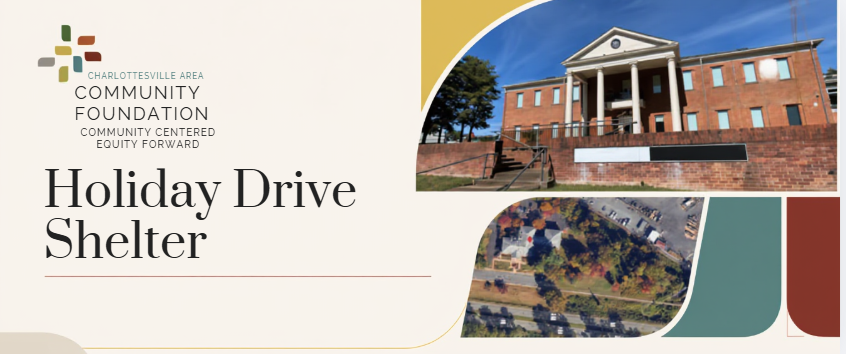
As of September 8, 2026, a total of 57 people have agreed to stay at the low-barrier shelter set up at 2000 Holiday Drive. City Council learned that information Tuesday night from Assistant City Manager Sam Roman just after hearing from critics of Charlottesville’s decision to clear the encampments on September 1.
“Charlottesville is doing some of the absolute worst things a city can do to address homelessness,” said Albemarle County resident Donna Tietjen. “You are actually doing this— criminalizing basic survival, sweeping encampments without providing real alternatives, treating out of sight as housed, building temporary beds when neglecting permanent housing, and constantly relocating people instead of stabilizing them.”
Tietjen was joined by several others who have spoken at previous Council meetings who expressed anger at the steps that have been taken.

Roman said that on the first night, there were between 13 and 15 people from the encampments who opted to stay at the shelter.
“I do want to reiterate that priority was given to the folks that were in the encampment,” Roman said.
As of September 8 there were 60 beds set up at 2000 Holiday Drive but Central Arizona Shelter Services has capacity to increase the temporary emergency shelter to 120 beds.
“There is an opportunity to increase the beds there now,” Roman said. “However, you know, that would be collaboratively done with the guests that are at the shelter. We want to certainly incorporate their ideas into what it would look like should we add more beds or should the operator add more beds.”
One of the speakers during public comment alleged that police used violence to remove people from the encampment. Roman said there were only two police officers present when what the city calls a “transition” took place and they were not in uniform.
“I assure you that at no time there was anyone slammed on the ground and arrested, as I heard earlier,” Roman said.
Roman said one person was taken away in an ambulance because there was a medical issue.
Donnas Chambers had been living at the encampment and has become a frequent voice at matters from the public. He is now staying at 2000 Holiday Drive and claimed it is not a safe place in part because the restrooms and showers are in trailers outside of the building as part of the temporary arrangement.
“I’m actually one of the ones that are in the shelter, and since I’ve been there, there’s been three incidents that happened where men have threatened women, tried to fight women, tried to go on women— the women’s sides,” Chambers said. “The women are scared to death to go outside at nighttime to use the bathroom.”
Roman said when he checked in with CASS officials while hearing Chambers’ concerns and was told they were not aware of any incidents, and were not aware of concerns regarding the safety of the restrooms.
“But with that certainly being heard tonight, we will certainly talk with the shelter operator and bring these concerns to them so they can collaboratively work on mitigating those concerns in terms of the restrooms,” Roman said. “The restrooms are able to be locked, especially the showers.”
Roman said people in the shelter have access to support services. Additionally, businesses on Holiday Drive have a specific contact with Charlottesville public safety officials to report potential concerns.
Chambers had also said there are no sprinklers in the building.
City Attorney John Maddux acknowledged later in the meeting that that is true, but the contract with CASS requires a “fire watch” to take place round the clock. Sprinklers will be installed as the space is fitted out to become a permanent low-barrier shelter.
During public comment, one person called Councilor Jen Fleisher a “truly horrible person” for her participation in getting people to the shelter. Such a statement is a violation of protocol to speak at Council meetings, but Fleisher ignored the description. She was on site during the removal and has continued to be involved.
“I did volunteer for an overnight shift at the shelter on Saturday night, and I can assure you that they have multiple protocols and procedures for any complaints and grievances,” Fleisher said. “There’s a huge QR code plastered lots of places for residents. Most of the residents I interacted with, I mean, it’s like a lot were sleeping, sleeping, but were very positive. They were connected to folks they had known for a while. They were supporting each other.”
In contrast to another claim made by one of the speakers at public comment, Fleisher said people can come to the shelter at any hour of the night including people who are just getting off of work.
“There are quite a few people working and able to do so a little more regularly because they’re at the shelter,” Fleisher said.
City Councilor Michael Payne said serving 57 people within a week is a sign that a need is being met. He said he understood that some people are going to continue to disagree.
“It is very important to be able to have an accurate basis of facts of what has actually happened,” Payne said. “And you addressed most of those.”
Payne added that the encampment was not a permanent solution and was not safe for people living there.
“It’s one in which there were multiple instances of reported sexual violence,” Payne said. “There were multiple physical assaults. There was, from our first responders, a daily risk of a mass casualty event in terms of a flash flood or a widespread fire. There were multiple fires, including ones that physically damaged people and burned down all their belongings. There were reported thefts. And in all those cases, the victims are those who are homeless and staying in the encampment.”
Payne said those who have moved to 2000 Holiday Drive now have access to services and access to case managers. He said what the city has done is more compassionate than allowing people to remain in danger.
Fleisher said CASS will soon be launching a way for people to volunteer but until then donations can be made to the Charlottesville Area Community Foundation.
Before you go: The goal of Town Crier Productions is to increase awareness about what is happening at the local, regional, state, and federal government levels. Please share the work with others if you want people to know things. Paid subscribers cover the cost of conducting research for this article which was originally published in the September 9, 2026 edition of Charlottesville Community Engagement. You can either subscribe through Substack or make a charitable contribution.
Discover more from Information Charlottesville
Subscribe to get the latest posts sent to your email.