All three documents created by the Cville Plans Together initiative are clear that the city’s official policy is to keep long-time residents of core neighborhoods in their homes.
“Gentrification occurs when private or public investment leads to changes in the racial or economic composition of a neighborhood toward higher incomes and more white residents,” reads a page on displacement from the Affordable Housing Plan adopted by Council in March 2021
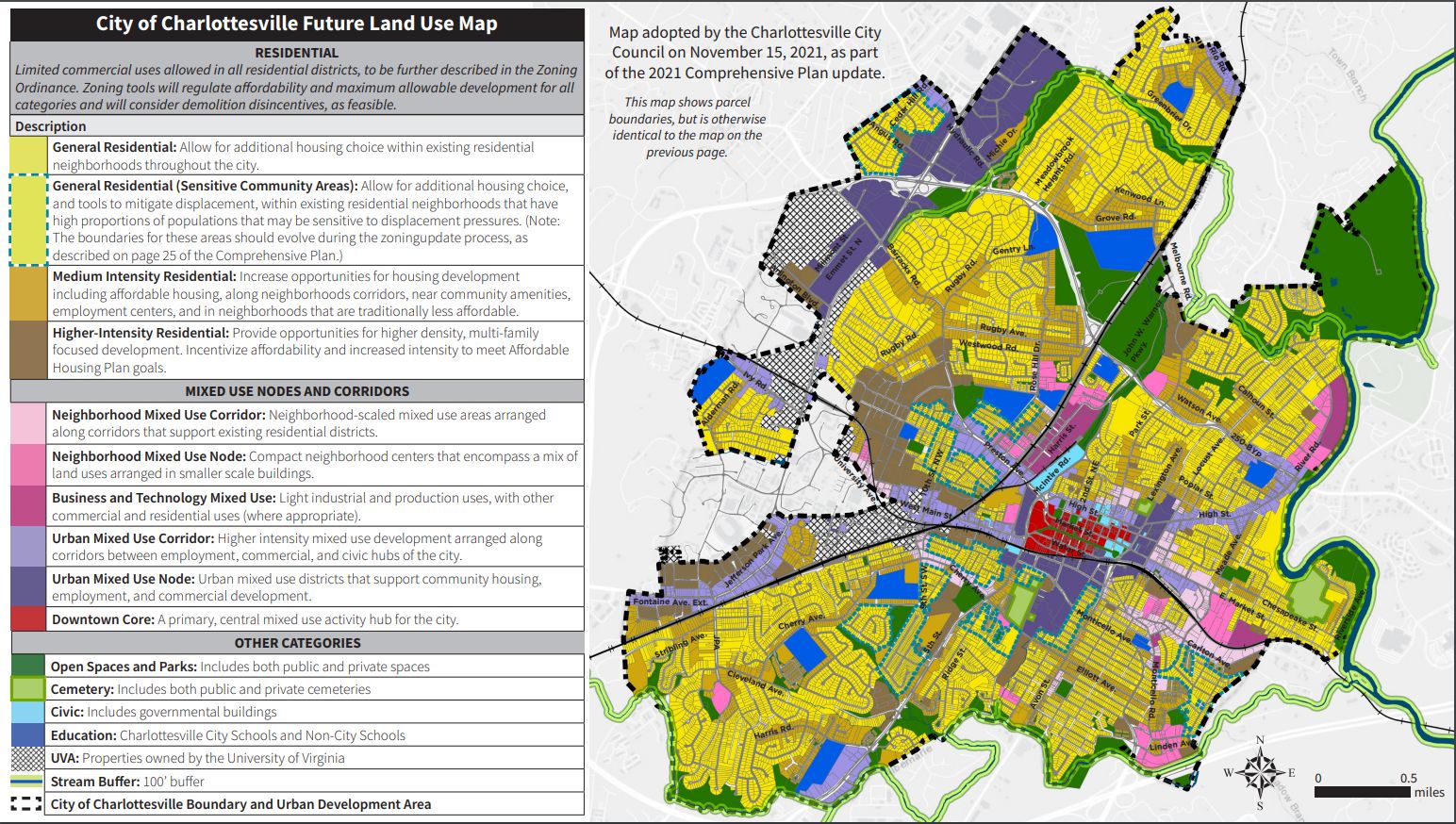
“Sensitive Community Areas are places throughout Charlottesville that include concentrations of community members who may be demographically sensitive to displacement pressures and potentially most at risk for displacement,” reads a description of one designation in the Future Land Use Map adopted as part of the Comprehensive Plan in November 2021.
“The intent of this [Residential Core Neighborhood-A] district is to encourage the construction and continued existence of moderately priced housing, the creation and preservation of affordable housing, to respect the cultural heritage of the neighborhoods, and to support the overall promotion of a convenient and harmonious community,” reads the Development Code adopted in December 2023.
Shortly before the Development Code went into effect in February 2024, City Council were briefed on what staff were calling the Housing Equity and Anti-Displacement Tool-Kit.
Materials from that February 5, 2024 meeting:
- Agenda Memo
- HEAT Project Presentation
- FY2024-2025 Strategic Outcome Area-Housing Workplan Details (Table)
- Inclusionary Zoning Feasibility Analysis_Zoning Rate of Change Analysis
This was to have been overseen by the Office of Community Solutions but that part of city government was dissolved a year and four months later. Housing functions are now within the Department of Neighborhood Development Services.
The H.E.A.T. presentation stated that staff’s work would be focused in several areas.
- A Land Bank was to have been formed to purchase property on behalf of developers to pursue low-income to middle-income housing. This function is de facto being provided by the Charlottesville Redevelopment and Housing Authority with assistance from the City of Charlottesville. CHRA is currently in the midst of spending $12.6 million on several dozen properties as previously reported.
- Continued investment in the Charlottesville Affordable Housing Fund has proceeded with at least $65.8 million spent in the last five years. Council recently learned a lack of staff is hindering efforts to implement specific steps as previously reported.
- The city continues to transfer $900,000 a year to CRHA to operate the Charlottesville Supplemental Rental Assistance Program. In June, Council re-upped the program for another year as previously reported
- The city would promote tax relief programs. Since 2016, the city has doubled its taxable value.
- The city would continue to provide tax increment rebates to affordable housing providers and there is a well-established pattern of these going to projects like the Piedmont Housing Alliance’s 501 Cherry Avenue project.
- The city would increase awareness of existing programs to waive various fees for utilities.
There has been no progress toward the seventh which was to have conducted small area plans for some of the neighborhoods using money that had been set aside for the “strategic investment area” created in the early 2010’s.
“This revitalization benefits Core neighborhoods by preserving their unique characteristics and affordability,” reads one of the H.E.A.T. slides. “Developers, community partners, and service providers can engage in neighborhood projects, supporting housing equity, and anti-displacement efforts.”

At their meeting on October 13, members of the Planning Commission updated their colleagues on various committees they are on and other work.
Planning Commissioner Betsy Roettger updated her colleagues on the city’s anti-gentrification efforts.
“Mainly we’ve been working with the 10th and Page and Rose Hill neighborhoods. Their small area plans kind of just sort of paused,” Roettger said.
Roettger and Assistant Director of Communications Oke Akinlotan are participants in training provided by a group called the Government Alliance of Race and Equity.
“We’ve been in classes since January and now we’re going to go to this conference in Raleigh in November, so we’re like whipping up our policy ideas to bring to kind of workshop with 7 other cities at this conference,” Roettger said.
That conference is the Facing Race on November 12 through November 14. Roettger said she would report back.
In the meantime, Charlottesville Community Engagement continues to look at every single property transaction across the city in part to see what is happening in the RN-A district. I’m not current but in April, eight properties traded hands in RN-A neighborhoods.
- April 8, 2026: A single family detached house with three bedrooms on 9th Street SW in the 10th and Page built in 1963 sold for $295,000. That’s 17.76 percent above the 2026 assessment of $250,500 and 54.77 percent above the 2020 assessment of $190,600. (Residential Neighborhood A, 0.073 acres)
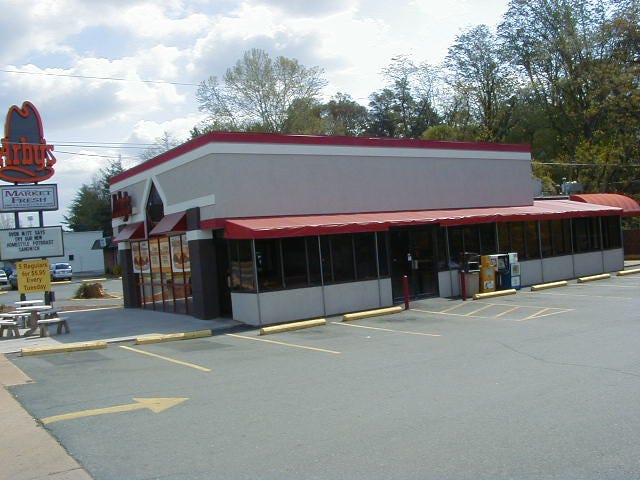
- April 8, 2026: KOW Development LLC purchased 418 10th Street NE for $225,000. A demolition permit has been filed to take down the two bedroom house built in 1925. The sales price is 31.21 percent below the 2026 assessment of $327,100. The entity associated with Woodard Properties is also purchasing an adjacent property from CRHA due to a right of first refusal. (Residential Neighborhood A, 0.255 acres)
- April 15, 2026: A three bedroom house built in 2005 in the 1000 block of Page Street sold for $550,000. That’s 13.03 percent below the 2026 assessment of $632,400 and 46.32 percent of $375,900. The house was constructed in 2005 as part of a Piedmont Housing Alliance initiative. (Residential Neighborhood A, 0.11 acres)
- April 20, 2026: A three bedroom house in the 1200 block of Grove Street in the Fifeville neighborhood sold for $380,000. That’s 0.26 percent above the 2026 assessment and 65.36 percent above the 2020 assessment of $229,800. (Residential Neighborhood A, 0.24 acres)
- April 22, 2026: A three bedroom house on Forest Street built in 1925 in the Rose Hill neighborhood sold for $235,900. The purchaser is a company called Five Branches Development LLC. A building permit has been filed for a whole home renovation. The purchase price is 13.43 percent below the 2026 assessment of $272,500. The assessment in 2020 was $127,700. (Residential Neighborhood A, 0.124 acres)
- April 24, 2026: Black Cat Holdings LLC purchased 400 10 ½ Street for $302,000. That is 19.23 percent below the 2026 assessment of $373,900 and 42.52 percent above the 2020 assessment of $211,900. What will happen next? (Residential Neighborhood-A, 0.08 acres)
- April 27, 2026: A three bedroom house built in 1900 in the 300 block of 10th Street NW sold for $562,500. That’s 1.02 percent above the 2026 assessment of $556,890 and 57.61 percent above the 2020 assessment of $356,900. (Residential Neighborhood-A, 0.103 acres)
- April 30, 2026: A two bedroom house in the 400 block of 12th Street NW in the Venable neighborhood sold for $432,500. That is 6.41 percent below the 2026 assessment of $462,100 and 48.27 percent above the 2020 assessment of $291,700. (Residential Neighborhood-A, 0.07 acres)

Before you go: The goal of Town Crier Productions is to increase awareness about what is happening at the local, regional, state, and federal government levels. Please share the work with others if you want people to know things.
Paid subscribers cover the cost of conducting research for this article which was originally published in the October 14, 2026 edition of Charlottesville Community Engagement. You can either subscribe through Substack or make a charitable contribution.
Discover more from Information Charlottesville
Subscribe to get the latest posts sent to your email.