
The City of Charlottesville has greatly increased the amount of funding that goes toward the Charlottesville Redevelopment and Housing Authority each year, allowing for the latter to invest in both renovation and expansion.
The governing bodies of each political jurisdiction met on September 9, 2026 for a yearly joint meeting in which CRHA representatives made various requests for additional funding for the purchase of new properties.
At the beginning of the meeting, Council learned that December 4 will be the last day for CRHA Executive Director John Sales. The CRHA has issued a request for proposals for firms to conduct the search for a replacement and bids were due October 1.
“We will likely get into a situation where we’re going to need to appoint an interim but we are reluctant to do that until we have to just due to potential disruption with the staff and just having to manage through multiple changes,” said Brigid O’Rourke, the chair of the CRHA Board of Commissioners.
CRHA wants the City of Charlottesville to cover the costs of the executive search. If Council agreed, City Manager Sam Sanders said the amount would either come from the citywide reserve or from Council’s fund for strategic initiatives.

The CRHA also wants Council to agree to amend an ordinance to allow Commissioners to serve multiple terms to improve longevity. There are two vacant positions and aside from City Councilor Michael Payne, O’Rourke and Earl Hicks are the longest-serving Commissioners having been appointed to terms beginning July 1. Payne has served since January 2022 when he succeeded Nikuyah Walker as Council’s voting representative.
The by-laws currently reserve two seats for “resident commissioners” who must be residents of public housing. As time goes on, many CRHA units are subsidized by project-based housing choice vouchers and the rules would need to state clearly those residents are eligible to serve.
City Councilor Michael Payne said he could support that change given a lack of applicants for the current vacancy for a resident commissioner.
Delphine Carnes, counsel for the CRHA, said that the U.S. Department of Housing and Urban Development requires at least one public housing resident, and recipients of project-based vouchers would not be eligible toward that count.
“I just wanted to specify that because the regulation is very specific in terms of who qualifies as a resident commissioner,” Carnes said.
Deputy Director’s presentation on what’s happening now
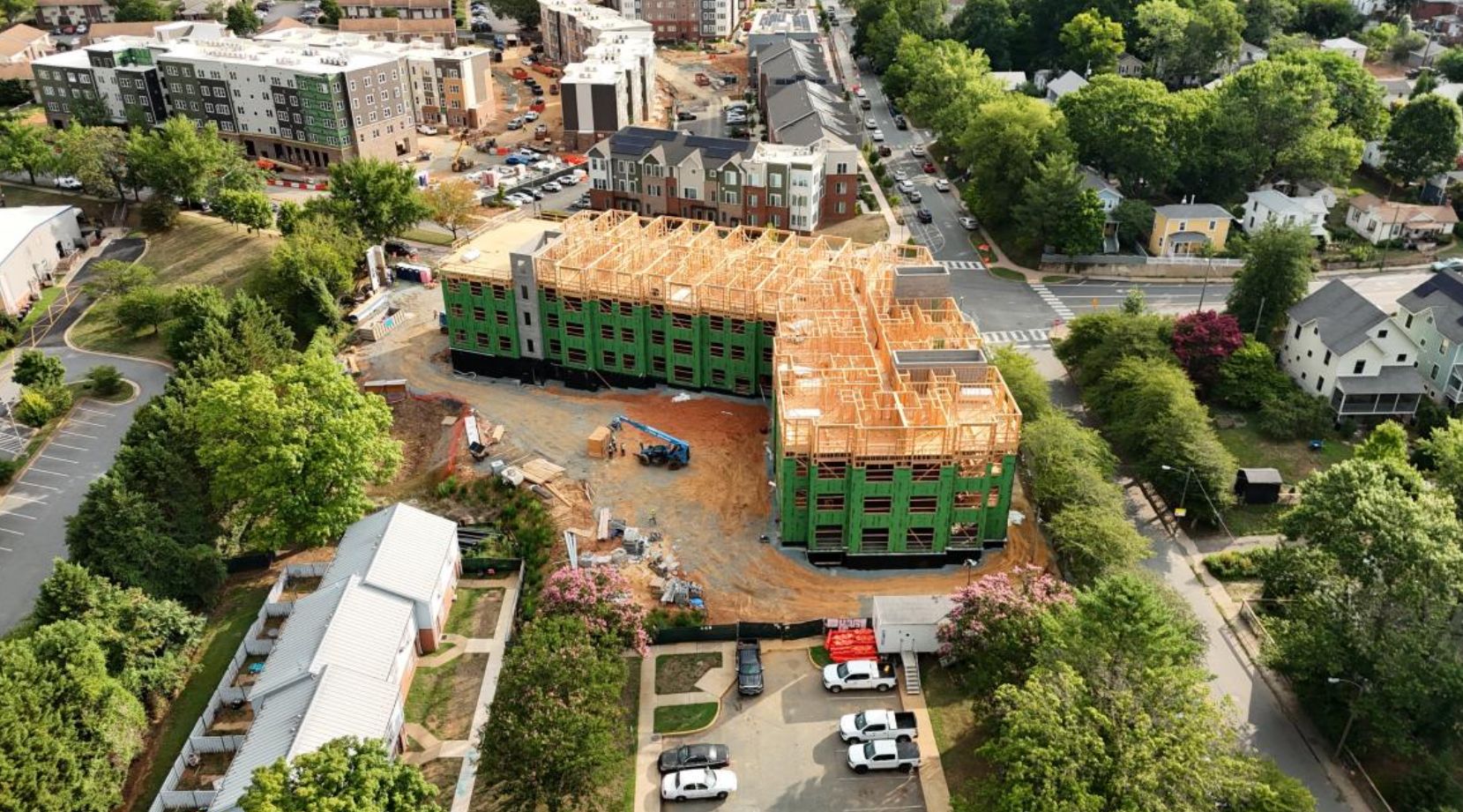
The September 9 meeting took place at a time when two major public housing sites are under construction. These are the second phase of South First Street which includes 113 new units in both apartment and townhome form.
“All units are fully subsidized by vouchers,” said Deputy Director Kathleen Glenn-Matthews. “So these are the project-based vouchers, and they’ll continue to serve families under 30 percent [area median income].”
There are also 47 units coming online at the first phase of Sixth Street which are all also subsidized through project-based housing vouchers.
There have also been renovations of various other sites across the city in what CRHA refers to as the “parallel track” projects.
Planning is also moving ahead for the first phase of Westhaven’s redevelopment. First, the technical on financing.
“We’ve received nine percent [Low-Income Housing Tax Credits] funding for Phase 1A, and we’re working on an application for four percent for 1B,” said Glenn-Matthews. “The current plan is we have a lot of questions around relocation, and the plan is to look at starting the process in late 2027 or early 2028.”
Glenn-Matthews said HUD has several requirements related to relocating residents during construction and there are a lot of moving parts. The planning itself has been overseen by a group of residents.
“The Phase 1 that’s initially starting includes 150 deeply affordable units. All of them are gonna be subsidized with a combination of public housing and housing choice vouchers,” Glenn-Matthews. “Eighty-two of the units initially will be a senior and elderly building, and then we’ll have 68 units in a multifamily building.”
The Affordable Housing Plan adopted by City Council in March 2021 called for creation of a land bank to purchase property to keep some units affordable. While the Housing Advisory Committee spent much time evaluating potential parameters and guidelines, the idea has become more or less dormant while CRHA has begun making purchases including several dozen units known as the Dogwood Portfolio which are co-owned by the City of Charlottesville.
“We’ve been calling it the NOAH program, because that’s a term that’s used nationally, but it’s naturally occurring affordable housing,” Glenn-Matthews said. “These are units at risk of being lost as the landlords are selling them and other groups purchase them. And we’re trying to keep them affordable. So we’ve been in partnership with the City of Charlottesville and have successfully preserved and fortified about 80 units, and that’s, that’s just been tremendous.”
Glenn-Matthews said this program is more cost-effective than building new units because upwards of a half-million dollars is required to construct each new one. CRHA is actively seeking to purchase homes from owners who want to keep rents lower and one of them is Silk Purse Properties owned by Jeremy Caplin.
“It includes 70 individual scattered site parcels throughout the city, and the majority of them are single-family homes in 10th and Page and Venable neighborhoods,” Glenn-Matthews said. “We’ve been in negotiation with him since 2025.”
Last October, Silk Purse Properties sold one property on West Street for $671,650. The company seeks to convey other units at lower prices.
On September 9, the CRHA Board made a formal request to City Council for $3 million to cover the purchase of eleven of the Silk Purse Properties for a total of 13 units.
“The housing market has a lot of pressure right now as well,” Glenn-Matthews said. “That’s why we need the city as a partner. We’ve been really grateful for that partnership. It’s due to this partnership that you know, we’ve been able to keep these rents very low.”
The CRHA Board voted to authorize that purchase at their meeting on September 28. They also agreed to purchase Rivanna Terraces, a 48-unit apartment complex off of River Road. They’ll use $5 million in funding from the city government as well a $4.6 million loan from the Federations of Appalachian Housing Enterprises.
CRHA is also in the process of selling one of the Dogwood units at 801 Harris Street and agreed on September 28 to sell a parcel in the 400 block of 10th Street NW to Woodard Properties. The company had a right of first refusal.
Toward the end of the meeting, Charlottesville Mayor Juandiego Wade asked CRHA representatives and advocates if they had any concerns about the future.
Joy Johnson, chair of the Public Housing Association of Residents and longtime Westhaven resident, said it is crucial for the city to continue investing in redevelopment of CRHA housing stock so that residents do not get disappointed.
“We talked about redevelopment for over 30 years, and it just got put on the shelf, and this is the first time that they start seeing buildings,” Johnson said. “And so there is a trust there. And if there is a pause, or if nothing happened with what needs to be finished, it’s gonna be hard to get the trust of the residents again.”
Johnson said planning must continue on both the second phase of Sixth Street as well as ensuring the second phase of Westhaven happens. She said that could require between $15 million and $30 million in public investment.
Before you go: The goal of Town Crier Productions is to increase awareness about what is happening at the local, regional, state, and federal government levels. Please share the work with others if you want people to know things.
Paid subscribers cover the cost of conducting research for this article which was originally published in the October 2, 2026 edition of Charlottesville Community Engagement. You can either subscribe through Substack or make a charitable contribution.
Discover more from Information Charlottesville
Subscribe to get the latest posts sent to your email.