One way so subsidize the cost of housing is to use the additional real property tax revenue that will be generated over the course of a project’s timeline and grant a portion of it back to a nonprofit developer.
On September 2, 2026, the Albemarle Board of Supervisors agreed to give County Executive Jeffrey Richardson the authority to enter into a performance agreement for such an arrangement for the second phase of Habitat for Humanity of Greater Charlottesville project to redevelop the Southwood Mobile Home.
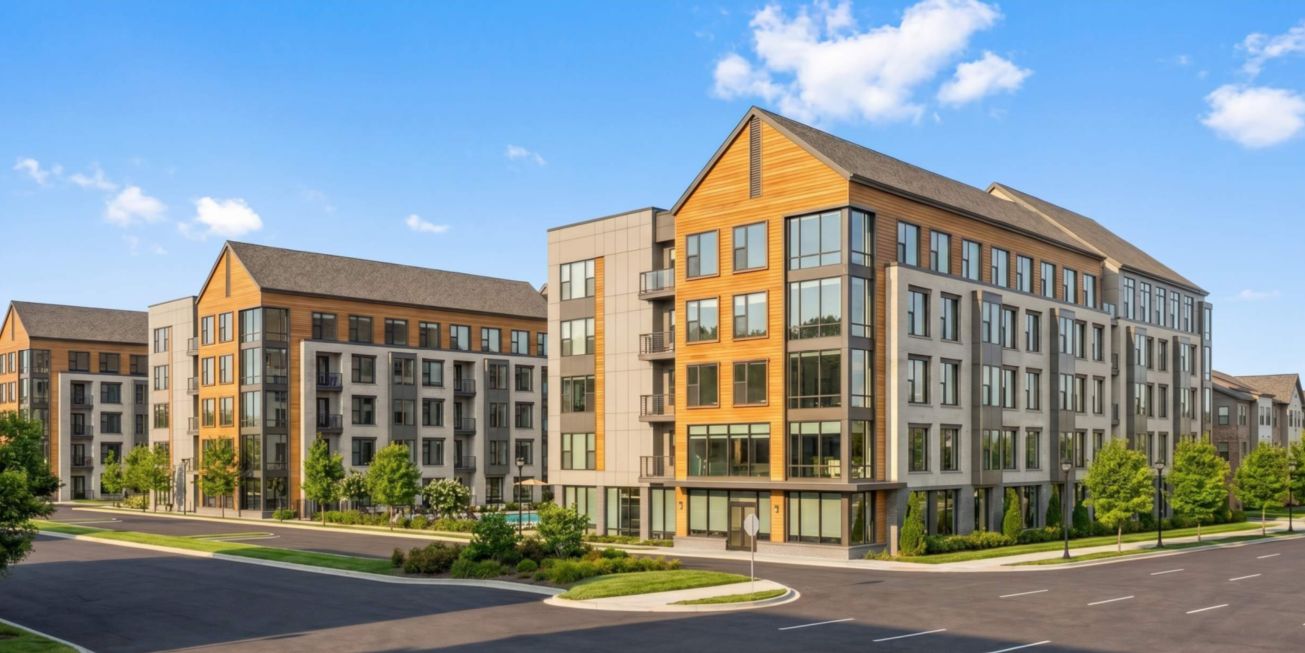
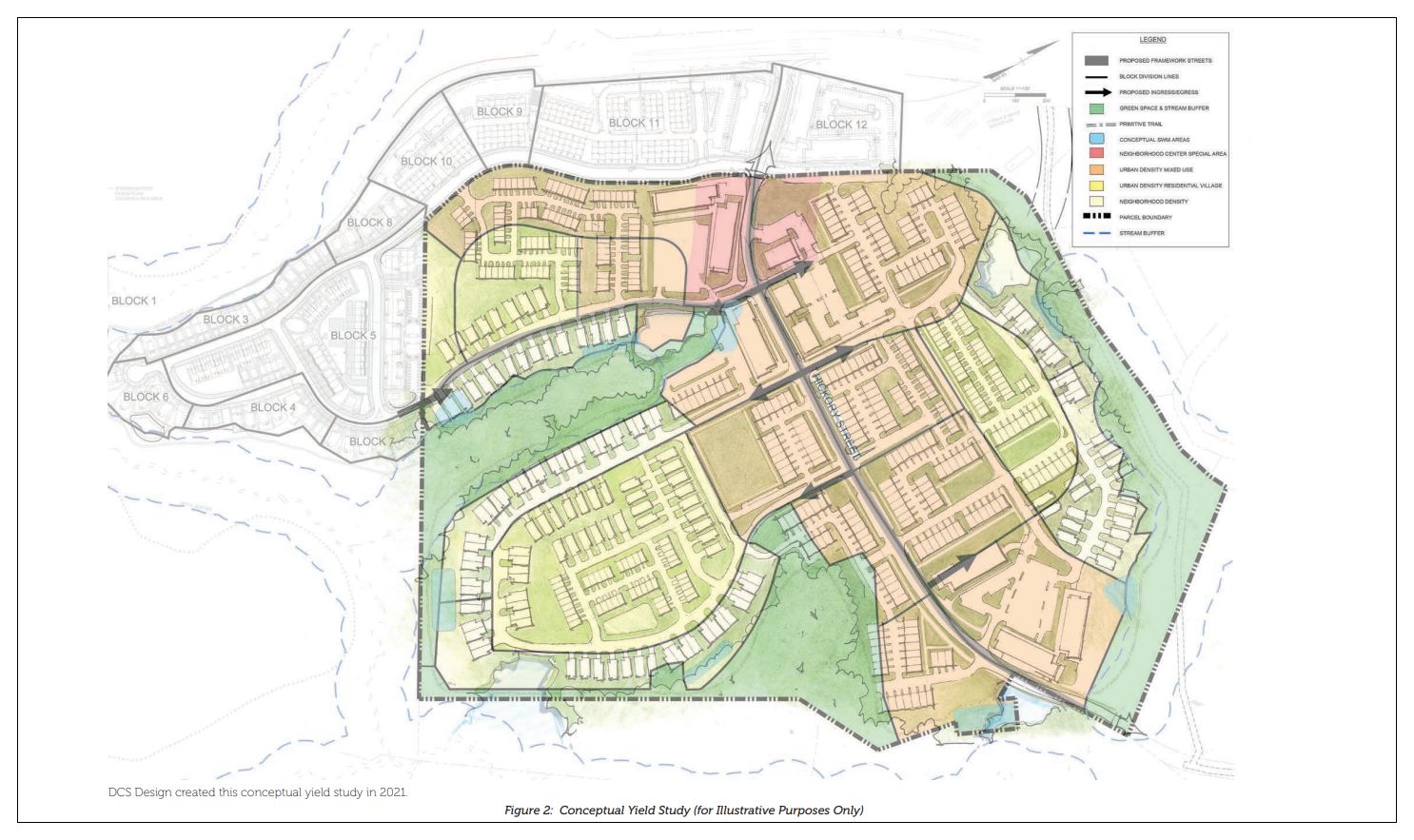
“Habitat for Humanity purchased the 100-acre Southwood neighborhood Property in 2007,” said Kaki Dimock, Albemarle County’s Chief of Human Services. “In an effort to prevent a mass tenant displacement, Habitat organized a resident-led initiative to build plans for an inclusive mixed-income development with a range of housing types and neighborhood amenities, including community gathering places, supports for small business operations, parks, and playing fields.”
The performance agreement itself was not available for review in the agenda packet.
Resources:
- June 19, 2019 performance agreement for phase one
- Code of Development for Southwood Phase Two
- Resolution authoring signature
On July 1, 2019, the Albemarle County Economic Development Authority and Habitat entered into a performance agreement for the first phase of the project which involved land outside the traditional footprint of the mobile home park. According to the county’s Development Dashboard, 335 of the 450 residential units have been constructed as of April 1, 2026.
The Board of Supervisors approved a rezoning for the second phase in November 2022 for another 1,000 units in a mix housing types including single-family homes. The financing package calls for more incremental tax financing.
“The maximum amount of financial incentives attached to the performance agreement is $15.75 million spread out over 20 years,” said Jacob Sumner, the county’s chief financial officer. “The funding for the incentive will be derived from the incremental increase in the real estate property tax generated from Phase 2 of their project.”
In exchange, Habitat and its partners must provide 227 affordable units at below 80 percent of the area median income. Rental units would have to be guaranteed to remain at that level for 30 years and at 40 years for units designated for homeownership.
“Habitat would need to provide a plan ensuring income diversity and community integration within their development along the way,” Sumner said. “Habitat has shown an interest in developing a community center within Phase 2 and could be contingent upon access to outside funding availability.”
Habitat will also have to provide all of the infrastructure and submit reports on a biannual basis. The money would be paid out twice a year. So far, Dimock said the county is satisfied with the reporting that has been done for Phase 1.
“The county has received all of the required reporting around displacement and status of Phase 1 sufficient to satisfy by the distribution of the funds, both the granting funds and the real estate tax-based ones,” Dimock said.
Dimock made that remark after two former members of the Planning Commission urged the county to get more details on how much real property tax revenue would be generated. First was Rick Randolph, who also represented the Scottsville District on the Board of Supervisors from 2016 to 2019.
“As real estate turns over in Southwood, and as market appreciation occurs for the market value homes there, has the board seen projections of the amount of the captured property tax revenue that will accumulate in a county account and is then available to be plowed back into Southwood to help pay for public improvements, site cleanup, utilities, and roads, et cetera?” Randolph asked. “Does the public deserve to see this projection?”
Sumner said the first performance agreement is set up to initially provide 100 percent of the incremental value and then the ratio reduces over the 20 year period.
Randolph’s term as a Supervisor was book-ended by stints on the Planning Commission. His appointee was Pam Riley who wanted more details on displacement.
“Because some of the Planning Commission and the Board of Supervisors had grave concerns about potential displacement of the residents, the Board of Supervisors required Habitat to develop a non-displacement plan and to report on any Relocation or displacement of the residents,” Riley said. “Did the Board of Supervisors receive written reports on resident relocation and displacement during the past 7 years? Have you all been given written information about where the legacy residents are today as part of your review for the funding for Phase 2?”
Riley said the information should be public under the federal Uniform Relocation Assistance and Real Property Acquisition Policies Act (URA).
Dan Rosensweig, President and CEO of Habitat, said the reporting does contain information about families that have been rehoused at Southwood. He said there have been no involuntary displacements.
“In Phase 1, which is 19 percent of the land mass, we have rehoused 89 families from Southwood, or 29 percent of the families who were originally living there,” Rosensweig said. “And so we keep track of that as we move through the project. We always want to make sure that there’s less land use than there is, or there’s more capacity to rehouse people as we go through the process.”
Rosensweig said some residents in Phase 2 have been rehoused due to the failure of their septic systems, an issue being addressed in part by a $2 million grant Albemarle County received from the federal government. He said right now the overall number of families who have decided to stay when it came time for their section to be redeveloped is 85 percent, a number way above the norm.
“That means that 85 percent of the people who were legacy residents of the park who, when it came time for their segment of the park to be redeveloped, they’ve elected to stay and they’re, they’re staying,” Rosensweig said. “Fifteen percent of the people have left for various reasons. Some people just move, right? But we’ve documented all of that.”
Rosensweig added Habitat has and will help with rehousing costs for those who opt to leave.
After a discussion, Supervisors voted 6 to 0 to authorization to Richardson to sign the agreement in the future.
Before you go: The goal of Town Crier Productions is to increase awareness about what is happening at the local, regional, state, and federal government levels. Please share the work with others if you want people to know things. Paid subscribers cover the cost of conducting research for this article which was originally published in the September 3, 2026 edition of Charlottesville Community Engagement. You can either subscribe through Substack or make a charitable contribution.
Discover more from Information Charlottesville
Subscribe to get the latest posts sent to your email.