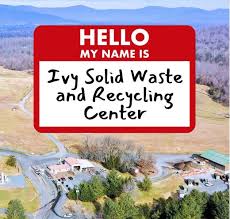
The main transfer station operated by the Rivanna Solid Waste Authority is on track to have its busiest year to date. That’s according to the entity’s executive director.
“We had 263 tons per day on average in August, which was a 12 percent increase over the same month last calendar year,” said Bill Mawyer at the RSWA’s meeting on September 22, 2026.
On one of the days, August 18, the RWSA had to close early because that day’s volume approached the state daily limit of 450 tons.
Every single month this year has seen an increase in use of the Ivy Creek Solid Waste and Recycling Center. Will that hold up for September? The 2025 average daily tonnage for that month was 307.18 tons.

Recycling centers operated by RSWA are also seeing more usage. Recent surveys put the 2026 figure at an average of 3,049 people using the McIntire Recycling Center up from 2,148 in 2018. The Southern Albemarle Convenience Center had a seven-day-average of 180 users in 2023 and that has increased to 374 in 2026.
“At the Ivy Convenience Center, it’s been about the same over the last 6 years with 575 in 2021 and 574 customers per week over that 6-year period,” Mawyer said. ‘
This year, the RSWA has begun accepting used lithium-based batteries when they are no longer able to charge. The agency is paying an Abingdon firm called Arcwood Environmental to dispose of batteries collected at the Ivy Solid Waste and Recycling Center. These must be kept separated from the rest of the waste stream.
“If you recall, we had a fire in the transfer station which we think was from batteries, and we had several fires in the transfer for trailers going down I-64 and caught on fire, and our vendors, you know, were very unhappy that their trailers were being damaged,” Mawyer said.
The cost for the first month of service was $2,150. The batteries being recycled are under RWSA’s Hazardous Household Waste Program and at some point the needs of commercial users will need to be addressed.
The RSWA Board also got an update on this year’s special collections from Phil McKalips, the agency’s solid waste director. These take place twice a year.
“In October of 1999, we began doing special collections as far as I’ve been able to go back through board reports and determine,” McKalips said. “Originally, they were focused on litter prevention, ways to get couches and tires and things from being disposed of along the roads. Later on, household hazardous waste collections were started at first on an annual basis, and then after about 2 or 3 years, they became semiannual back in 2011.”
The RSWA began collecting paint every day in 2016 because that offering was very popular and was leading to traffic back-ups on the special days. In September 2019, the agency began an e-waste program. This year there were 480 slots but only 350 or so actually showed up.

This weekend is for furniture and the website states that “recliners, sofas, loveseats, tables, chairs, bedframes, dressers, entertainment centers, mattresses, nightstands, coffee tables, and more” can be dropped off between 8:30 a.m. and 4 p.m. at the center. Staff is not able to assist with unloading so participants are asked to bring help.
The special collection for appliances is on October 3 and you can find more information here.
“One of the things to mention that we’re doing here is recovering freon,” McKalips said. “So that’s a big part of what comes in, are Freon appliances. I would say that’s between 25 percent to 30 percent of what comes in the doors during our appliance events are items where we have to recover the freon.”
The final event of the fall season is for tires on October 10 and there is a limit of a dozen per participant with no commercial businesses allowed.
McKalips said the overall cost of the special collections, including lithium batteries, is about $225,000 a year.
Before you go: The goal of Town Crier Productions is to increase awareness about what is happening at the local, regional, state, and federal government levels. Please share the work with others if you want people to know things.
Paid subscribers cover the cost of conducting research for this article which was originally published in the September 25, 2026 edition of Charlottesville Community Engagement. You can either subscribe through Substack or make a charitable contribution.
Discover more from Information Charlottesville
Subscribe to get the latest posts sent to your email.