Early voting is underway in Virginia which means tens of thousands of people across the Commonwealth have weighed in on referenda on whether the local sales tax should be increased to raise additional funds for school construction.
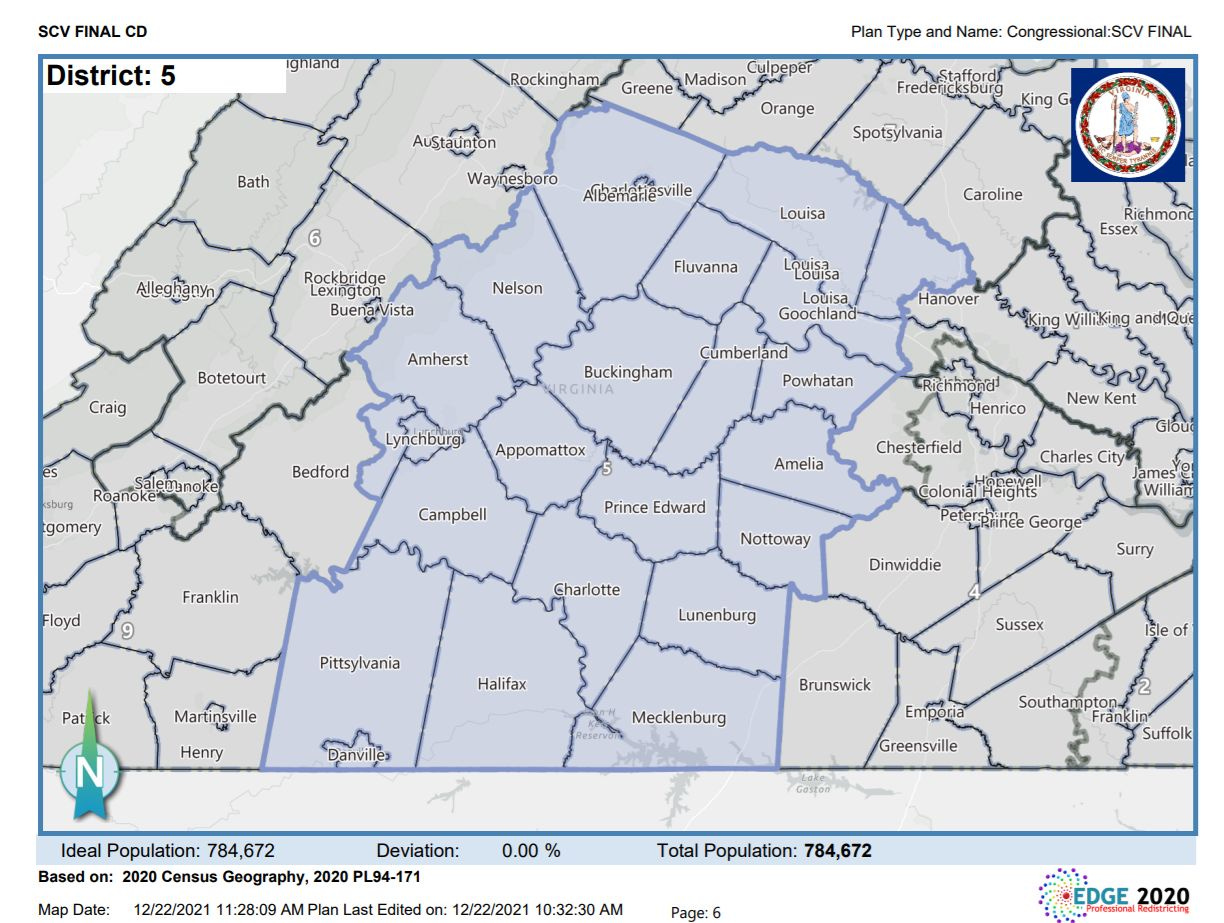
According to a count from the Virginia Public Access Project, 147,630 people have cast ballots through this September 25 at 5:30 a.m. That includes just over 16,500 people in the 5th Congressional District.
Five out of six localities in the Thomas Jefferson Planning District Commission have chosen to put that question to voters. The Louisa County Board of Supervisors will skip this year and did not even discuss the matter in public
The wording is slightly different in each locality as can be seen on the Virginia Department of Elections’ list of local referenda. Spot the differences?
“Shall the County of Albemarle impose a one-percent (1%) sales and use tax to fund capital projects for the construction or renovation of schools, with revenues to be used solely for those purposes, and the tax to expire on June 30, 2046?”
“Shall the City of Charlottesville, Virginia be authorized to levy a local general retail sales tax at a rate not to exceed one percent (1%), the revenues of which shall be used solely for capital projects for the construction or renovation of public schools serving the City of Charlottesville, and which shall expire on June 30, 2046?”
“Shall Fluvanna County be authorized to levy a general retail sales tax at a rate not to exceed 1% to provide revenue solely for capital projects for the construction or major renovation of schools serving the county? Should this referendum be approved authorizing the levy of such tax, the tax would expire no later than June 30, 2046.”
“Shall Greene County, Virginia be authorized to levy a general retail sales tax at a rate not to exceed one percent, with the revenues to be used solely for capital projects for new construction or major renovation of schools serving Greene County, Virginia, including related bond and loan financing costs, and with the tax expiring on June 30, 2046?”
“Shall Nelson County, Virginia be authorized to levy a general retail sales tax at a rate not to exceed one percent, with the revenues to be used solely for capital projects for new construction or major renovation of schools serving Nelson County, Virginia, including related bond and loan financing costs, and with the tax expiring on July 14, 2046?”
Resources for the rest of the story:
- Staff report for August 12, 2026 discussion
- School Facilities in the City of Charlottesville
- Watch the August 12, 2026 meeting
When the Charlottesville School Board met with the City Council on August 12, one of the topics was what approach the city might take if voters approve the additional funding mechanism.
They got a presentation on the state of school facilities from Kim Powell, chief operations officer for Charlottesville City Schools.
“The age of most of our schools demonstrates that Charlottesville does capital maintenance and does it really pretty well,” Powell said. “In fact, our oldest schools do not have the greatest need for improvement. Our schools that were designed in the ‘60s are, in fact, the most out of alignment with current education expectations and best practices and even basic standards in some cases.

Powell said there was a very long gap in which city schools focused exclusively on maintenance rather than new construction. That changed in the mid-2010’s when a new focus was put on modernizing elementary schools during summer breaks, budgeting about $1 million for each project. In 2025, the bathrooms at Charlottesville High School got an update.
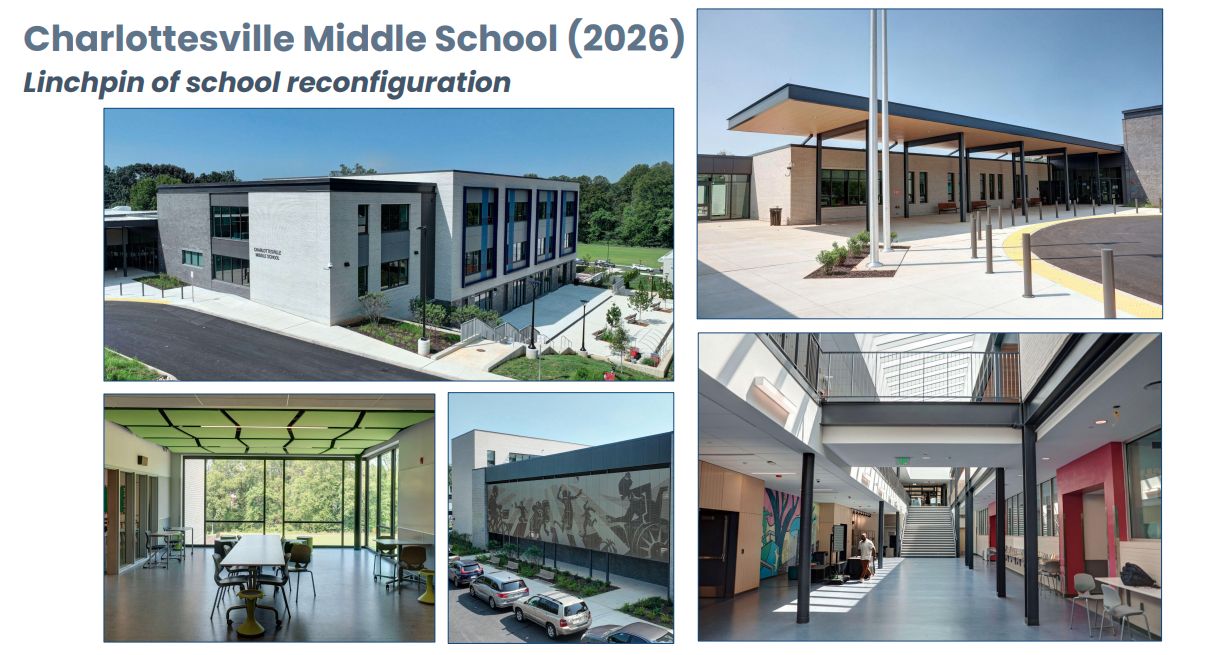
The biggest investment in a generation has gone toward the renovation and expansion of Buford Middle School into the new Charlottesville Middle School which has added sixth grade for the first time in decades.
“This campus truly went from worst to first, if you will. It represents new opportunities for our students, a great asset for the community, and a much improved environment for everyone who works and learns in these spaces,” Powell said.
The opening of Charlottesville Middle School brings the average age of city schools to 59.56, down from 63.67. School officials then went on to describe some of the deficiencies in existing facilities and how space limitations are preventing Charlottesville High School from offering courses ranging from biotech foundations to HVAC and Plumbing.
“Before we can even consider whether we would even introduce the idea of having these classes to our students, we know that it’s not even possible,” said Superintendent Royal Gurley. “We know that it’s not even possible for us to have these conversations because the space does not exist.”

Gurley said not building more space creates barriers for students. As far as the referendum, he said his administration wants to remind people of the school’s needs but said he did not want to distract people with the specifics of how additional funds would be spent.
Councilors were in agreement that specific decisions on how the money would be spent would come after the results are known.
“I think the 3 projects come after the yes,” said Councilor Natalie Oschrin. “We get people to yes with the, here’s all of the things that could happen. We know we have to do them, get to the yes, and then we work on solidifying the priorities.”
The official communication from Charlottesville City Schools on the referendum suggests several priority areas for where spending might go. Take a look there.
Meanwhile in Albemarle
At its meeting on September 2, the Albemarle Board of Supervisors had a brief discussion of how the county could communicate about the referendum. County Attorney Andy Herrick explained the constraints under Virginia code.
“It allows an explanation of a referendum that would include the ballot question and a statement describing the referendum,” Herrick said. “It has to be a neutral factual explanation. It must remain unbiased, be in plain English with a maximum of 500 words. It may not advocate for or against referendum passage.”
Albemarle County’s Communications and Public Engagement office launched a campaign on September 4 to publicize the referendum.
“We’re really focusing on a broad education-based campaign. It’ll include a web platform or webpage, and that’s really going to be the source of all of this information so people can find it, particularly all those Google searches,” said Abbey Stumpf, the CAPE director.
Visit the county’s website for more information.
Before you go: The goal of Town Crier Productions is to increase awareness about what is happening at the local, regional, state, and federal government levels. Please share the work with others if you want people to know things.
Paid subscribers cover the cost of conducting research for this article which was originally published in the September 23, 2026 edition of Charlottesville Community Engagement. You can either subscribe through Substack or make a charitable contribution.
Discover more from Information Charlottesville
Subscribe to get the latest posts sent to your email.