So far, the Albemarle Board of Supervisors has held two work sessions going through the $742 million budget for FY27 recommended by County Executive Jeffrey Richardson in late February. Two more are scheduled next week with a fifth as an option later in the month.
On March 4, the Board held the first of two public hearings with this one intended to get community feedback on Richardson’s version of the budget. The second will be held on April 15 after Supervisors shape the budget during a series of work sessions.

A theme for the night was set with the first speaker from the advocacy group IMPACT who called for Albemarle to increase the amount of funding that goes into a housing fund to assist with renovation and construction of subsidized units.
“In addition to being here with IMPACT, I’m a member of the Society of St. Vincent de Paul,” said board member Denise Zito. “This is a 200 year old worldwide Catholic organization that, that gives direct assistance to those in need. The Society of St. Vincent de Paul joins IMPACT in urging you to finally fully fund the Affordable Trust Fund. Affordable Housing Trust Fund with a recurring $10 million annually.”
Last year, Supervisors agreed to a real property tax rate increase of four cents that dedicated four-tenths of a penny to the housing fund. That would generate $1,333,144 in FY27. A reserve of $5 million of money not yet spent would be reappropriated to FY27.
Vicki Bravo also represented IMPACT and thanked Supervisors for establishing an ongoing revenue source. However, she said it would not be enough.
“As Albemarle county grows business, we must have the housing to support it for all the necessary levels of workforce,” Bravo said. “We’re already behind.”
Michael Monaco of the White Hall District also said $1.3 million in dedicated funding is not enough and he advocated for an additional one cent property tax rate increase to go into the fund.
“I believe that a $0.01 increase this year would come out to a little over 3.3 million in revenue, which would bring the overall total when you include the projected carryover from FY26 to about 9.7 million in FY27,” Monaco said. “That $0.01 increase for the median homeowner in Albemarle county would cost them $4 a month.”
Peggy Gilges of the Jack Jouett District called upon the county to create an office of sustainability like the one in Charlottesville. She said she is concerned that Albemarle is putting more emphasis on economic development than on conservation .
“I don’t think I’m alone in worrying that the population growth that economic development brings affects our sustainability, environmental impacts, and big infrastructure expenditures come with growth,” Gilges said.
Gilges specifically called for renewed funding in the county’s program to help property owners with lower incomes put their land under easement to prevent it being sold for new housing. The Acquisition of Conservation Easement program is no longer regularly funded and has a balance of $50,619 in the capital improvement plan.

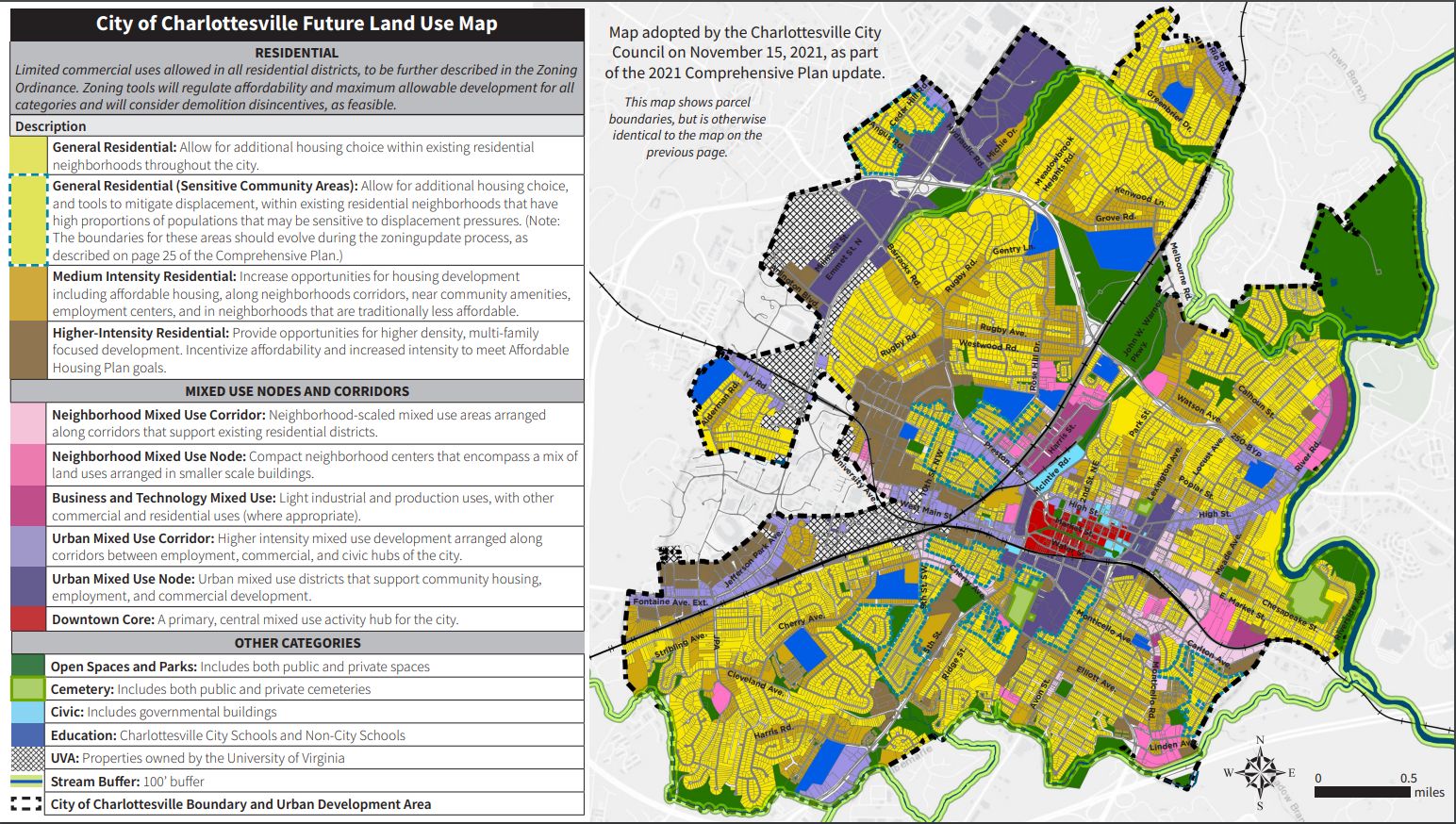
The FY27 budget includes over $21 million that must be paid to Charlottesville due to a revenue-sharing agreement signed in 1982 to stop the city from annexing land in Albemarle County. A moratorium stopping the practice across the Commonwealth went into effect the next year.
Jack Jouett District Resident Richard Fox called on Supervisors to try to amend the agreement to receive some of the funding.
“We could help the housing budget,” Fox said. “We could help the health and welfare budget. We could avoid tax increases in the future… We have an agreement we have to follow to a certain extent, but we should at least be willing to have a conversation and an open mind about what we could possibly do to renegotiate.”
Phil Riese, the new chair of the Albemarle County Republican Committee, urged the county to play tough with the City of Charlottesville.
“Consider putting the money in an escrow account,” Riese said. “Let the city take us to court. Force the city to come to the negotiating table. Demand that delegate annual offers. Sponsor legislation that would null any of the revenue share agreements whenever the annexing of land is under a moratorium.”
After the public hearing, Supervisor Michael Pruitt of the Scottsville District said he would prefer if Albemarle was not involved in the revenue sharing agreement but said there were few options including a legislative approach.
“Any legislation would almost certainly not be able to retroactively affect a contract that’s already been agreed to,” Pruitt said. “The only way to get out of it is going to be political. It’s going to be by playing nice. And it will be challenging.”
Supervisor Sally Duncan of the Jack Jouett District said she would also like to see the agreement renegotiated.
“Our counterparts in the city are reasonable people, some of us are friends with them,” Duncan said. “I don’t think it necessarily has to be a contentious discussion, but I do think it maybe eventually is worth raising.”
Duncan said she would be in favor of the one cent real property rate increase Monaco had suggested.
A next step for the budget is for Supervisors to set the tax rates to go to public hearing, including the real property tax rate. That will take place at the fourth budget work session on March 18.
Further resources for your education:
- Presentation on FY27 budget for March 4, 2026 public hearing
- The 350 page recommended budget for FY27 in Albemarle County
Before you go: The goal of Town Crier Productions is to increase awareness about what is happening at the local, regional, state, and federal government levels. Please share the work with others if you want people to know things. Paid subscribers cover the cost of conducting research for this article which was originally published in the March 12, 2026 edition of Charlottesville Community Engagement. You can either subscribe through Substack or make a charitable contribution.
Discover more from Information Charlottesville
Subscribe to get the latest posts sent to your email.