The budget development cycle never quite ends in a locality with over 115,000 people. The Albemarle Board of Supervisors adopts an annual revenue and spending document each May after a review process that begins soon afterward.
On November 20, Supervisors had a work session on the five-year financial plan.
“Long range financial planning brings together three major components of the County budget: the School Division, General Government, and the Capital Improvement Plan and includes long-range revenue forecasts,” reads an overview on the Albemarle website. “This long-range planning effort guides the development of the annual budget.”
One way the staff keeps track of meeting performance goals is through reporting on the strategic plan adopted by the Board. Supervisors got a briefing on Strategic Plan Execution Analysis and Reporting in September.
“I highlight this because we’ve been very intentional in the last two years since the Board adopted a strategic plan to tie the budget and the long range plans and the strategic plan together very tightly,” said Andy Bowman, the Assistant Chief Financial Officer for Albemarle County.
A budget depends on the priorities of elected officials and the needs of other stakeholders, such as the Albemarle School Board. Supervisors will have a joint meeting with that elected body on December 4. Bowman said that will give a sense of capital needs which will inform the county’s budget.
Supervisors’ direct involvement with the budget each year begins with a five-year forecast. Bowman said this approach has helped the county in the past.
“I recall several years ago when we were in a five year plan session, the board really had a lot of discussion around revenue diversification,” Bowman said. “And that led when the state authority changed around food and beverage and transient occupancy taxes, the board was well positioned to take action in response to those.”

In May, Supervisors adopted a general fund budget of $437,974,231 for the current fiscal year. Bowman said it is too early to have an exact number for revenues for FY26 but the five-year financial planning and strategic planning framework can give an early glimpse into what shortfalls may occur in the future.
For instance, federal funding to hire dozens of new firefighters and rescue personnel will go away in 2029 as grants run out. That means Albemarle will have to pick up the tab.
“Several years ago when we went into this, we knew with our five year financial planning that as we reached fiscal years 26 and 27, we would feel the financial obligations begin to be a reality for Albemarle County,” said County Executive Jeffrey Richardson.
Richardson said public safety is an area that will need more funding in the immediate future.
For now, Bowman said Albemarle’s economy continues to perform well but an October presentation from Virginia Tech economist Sheryl Bailey did sound off one warning.
“The threat of a recession is not as great right now as it had looked perhaps one year ago and two years ago,” Bowman said. “And while there may not be a recession, Dr. Bailey did recommend it’s prudent for us to plan for some cooling that will show up in late 24 to 25 followed by moderate growth.”
Bowman said revenues received so far for FY25 so far are on track to hit their budgetary targets.
County Executive Jeffrey Richardson focused on three strategic plan goals to describe how Albemarle is investing. One of them is “safety and well-being” which includes funding for the court system and the Albemarle Charlottesville Regional Jail.
“These are renovations just to bring the jail up to a basic minimum of acceptable design and operational capacity,” Richardson said. “New courts, basically the same thing as with jails. This is modernising and bringing these courts, with the help of and partnership of the city, to a basic level of functionality to be able to deal with today’s demands.”
Richardson said under “education and learning” the county is building two new elementary schools and a second high school center. New construction has not happened for years as the county continued a series of expansions.
Under “workforce and customer service” the county executive explained there has been an ongoing need to pay Albemarle employees.
“Two years ago you supported modernization of the classification and pay plan for the balance of the organisation and you received a report last month from our human resources department on how we’re doing in a number of areas with key metrics,” Richardson said.
However such investments also create more obligations over time, projecting an increasing need for revenue. Throughout the course of the presentation, Supervisors got a look at how Albemarle’s budget staff plans to cover the rising cost of local government. Some highlights:
- Employees of Albemarle County will soon be able to get some health care services done at an in-house clinic, a way that could bring down the overall costs to provide health care.
- A new system to monitor community development processes is expected to go live in January as part of the county’s “core systems modernization project”
- The General District Court is expected to open in FY26
- The Board of Supervisors will soon get an update on the MicroCAT program which has been partially supported with grant funding.
- Bowman gave an opening date of December 14 for the opening of the first phase of Biscuit Run Park
Kaki Dimock, the Chief Human Services Officer, gave an overview of affordable housing investments made in recent years. She began with some statistics indicating that many people struggle to pay for where they live.
“In March of this year the median home value was $522,000,” Dimock said. “Forty-four percent of renters in our communities spend more than 50 percent of their income on housing. That is severely housing burdened according to HUD’s definition. And 16 percent of homeowners spend more than 50 percent of their income on housing.”
Dimock said the Thomas Jefferson Planning District Commission is in the early stages of getting a new regional housing needs assessment and she is fearful the numbers will be even worse.
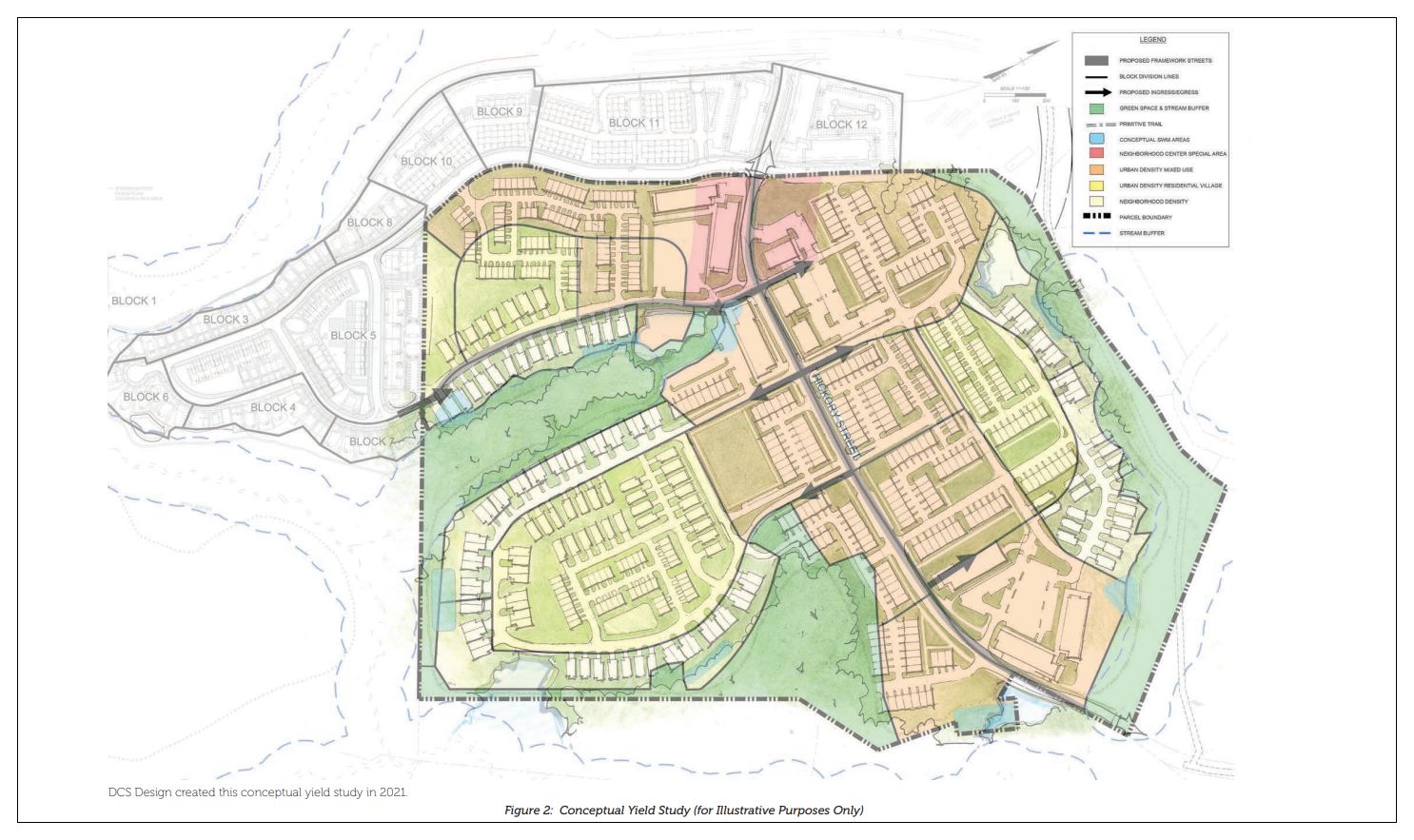
Albemarle has invested nearly $17.75 million in affordable housing projects in the past five years including Piedmont Housing Alliance’s Hickory Hope’s apartment complex and the Vista29 project that used to be called Premier Circle.
Dimock gave an overview of many of the tools at Albemarle’s disposal such as housing choice vouchers and project based vouchers.
“We provide down payment assistance,” Dimock said. “We have a housing development policy which focuses on density bonus and affordable housing thresholds. We have shelters that we support for people experiencing homelessness and domestic violence, provide emergency financial assistance, housing repair and preservation, primarily through contracts with [the Albemarle Housing Improvement Program.]”
Supervisor Ned Gallaway of the Rio District said budgets are a reflection of the priorities of elected officials, and he wants to make sure the county tackles housing affordability however it can. He noted that Dr. Bailey’s economic outlook had noted a decline in poverty, but he said that likely means people have just left.
“All six counties in the [Thomas Jefferson Planning District Commission] are over 400,000 right now in median housing sales price,” Gallaway said. “So we’re not just forcing people out of Albemarle, we’re forcing them out of our entire region. And we have two choices. We can accept that or we have to do something to offset that.”
Gallaway said the county should be investing in a housing trust fund that could produce its own revenues through interest. This would help provide funding to nonprofits building units that are rented or sold below the market rate.
Supervisor Ann Mallek of the White Hall District said she appreciated staff for being able to avoid surprises. One such surprise is a need to comply with a federal mandate that fire and rescue personnel provide more oversight of how they handle pharmaceuticals. She said this has thrown localities into disarray.
“Imagine the challenges that we’re facing,” Mallek said. “Take that down to a 5,000 person community who doesn’t have an extra 100 grand lying around to be able to do something that should never be happening to begin with.”
Supervisor Mike Pruitt of the Scottsville District said his main takeaway from the report is that the county would either need to increase the real property tax rate or reduce spending.
“That would be, frankly, very challenging to identify at the scale that would be needed to close the gap,” Pruitt said.
County Executive Jeffrey Richardson acknowledged there are some challenges facing Albemarle this year that haven’t been seen for a while but the county also does not have a complete picture of revenues for FY26.
“That will happen over the next 30 to 60 days where we get into some detail about what revenue assumptions, both through reassessment and natural growth, what that looks like,” Richardson said.
Pruitt said he did not think the report was grim, but it did indicate the cost of providing services such as reliable fire and rescue service.
“These are the costs that are reflective of living in a kind of high quality and outstanding community like we have that has fire service that is reliable throughout an entirely large county, throughout all our rural areas, which is not a thing that is guaranteed, which is not a thing that is legally required,” Pruitt said.
Pruitt also pointed out that better fire service can lead to lower insurance payments for homeowners.
Supervisor Ned Gallaway said he wanted more information on trends in local government spending.
“ I think that may be helpful for us to understand how expenditures work, how costs, I mean our services, what we’re paying for, how that changes over time,” Gallaway said.
The next step in the budget process was a meeting held on November 25 of the Audit Review Committee. Stay tuned for more stories.
Before you go: The time to write and research of this article is covered by paid subscribers to Charlottesville Community Engagement. In fact, this particular installment is from the November 25, 2024 edition of the newsletter. To ensure this research can be sustained, please consider becoming a paid subscriber or contributing monthly through Patreon.
Discover more from Information Charlottesville
Subscribe to get the latest posts sent to your email.