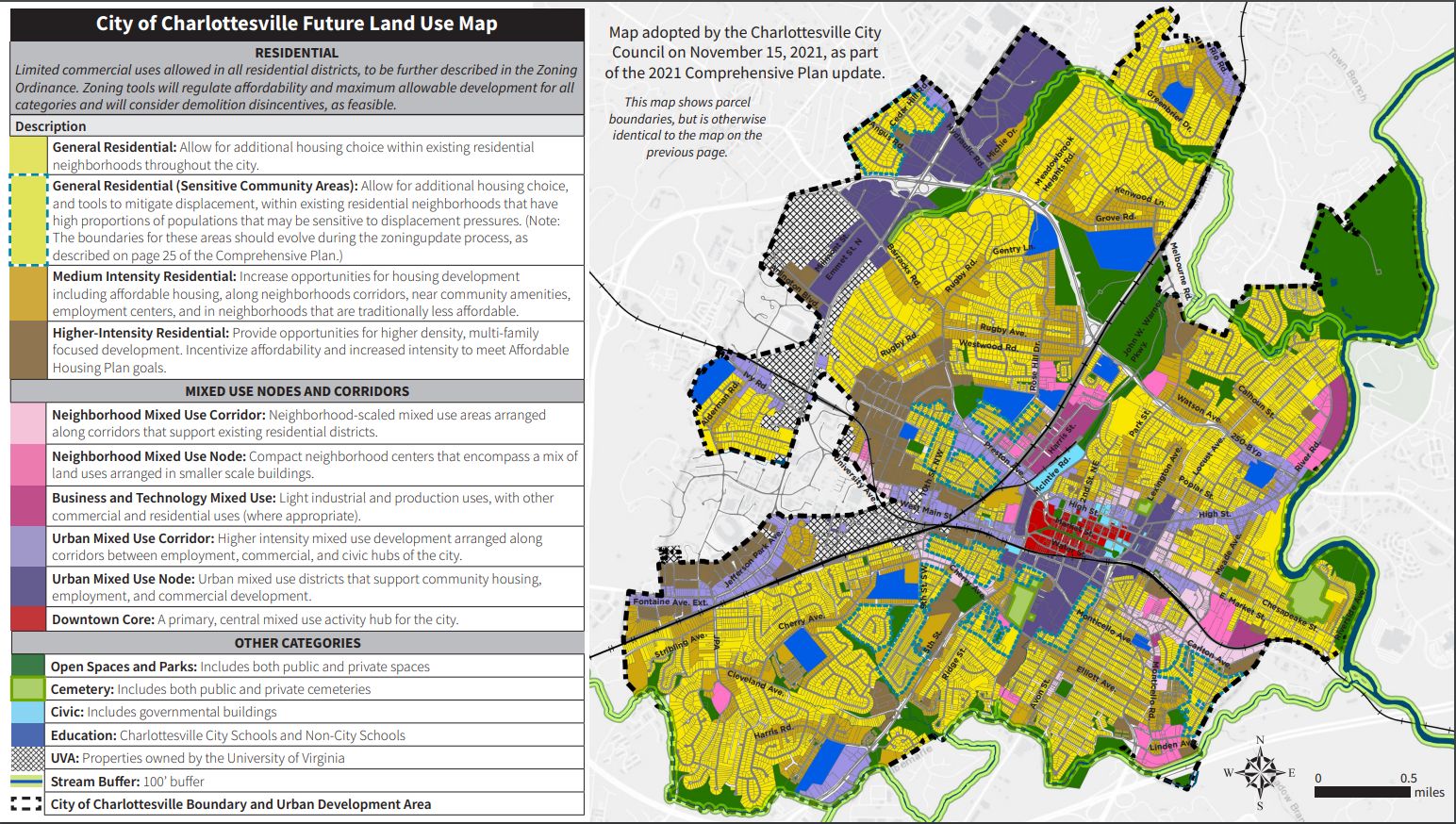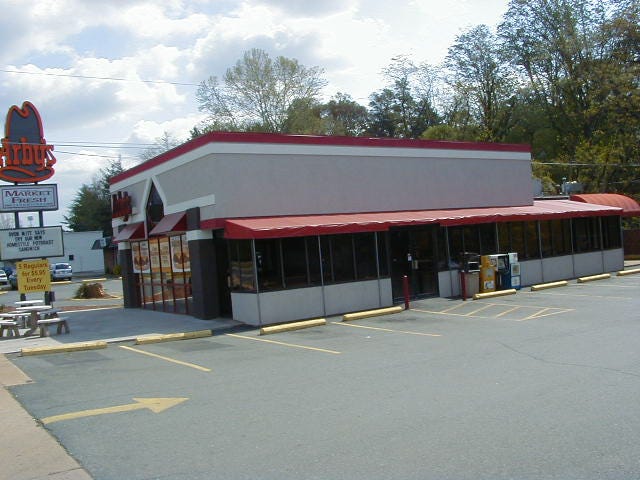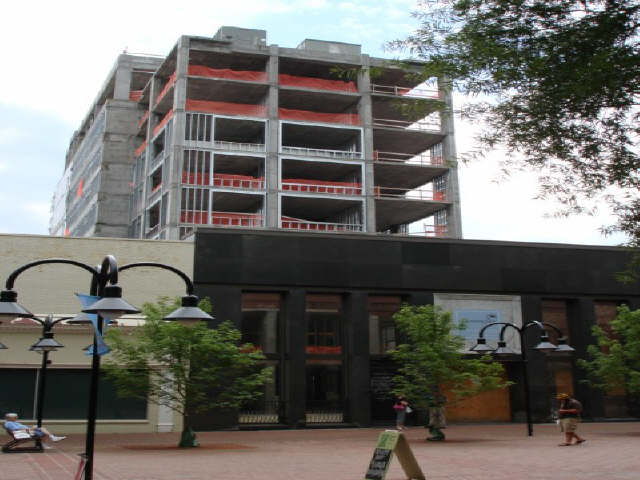
The case has a slight connection to the unfinished hotel
The owner of the unfinished and abandoned structure on Charlottesville’s Downtown Mall will get his day in the nation’s highest court to appeal a trademark violation that came with millions in damages.
Partially at issue is whether the failure of the entity formerly known as Dewberry Capital to complete the unfinished Landmark Hotel created enough of a negative image that it hurt the reputation of an engineering firm with the same name.
On Monday, the United States Supreme Court agreed to take up Dewberry Group Inc. v. Dewberry Engineers when the next term begins in the fall.
The Dewberry Group is a name that Atlanta-based John Dewberry now uses to describe his real estate companies across the eastern United States. This succeeds an earlier attempt to rebrand under multiple labels that fell afoul of a previous agreement with Dewberry Engineers, a Fairfax-based company formed in 1956 that operates in the same geographic space.
After previous disputes about who could use the name and where, the two parties entered into a confidential settlement in 2007 that broke down in the late 2010’s as Dewberry Capital sought to reband into multiple entities representing different sectors.
Dewberry Engineers sued the development group for breach of the settlement agreement because each branch carried their shared name in a way the Fairfax company did not approve. By this time, there had been substantial media reports that tied the name Dewberry to an unfinished structure on Charlottesville’s Downtown Mall
A federal judge in the Eastern District of Virginia sided with the engineers and ordered the Atlanta-based development company to pay $43 million in something called a “profit disgorgement award.”
The Fourth Circuit of Appeals upheld the case last August in a divided opinion that offers a history lesson of the relationship of the two companies.
“After the successful launch of The Dewberry® hotel in Charleston, South Carolina, John Dewberry decided to change the suffix ‘Capital’ to ‘Group,’ which would better align with the company’s expansion into providing services for hospitality properties,” reads page six of the opinion. (read the opinion)

Charlottesville connection
One of those properties is the unfinished Landmark Hotel at 201 E. Water Street on the Downtown Mall. Developer Dewberry bought the property at auction in August 2012 for $6.25 million under the entity Deerfield Square Associates II, LLC. The address listed in the city’s geographical information system database is the same Atlanta location where the Dewberry Capital Group is headquartered.
Even though construction stopped in late 2009, the property is still assessed at $8.9 million including $6.6 million for the concrete skeleton. There are no current building permits associated with the property which was wrapped with an artistic covering by the Friends of Downtown Charlottesville in February 2022.
The concept for the Landmark as a 100-room nine-story luxury hotel belongs to Halsey Minor, an entrepreneur who bought the property from developer Lee Danielson in August 2007 for $4.5 million. The two wound up in a legal battle over the project and Minor would eventually declare bankruptcy and put the project up to help raise funds to pay his settlements.
After Deerfield Square Associates took control of the property, the project continued to remain dormant until after Dewberry’s similar project in Charleston, South Carolina was completed in June 2016.
In March 2017, Council agreed to provide some assistance to the project. By the end of the year, Council voted 3-2 against a plan to provide tax rebates as long as the project was completed by September 2020. The Daily Progress reported in 2019 that the project would become luxury housing instead, citing links on a website that has since been deleted.
Around the same time, the United States Patent and Trademark Office prevented the developer from reserving the phrase “Dewberry Living.” The Fourth Circuit opinion makes note that the controversy over the hotel raised concerns.
“Dewberry Engineers also warned that Dewberry Group’s marks had already ‘caused confusion in both the Charlottesville[, Virginia] area and the Northern Virginia area.’” reads page nine of the opinion.
At issue in the Dewberry Group’s appeal to the U.S. Supreme Court is how the “profit disgorgement award” was calculated. According to the Legal Information Institute at Cornell Law School, “disgorgement is a remedy requiring a party who profits from illegal or wrongful acts to give up any profits they made as a result of that illegal or wrongful conduct.”
The use of trademarks is governed by the Lanham Act, which the Legal Information Institute tells us was adopted in 1946 to establish their use and governs what happens when they are violated.
The request for the U.S. Supreme Court to take up the case (a writ of certiorari) asks whether “distinct profits of legally separated non-party corporate affiliates” can be included in calculating the damages.
This article will be updated and expanded on Information Charlottesville with more details about the case.
Resources for further research into the case:
- Dewberry Group’s petition to the U.S. Supreme Court (February 16, 2024)
- Dewberry Engineers’ response (May 8, 2024)
- Dewberry Group’s reply (May 28, 2024)
- Learn more about the case on SCOTUSBlog
Before you go: The time to write and research of this article is covered by paid subscribers to Charlottesville Community Engagement. In fact, this particular installment is from the June 25, 2024 edition of the newsletter. To ensure this research can be sustained, please consider becoming a paid subscriber or contributing monthly through Patreon.
Discover more from Information Charlottesville
Subscribe to get the latest posts sent to your email.