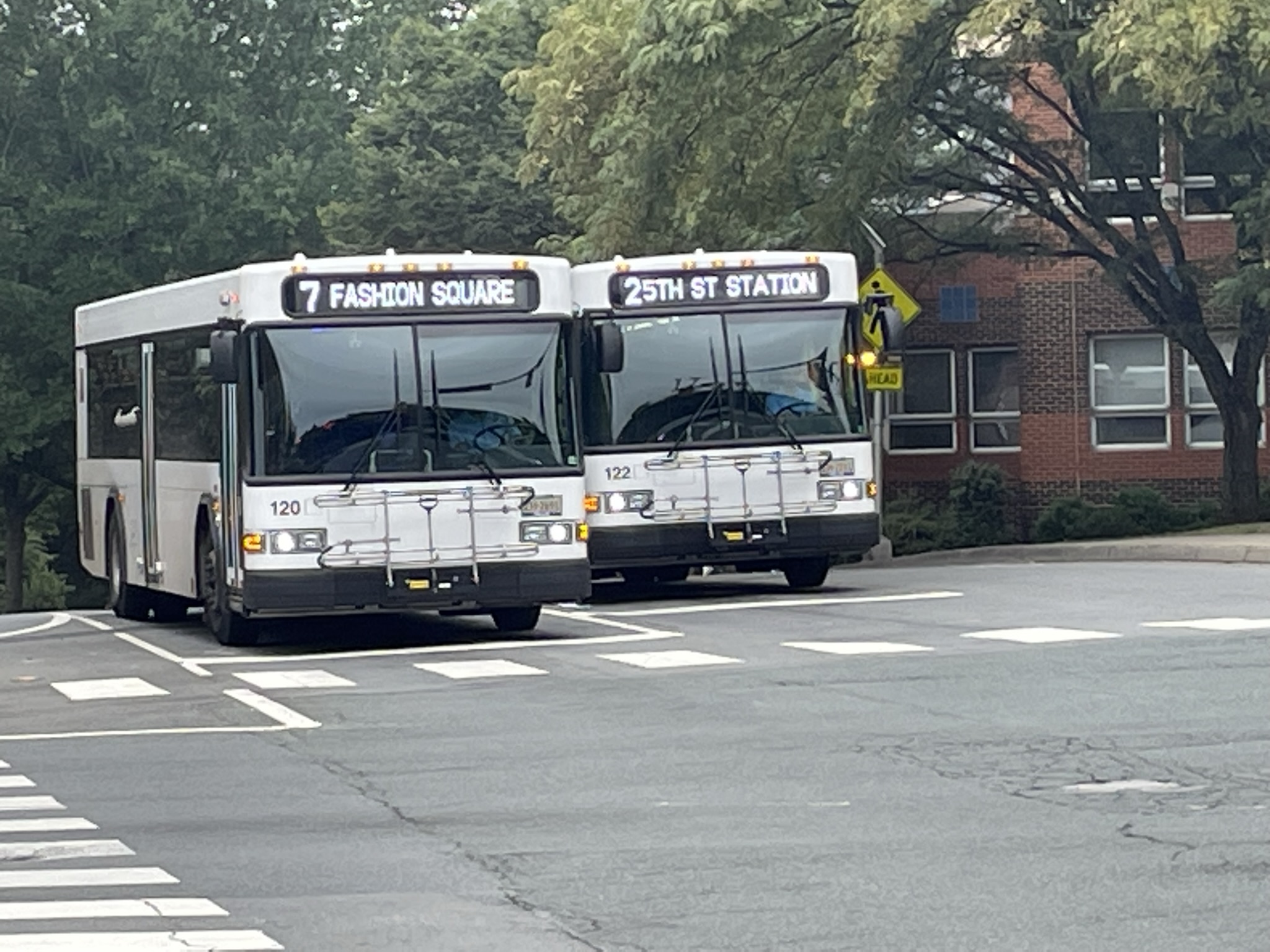
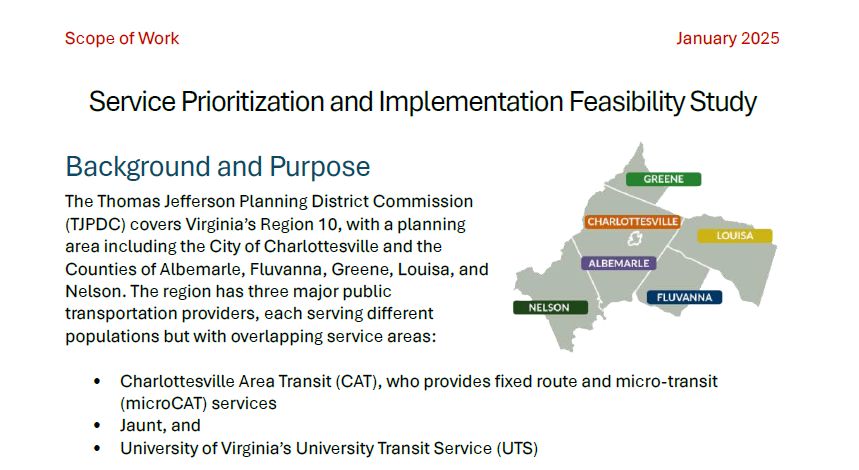
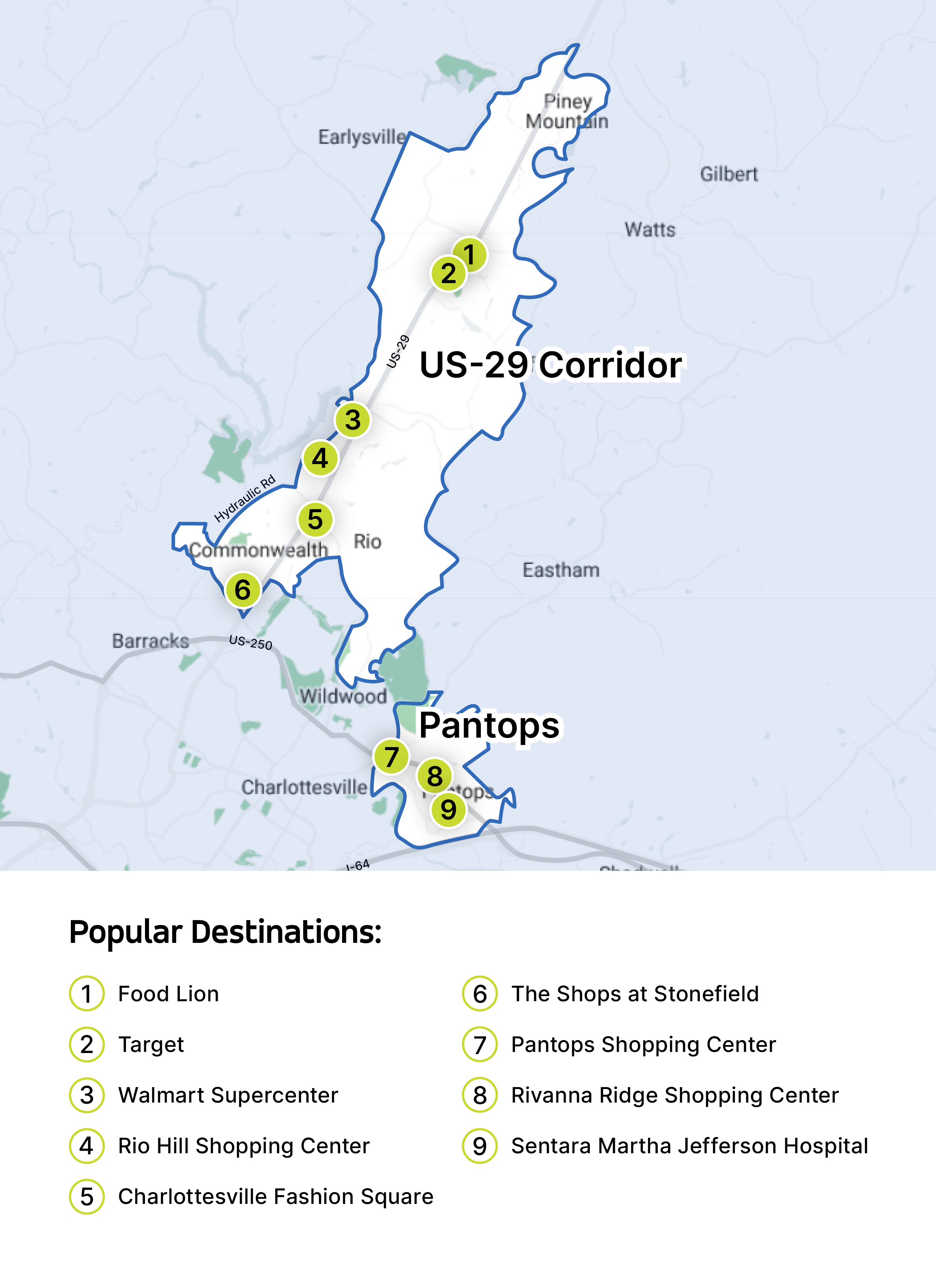
Staff at the Thomas Jefferson Planning District Commission have spent the last two years on two studies intended to investigate the possibility of enhanced public transit service in the region. Lucinda Shannon is a planner with the regional agency.
“The consultant is recommending that we form a regional transit authority,” Shannon said at the March 7, 2024 meeting of the TJPDC Board of Commissioners. “That would do regional transit planning. It would bring in additional transit revenue. And also decide how to spend that revenue. It would have governance over the funding and the planning and also provide oversight to ensure that the public money is being spent well and efficiently.”
The study also recommends a rural needs assessment and further collaboration with the University of Virginia which operates a bus system almost entirely separate from Charlottesville Area Transit. UVA is a member of the Regional Transit Partnership but has not committed to taking the next step and is not part of a work group that is drafting potential by-laws for an authority’s operations.
Staff at the TJPDC are continuing to work with Albemarle and Charlottesville on the next steps for the creation of an authority. Albemarle County Supervisor Ned Gallaway had this perspective.
“Charlottesville and UVA have functioning transit operations,” Gallaway said. “The urban ring of Albemarle County does not have a functional transit system.”
Gallaway said Albemarle sees the authority as a way of getting some say and control over a service they’re helping to pay for. County Executive Jeffrey Richardson has recommended a significant increase in transit funding in FY25 with the amount paid to Charlottesville Area Transit increasing 43 percent from $1.3 million this year to $1.86 million.
Albemarle is also increasing the amount it is spending on micro-transit from $450,000 in the current year to $1,741,887.
At their meeting on March 7, the TJPDC adopted a resolution accepting the final governance study and giving approval to staff to proceed with further work.
For more information, take a look at the final report.

Before you go: The time to write and research of this article is covered by paid subscribers to Charlottesville Community Engagement. In fact, this particular installment comes from the March 18, 2024 edition of the newsletter and podcast. To ensure this research can be sustained, please consider becoming a paid subscriber or contributing monthly through Patreon.
Discover more from Information Charlottesville
Subscribe to get the latest posts sent to your email.