The Weldon Cooper Center for Public Service at the University of Virginia projects that Albemarle will have a population of over 150,000 in the year 2050. How will people get around in that not-too-distant future?
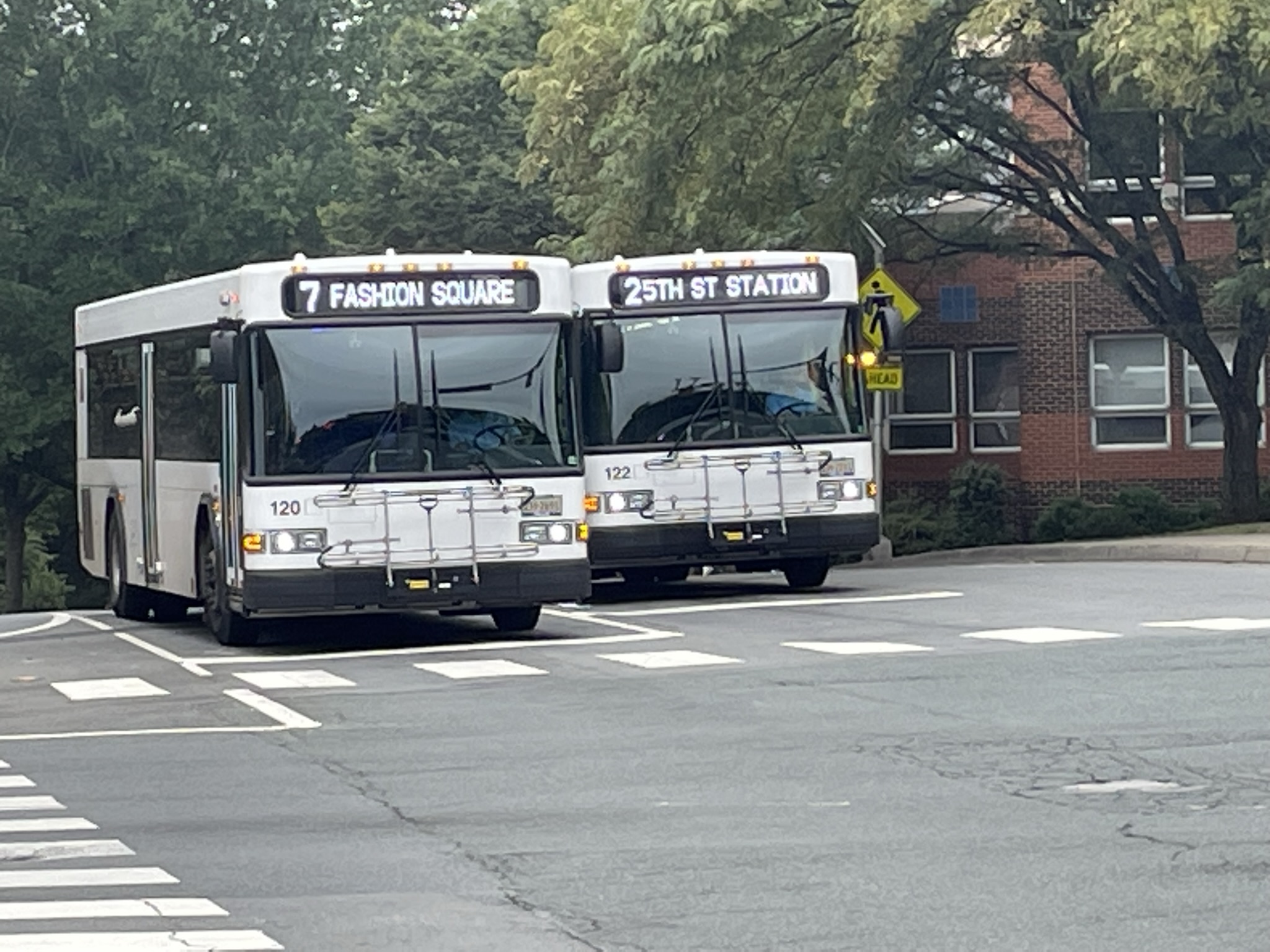
One way the county is preparing is increased investment in Charlottesville Area Transit for both fixed routes and the MicroCAT service. In the recently adopted budget for FY2027, Supervisors agreed to increase funding to CAT 21 percent for a total of $3,243,187. They’re also increasing the payment for MicroCAT 10.9 percent to $1,442,000.
Any growth in transit routes will take place at a time when both Albemarle and Charlottesville have created a new public body to find additional resources to expand service. At the March 24 meeting of the Charlottesville Albemarle Regional Transit Authority, CAT Director Garland Williams gave an overview of the organization’s past, present and future. (view the presentation)
“1975 started off as [Charlottesville Transit Service],” Williams said. “City took over the school bus system in 1985. 1999, the free trolley came. The connection between downtown and the university.”

In 2007, the city signed an agreement with University Transit Service to allow reciprocal ridership and numbers went up that year as I reported for Charlottesville Tomorrow. In 2010, the service was renamed Charlottesville Area Transit as I also wrote. In 2012, CAT set a ridership record of 2.6 million.
After routes changed in January 2014, ridership began a decline that continued until the pandemic when the system reduced service, eliminated Sunday routes, and went fare-free.
Williams was hired just before the pandemic. In FY20, ridership dropped to around 600,000 but has rebounded to 1,382,686 in FY2025.
“2023 introduced microtransit, one of the fastest growing microtransit products in the Commonwealth,” Williams said. “2024 we became unionized. So we are feeling the effects of that.”
Williams said two battery-electric vehicles will arrive later this year as part of a transition to alternate fuel sources. That fulfills one half of a pilot project Council agreed to in March 2024 to test battery-electric vehicles as well as one powered by hydrogen fuel cells. A delegation traveled to Champaign-Urbana, Illinois in May 2024 to inspect a fleet powered by that technology, which I reported in this newsletter.
But a key aspect of CAT’s future depends on the ability to hire an additional 42 drivers over the next three years. Williams told City Council in December that that’s what is necessary to be able to fully move forward with long-awaited route expansion and a return to Sunday service. He gave CARTA a snapshot as of March 24.
“We have 109 transit staff and 39 on the pupil side of the house,” Williams said. “Sixty-six full time drivers on transit, ten full time drivers on the pupil side.”
There are eleven routes as well as the trolley route. There was no update on the next phase of implementing the system optimization plan. You can see those details in CAT’s Transit Strategic Plan.
As for MicroCAT, the system delivered 24,593 rides between its launch in late October 2024 and February 20, 2026. There are an average of 3,000 requests each week and the system can fulfil about three quarters of them.
CAT also plans to build a new maintenance facility at a cost of $37.1 million, a new administrative facility at a cost of $35.6 million, and $14.7 million for a new facility to handle regional transit expansion.
There were few questions at the end of the presentation.

Before you go: The goal of Town Crier Productions is to increase awareness about what is happening at the local, regional, state, and federal government levels. Please share the work with others if you want people to know things. Paid subscribers cover the cost of conducting research for this article which was originally published in the April 28, 2026 edition of Charlottesville Community Engagement. You can either subscribe through Substack or make a charitable contribution.
Discover more from Information Charlottesville
Subscribe to get the latest posts sent to your email.