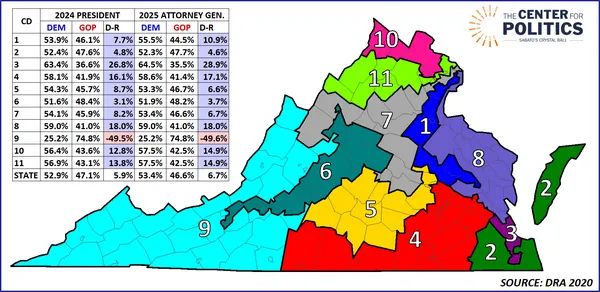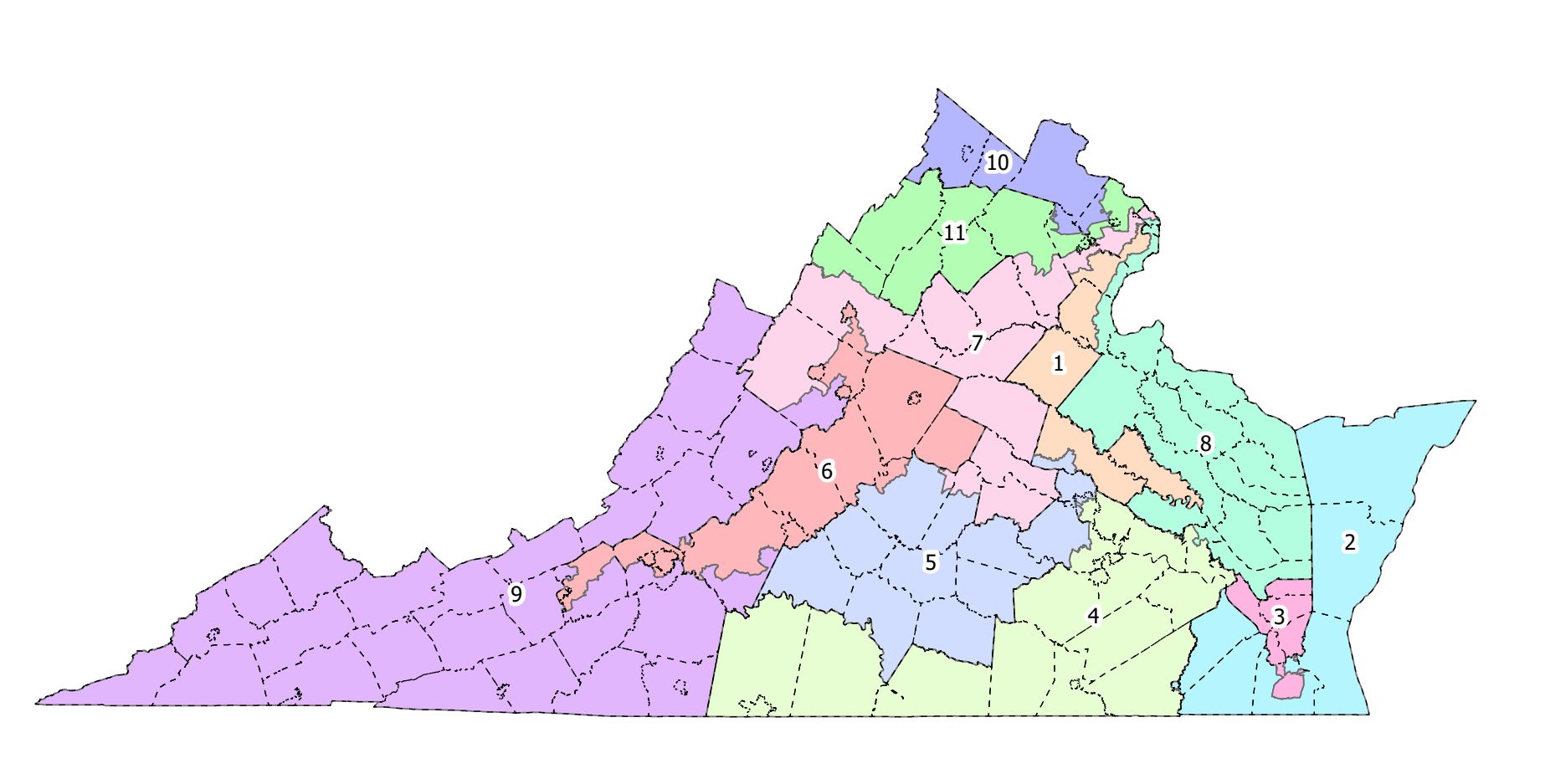
The Virginia Department of Elections currently reports a 51.65 percent majority of the “yes” vote in the April 21 referendum on whether the state’s Constitution should be changed to allow a mid-term redistricting. That will would the majority party in the General Assembly to redraw Congressional districts for the next three cycles.
Last October, Democrats in the House of Delegates and the Senate amended the rules of a special session to allow consideration of this question as a first reference. The Virginia Constitution requires amendments to pass in two consecutive sessions with a general election in the middle.

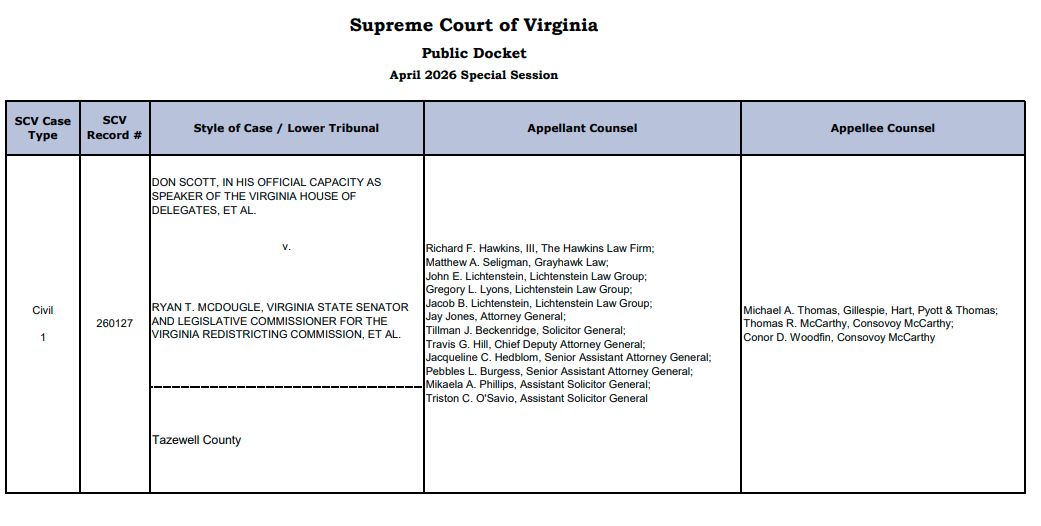
After legislation passed in January setting up the April 21 vote, Republican Senator Ryan McDougle filed a suit in Tazewell County Circuit Court that argued the Democratic majority broke the rules of the special session. The Republican National Committee later filed a suit challenging language in the ballot question.
In both cases, Judge Jack Hurley Jr. ruled in favor of granting injunctions to stop the vote but the Virginia Supreme Court allowed the election to be held but agreed to hear the case. Oral arguments were held today and began with comments from counsel representing appellants associated with the Democratic party.
“The people of the Commonwealth approved an amendment to the Virginia Constitution,’ said Matthew Seligman, an attorney based in California. “That approval was the final step in a clear and comprehensive process laid out in Article 12 of the Constitution. The General assembly and the people complied with every step of that process.”
Seligman argued that a state Supreme Court does not have the power to enforce alleged violations of legislative rules. At least two Justices appeared to push back and the topic of early voting came up. The first reference was approved after early voting had already begun after more than a million people had already voted.
Seligman said this was not an issue.
“I understand the concern that someone who cast their ballot before something happened might be upset or regret,” Seligman said. “And that is a problem that is endemic to early voting. That is a problem that someone accepts by taking advantage of the option of voting early. It’s worth pointing out that every single voter in the Commonwealth has the option to cast their ballot on Election Day.”
During the arguments from Republican counsel, one Justice asked for an update on other lawsuits that are seeking to invalidate the April 21 vote. Attorney Thomas McCarthy said the 1971 Virginia Constitution sets up a clear process for it to be amended.
“The Virginia Constitution and code delineate a very specific and detailed process for amending the Constitution,” McCarthy said. “A process that proceeds in two stages with an important role to be played by the voters of the Commonwealth in each… Yet a bare partisan majority of the General Assembly rammed the proposed amendment through the legislature, departing radically from the mandated Constitutional amendment process and historical practice, severely undermining the rights of Virginia voters and indeed undermining confidence in the results of the very referendum itself.”
McCarthy said Virginia’s constitution is intended to set up a citizen legislature that meets for only 30 to 60 days a year. Special sessions are limited to specific topics and last October legislators returned to Richmond for one that had been convened in 2024 for the purposes of amending the budget. The first reference was contained in House Joint Resolution 6007 which passed the House on a 51 to 42 vote and agreed to by the Senate on a 21 to 16 vote.
The hearing ended after an hour with no discussion from the Justices. You are highly encouraged by this reporter to take an hour to listen and you can do so here.
Before you go: The goal of Town Crier Productions is to increase awareness about what is happening at the local, regional, state, and federal government levels. Please share the work with others if you want people to know things. Paid subscribers cover the cost of conducting research for this article which was originally published in the April 27, 2026 edition of Charlottesville Community Engagement. You can either subscribe through Substack or make a charitable contribution.
Discover more from Information Charlottesville
Subscribe to get the latest posts sent to your email.