As the United States of America proceeds into its 251st year, there is no shortage of intractable problems. In the past three years, Charlottesville has been dealing with a rising number of people living outside with no fixed address.
One of Charlottesville City Manager Sam Sanders’ first actions after taking the job in August 2023 was to allow camping in Market Street Park by lifting closing hours for a month while the nonprofit PACEM prepared to open their overnight shelters earlier than usual.
“I understand that we have never had a comprehensive plan for addressing homelessness,” Sanders said on October 2, 2023. “I now commit to seeing that one gets built.”
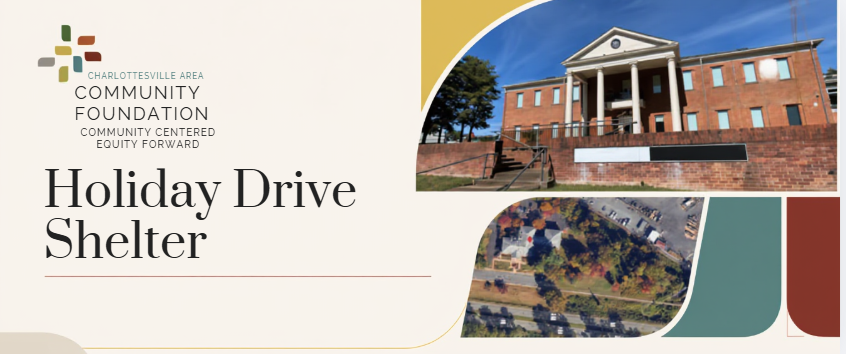
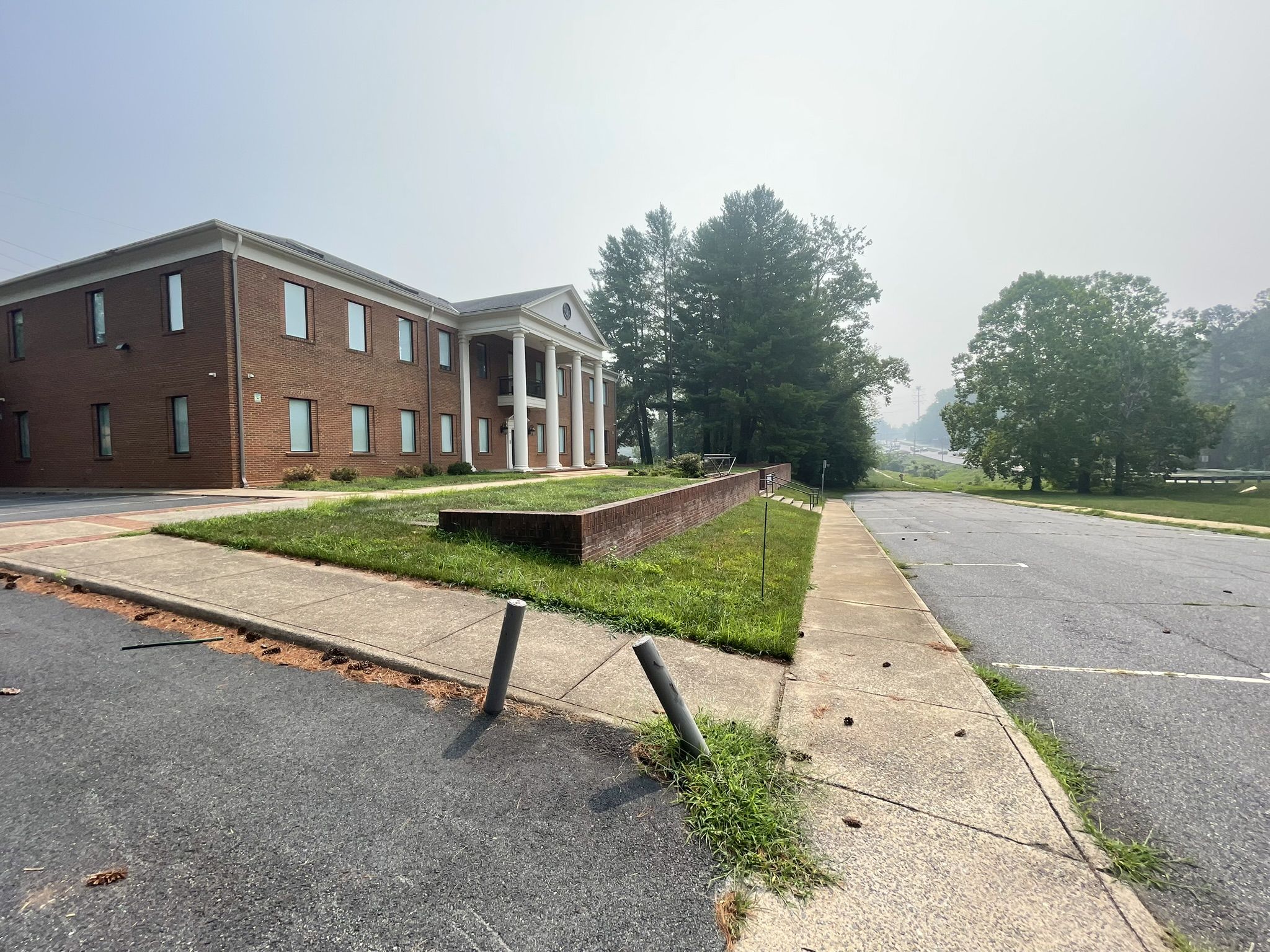
This newsletter has documented many of the steps along the way including the $6.2 million purchase last October of an office building at 2000 Holiday Drive to serve as a low barrier shelter. That came a month after Charlottesville City Council opted not to proceed with an ordinance that would have made it a Class 6 misdemeanor to camp outside.
There have been two public meetings this spring between the Charlottesville City Council and non-profit organizations who have taken on the task of providing services as part of the federally-recognized Continuum of Care. An operations plan is due on August 31 according to my most recent reporting.
In the meantime, there are dozens of people living at an encampment along the Rivanna River at Free Bridge and the city has provided some services while also signaling that living in a flood zone is a serious safety risk. Earlier this month, Mayor Juandiego Wade announced in an email to a constituent that people would be moved from the area into other living arrangements and camping will be prohibited on or around September 1.
That prompted several people to attend the July 20, 2026 City Council meeting, the first in over a month. One of them was city resident Mary Gulland who spoke in support of the move.
“I think that public spaces should be available and safe to the public,” Gulland said. “And unfortunately, right now, the Rivanna riverfront, and this should not come as a surprise to anyone, is no longer that across the whole area in the city for walkers, joggers, families.”
Gulland thanked the Council for making investments in a property as well as funding organizations whose missions are to assist those who are unhoused. That includes the Blue Ridge Area Coalition for the Homeless who are slated to receive $250,000 a year in funding as a “fundamental” organization.
As Gulland ran out of time, her comments were booed by some in the crowd. Charlottesville Mayor Juandiego Wade asked them to please not interrupt speakers.
Jeffrey Lisciandrello, a resident of the Greenbrier neighborhood, also spoke in support of the upcoming transition and said prohibiting camping on public land should have been done a year ago. He said Council has allowed a crisis to grow because of vocal pressure from some who attend meetings.
“At previous meetings, residents expressing ordinary concerns about safety, public order and stewardship of shared spaces were shouted down and treated as morally suspect,” Lisciandrello said. “We cannot allow intimidation, slogans and accusations of heartlessness to substitute for reasoned public debate. The loudest activists do not necessarily represent the broader community, and governing requires the courage to make difficult decisions before failure becomes undeniable.”
Lisciandrello also said he does not support public subsidization of a low-barrier shelter if that means none of the residents have to seek help for their mental health and behavioral issues. As he spoke, he began to be interrupted with mocking laughter.
“It’s been a perfect example of the behavior,” Lisciandrello said. “Folks are not willing to tolerate opinions different from their own and believe they have the right to dominate a public space and bully others into submission.”
Lisciandrello continued to be mocked by the group as he ended his comments.

Resident voices
The next speaker gave the name Donnas Chambers on the sign-up sheet. He said he is a resident of the encampment who used to live in low-income housing at places operated by both Piedmont Housing Alliance and the Charlottesville Redevelopment and Housing Authority.
“I’ve definitely been from Hardy Drive to Garrett Square to 6th street, and living over there, it’s unbearable,” Chambers said. “Gunshots every night you come down there, ask the homeless. But when these people are shooting in these apartments with these fully automatic guns and stuff, as nothing is done, those should be the places y’ all should be trying to fix so people could get housing and go and go to these places and live.”
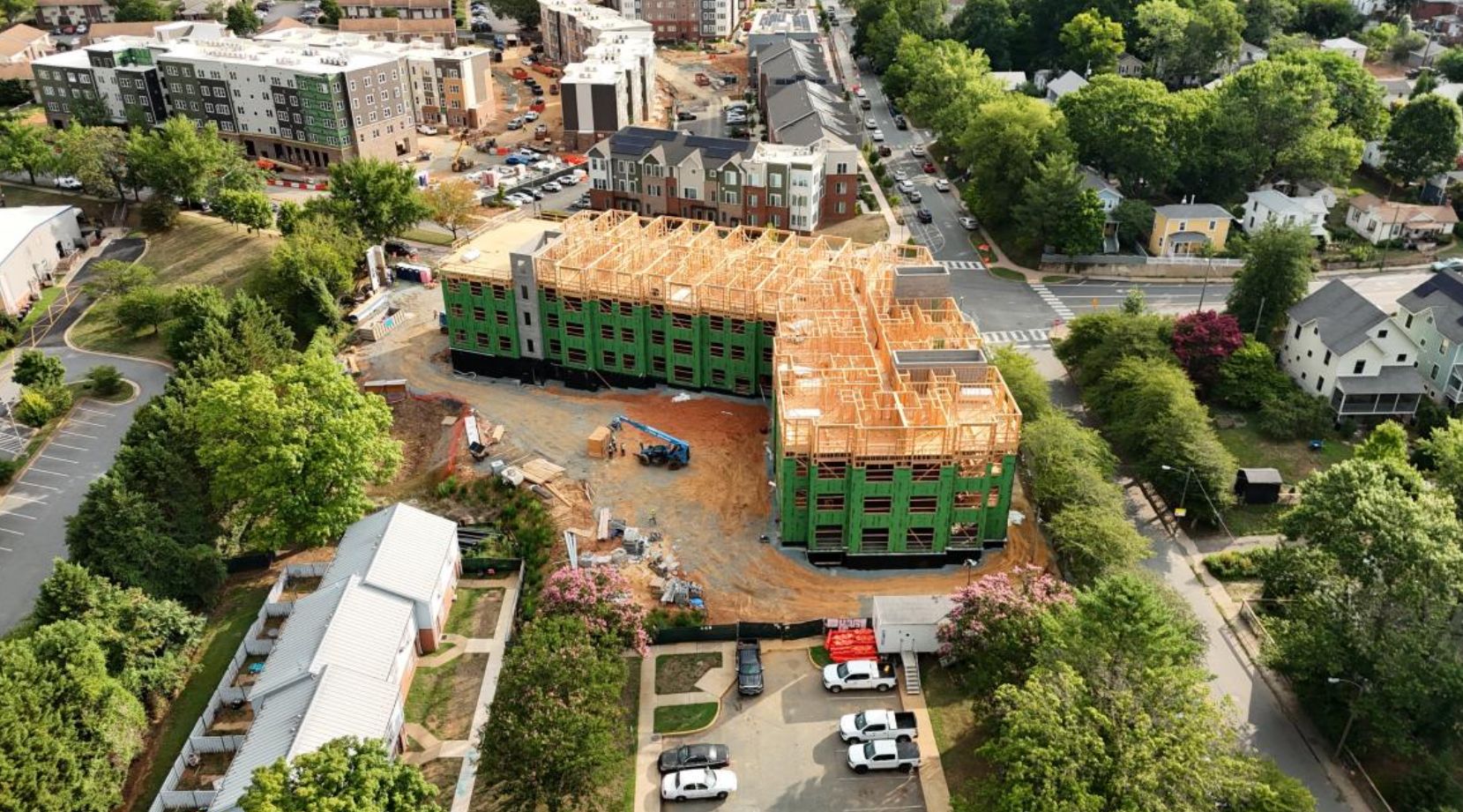
In recent years, Council has been part a key component of the financing strategy for the redevelopment of Friendship Court into Kindlewood as well as the new generation of CRHA properties. For instance, Charlottesville provided over $5.5 million in cash for Kindlewood’s first phase as well as $6 million in tax abatement. That doesn’t include city funds for infrastructure.
In 2026, CRHA is putting together the financing for the first phase of the conversion of Westhaven. City Council is contributing $15 million and will be expected to provide more in the future.
Chambers said he has had difficulty with nonprofit and government providers such as Region 10 and the Haven. He also accused the city of sending media crews to the Rivanna Trail to stir up trouble, an expression that brought wild cheers from some in the crowd.
“News crew, recording y’aal,” Chambers said. “Y’ all brought all these people here, and now y’ all trying to blame the people there for the problem. We did not cause the problem. Y’ all caused the problem.”
Another resident of the encampment said she is concerned that the low-barrier shelter may accept pets.
“What are you going to do with people that are allergic to pets?” asked Jennifer Grant. “What are you going to do with people that have problems with other people? If you put them all in the same room, you’re going to have nothing but more problems.”
Grant asked for the city to stop sending people who just got out of jail to the encampment. She said she herself is a convicted felon who has turned her life around but still lacks a support system.
“People can change,” Grant said. “And a lot of people do want the services. But what you’re going to have to regulate is who is really homeless down there, who really wants to help. Not everybody down there is homeless.”
Grant said many people are turned away by the Region 10 Community Services Board, an agency set up to provide assistance with people with developmental, substance abuse, and mental health conditions. She called for outreach workers who can provide support.
“A lot of people cannot get their meds because they don’t know which way to go to get their medication,” Grant said. “A lot of people down there need the help. It’s just, where do we start?”
Last June, City Council agreed to use $425,000 from budget surpluses to hire two city employees to conduct street outreach. I’ve been trying to track where that money has gone and as of July 23 it still has not been used.
Several other speakers asked for the city to delay the pending transition.
“The September 1 deadline is totally arbitrary,” said Anna Malin Malinowski. “There’s absolutely no reason I can see to kick people out by then because if it’s a problem about climate change. Climate change is year round. There’s ice storms, there’s flooding, there’s hurricanes. So I think that that has been instated because City Council has been influenced too much about what they’re seeing on Reddit.”
Assistant City Manager provides updates on plan to end camping at Free Bridge
The July 20 meeting of Charlottesville City Council was the first time in a month that the public and City Council could get a verbal update on efforts to bring the operations plan together as well as more information about the transition.
“On Friday the 17th, city staff from the Department of Human Services visited both encampments to provide the occupants notifications of the upcoming closure as well as the upcoming needs assessment happening over the next few weeks,” said Assistant City Manager Sam Roman.
Roman said a working group has met several times consisting of city staff, service providers, people who live in the camp, as well as the Rivanna Conservation Alliance and the Rivanna Trail Foundation. Councilor Jen Fleisher is a member of this group.
This week a Point in Time count was held to assess how many people are both at the camp and other locations throughout the community. Roman said this will be coordinated by PACEM and staff from the University of Virginia Medical Center.
“The intent is to learn about each individual’s current needs and begin gathering information helpful to prioritize and organize transition plans,” Roman said.
Such counts are usually conducted in January, but the Blue Ridge Coalition for the Homeless website states that the city provided funding to BRACH to do a summer count for the first time. More information here.
Roman said the city is seeking to move forward with the opening of 2000 Holiday Drive as an emergency shelter as soon as possible. This appears to include still finding someone to run the center.
“This includes locating a viable source to manage an emergency shelter which includes producing an operational plan that would address and inform how that work will be done.” Roman said. “We will continue to collaborate with providers and donor funded opportunities as we consider all available options.”
Roman said in the meantime, both the Charlottesville Fire Department and the Charlottesville Police Department have increased patrols of the area. A large clean-up of the area is expected after the camp is cleared.
“Staff will seek to mitigate opportunities of illegal behavior, illegal actions as well as life safety issues such as open fires and use of equipment that further endanger life and property,” Roman said.
Roman also said a brochure has been produced with a full set of resources for people seeking help. A request for a copy of that brochure is pending.
Council had no comment after the discussion but Charlottesville City Manager addressed the issue in his comments calling the ongoing situation challenging and difficult.
“It is one that faces many communities around the country,” Sanders said. “No one has figured it out. We’re having to come up with our version for what applies here in Charlottesville.”
Previous coverage in this newsletter
- Chief Kochis refutes charges of police brutality in Market Street Park, October 3, 2023
- Sanders outlines work plan, homeless intervention strategy, October 9, 2023
- Council to consider $3M request from CRHA as well as sales agreement for $4M purchase of 405 Avon, February 20, 2024
- City Manager Sanders provides update on Charlottesville’s efforts to assist the unhoused, September 12, 2024
- City Council ends consideration of anti-camping ordinance after pushback from homeless advocates, September 9, 2025
- Sanders provides an update on efforts to address homeless population of Charlottesville, September 19, 2025
- Charlottesville City Council briefed on low-barrier shelter by groups that provide the programming, March 27, 2026
- City Council presented with The State of Homelessness 2026 by four nonprofit groups working on the issue, May 12, 2026
- Salvation Army launches fundraising campaign for Center for Hope, May 15, 2026
- Many details remain to be worked out for how three groups will work together at Charlottesville’s future low-barrier shelter, May 15, 2026
- Sanders gives first progress report on operations plan for 2000 Holiday Drive, May 22, 2026
- Albemarle Supervisor Pruitt provides short briefing on low-barrier shelter plan, May 29, 2026
Before you go: The goal of Town Crier Productions is to increase awareness about what is happening at the local, regional, state, and federal government levels. Please share the work with others if you want people to know things. Paid subscribers cover the cost of conducting research for this article which was originally published in the July 22, 2026 edition of Charlottesville Community Engagement. You can either subscribe through Substack or make a charitable contribution.
Discover more from Information Charlottesville
Subscribe to get the latest posts sent to your email.