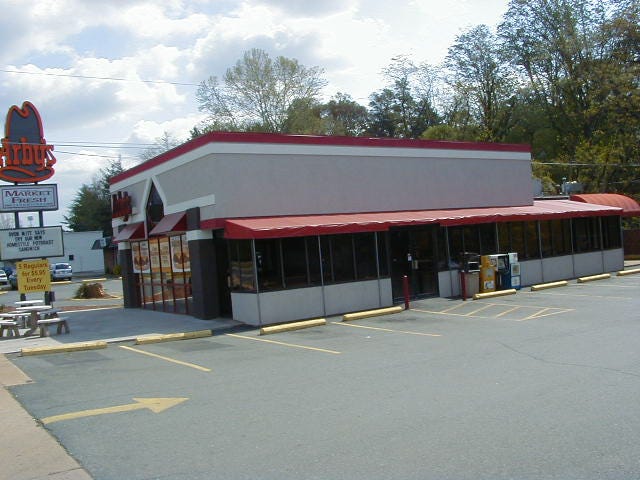
A group working on plans for a low-barrier homeless shelter has given Charlottesville City Council a preliminary cost estimate of $8.6 million to upgrade an office building in the Meadows neighborhood to serve as a place with 80 beds for overnight stays all year round.
“We really wanted to focus on transformational impact at 2000 Holiday Drive,” said Shayla Washington, the executive director of the Blue Ridge Area Coalition for the Homeless. “We want to increase our safety net and improve it, ideally just creating pathways to stability housing.”
In October 2023, Charlottesville City Manager Sam Sanders outlined a homeless intervention strategy that included work to find a low-barrier shelter that would be open year-round. Earlier this year, the city closed on the $6.2 million purchase of the now-vacant office building on Holiday Drive, visible from the U.S. 250 bypass.
On March 25, Sanders led a discussion on the building’s conversion between City Council, Washington, and the heads of several nonprofit groups that are part of the “continuum of care” as well as other stakeholders.
“The goal would be for Council to have an opportunity to first hear from you directly, ask any questions that occur to them today and give them an opportunity to think about what they’ve heard and begin further conversations with me on how we move this effort forward,” Sanders said. (view the presentation)
According to the presentation, the working group includes:
- Washington, executive director of the Blue Ridge Area Coalition for the Homeless
- Cameron Moore, executive director of PACEM
- Owen Brennan, executive director of The Haven
- Major Donny Wilson, Charlottesville Corps Officer with the Salvation Army
- Erin Hannegan, principal with the firm Mitchell Matthews
Sunshine Mathon, executive director of the Piedmont Housing Alliance, had asked to speak first at the meeting so he could state that any animosity between various agencies is now in the past.
“The Holiday Drive site and the prospect of it becoming a comprehensive, organized center of support that has catalyzed the deepest and most sustained collaboration between these agencies that our community has ever witnessed,” Mathon said.
Mathon said the region has never sufficiently invested in what he described as “homeless response organizations” and said it is time to play catch up.

Under the proposal, 2000 Holiday Drive would be much more than a low-barrier shelter.
“The programs will support day-shelter services, coordinate ‘coordinated entry’, case management, housing navigation, and connections to health care and workforce supports,” Washington said.
The firm Mitchell Matthews joined the working group in September when a different site was still being evaluated. Principal Erin Hannegan said architects and designers pivoted to the 2000 Holiday Drive site when it was announced.
“We currently have 80 beds requested to be in the project now, which is an increase of 20 to 30 beds over the existing conditions that PACEM currently has,” Hannegan said. “And that is our sort of minimum goal to meet to inhabit Holiday Drive.”
According to the current proposal, 37 percent of the space would be reserved for the overnight shelter and 18 percent would be administrative offices for PACEM, the Haven, and BRACH. A day shelter would take up 10 percent of the space with 20 percent reserved for dining. A health clinic would take up three percent.
In the overnight shelter, the majority of rooms would include eight beds per room spaced three feet apart. Hannegan said that is an improvement on existing conditions at shelters at churches operated by PACEM in the colder months. Some of the rooms would be gender-neutral while others would be designated for men and women.
“Before we get too far, I do want to mention that this is considered a test fit or conceptual design,” Hannegan said. “It’s very early in the design process.”
Hannegan said that includes the cost estimates which will adjust as the project moves through design.

Would the Haven move?
In December, the Haven began the process of studying whether they would move their services to 2000 Holiday Drive from their current location at 112 West Market Street. That includes asking their clientele, volunteers, and other stakeholders.
“The limitations of that building are acknowledged by all groups and the potential of the Holiday Drive space is broadly seen as a fruitful opportunity,” Brennan said. “Guests are excited about the expanded overnight shelter space including more showers, more storage space, more overnight capacity than is currently available, and more private spaces. They’re also excited about the outdoor space, the potential there.”
Brennan said another consideration is co-locating with other organizations under one roof and working more closely together. Another is whether the money can be raised to proceed not only with capital costs but ongoing operations. Perhaps the most important community impact would be moving the hub of homeless operations two and a half miles away from Downtown Charlottesville.
“What is clear across all the stakeholder groups is that a move to Holiday Drive is not going to eliminate the visible presence of unhoused community members downtown,” Brennan said. “And so one of our questions is how do we continue to serve the folks who are downtown that once Holiday Drive is the center of gravity.”
Brennan said Holiday Drive is not in a pedestrian-friendly space but the Haven’s Board of Directors endorsed a resolution to continue participating in the planning including creation of a bus system for the unhoused that would travel to various places including the current homeless encampment at Free Bridge.
“We did some very rough initial pricing with Jaunt who estimated that it would cost them $411,000 to run that shuttle service annually,” Brennan said.
The Haven does not own its building and could not sell it to contribute to capital costs.
Who would do what?
Under the proposal, Charlottesville would continue to own the building and a memorandum of understanding would need to be worked out to reflect co-location of services.
- The BRACH would continue to serve as the coordinating agency across the localities of the Thomas Jefferson Planning District Commission.
- The Haven would run the day shelter
- PACEM would run the overnight operations
Each would continue to keep a separate budget.
Operational costs for the PACEM overnight shelter would increase as more case managers are hired for the site from roughly $942,000 for salaries, supplies, and meals to $3.7 million. However, that also reflects year-round operations as opposed to only 170 days a year now.
BRACH proposes an operational budget increase from $397,955 today to $572,735 including salary for another case worker.
The Haven proposes a budget increase a slight increase as well from $2,424,000 now to just over $3 million.

The project would need to work through the city’s review process which Hannegan said would take between 12 and 18 months. Construction would take another year. Hannegan said a full zoning review has not been conducted.
Washington said community engagement efforts will soon begin about items such as where people would go for lunch during the day. The working group also wants an official camping site to be designated in the interim as well as a temporary emergency shelter.
Council questions and next steps
Charlottesville Mayor Juandiego Wade referenced a recent point in time count that had a higher number than 80 beds. He wanted to know if there was room for this proposal to include more spaces.
“I’m looking at the big picture like we, on any given night, 220, 230 persons don’t have a reliable place to lay their head,” Wade said. “And I know a lot of them now may be staying with family or friends, but it’s not reliable.”
Councilor Lloyd Snook noted that several proposals had options to expand the number of beds but were discarded for this proposal. He suggested putting some of them back.
“As I do the math, if we’re looking at getting 80 beds for $8.6 million, that’s roughly $110,000 per bed,” Snook said. “If we’re looking at 100 and an additional 28 beds for an additional 1.2 million, that works out to a marginal cost of $54,000 a bed.”
There was no formal ask to cover that $8.6 million at the meeting but the assumption is it would be split across multiple jurisdictions.
“This is not an ask of the city,” Brennan said. “This is a regional housing hub. The city purchased the building, so the city is taking lead on the development of it. We have existing funding relationships with Albemarle County that would need to be expanded as well, as well as the surrounding counties which we currently don’t have funding relationships with.”
And then there are other initiatives underway as well.
The Salvation Army is fundraising for expansion of its Center for Hope on Ridge Street. Sanders said the city has made a $3 million contribution.
Washington said SupportWorks Housing are hoping to have Vista29 online in December which will provide 80 rooms of permanent supportive housing.
Updates as they come in.
Before you go: The goal of Town Crier Productions is to increase awareness about what is happening at the local, regional, state, and federal government levels. Please share the work with others if you want people to know things. Paid subscribers cover the cost of conducting research for this article which was originally published in the March 26, 2026 edition of Charlottesville Community Engagement. You can either subscribe through Substack or make a charitable contribution.
Discover more from Information Charlottesville
Subscribe to get the latest posts sent to your email.