The events of the summer of 2017 served as a moral call for the City of Charlottesville to increase the amount of funding that goes toward maintenance and construction of housing units whose monthly rent or sales price is kept below the market rate.
The budget adopted in April 2017, months before the Unite the Right Rally, anticipated putting $2.5 million into the Charlottesville Affordable Housing Fund (CAHF) in FY2018 with a five-year total of $16.1 million.
While there was no dramatic change to the CAHF in the budget adopted in spring of 2018, the capital improvement program began to allocate funds directly to the Charlottesville Redevelopment and Housing Authority at $500,000 a year. Advocates continued to put pressure on Council for the city to continue increasing funds for housing projects as well as reforming land use rules. This resulted in Council issuing a request for proposals in February 2019 for a firm to relaunch a Comprehensive Plan update that had stalled the year before.
“The acute need is to get the Comprehensive Plan finished and to have an integrated affordable housing strategy within that Comprehensive Plan and then to roll immediately into the rezoning citywide,” said then-City Councilor Kathy Galvin at the time.
The city hired Rhodeside & Harwell to conduct what would become known as the Cville Plans Together initiative. The first product was the creation of an affordable housing plan adopted by Council in March 2021 that called for a minimum of $10 million a year in spending on housing for ten years.
“These expenditures include both ‘capital’ subsidies used to build and preserve affordable homes, such as financing for public housing redevelopment and single family infill development, and ‘operating’ subsidies provided on an ongoing basis, such as emergency rental assistance and property tax relief,” reads page 49 of the plan.
A new Comprehensive Plan followed in November 2021 and a new Development Code in December 2023.

The city did begin to increase funding and continued to allocate money to specific items in the capital improvement program. In the final budget adopted for FY2021, Council agreed to give CRHA a total of $12 million over five years to help finance projects such as the renovation of Crescent Halls and the first new CRHA units in a generation at South First Street. Beginning with the FY22 budget, the Piedmont Housing Alliance began to receive millions in funding for the redevelopment of Friendship Court into Kindlewood in four phases.
The five year anniversary of adoption of the housing plan is approaching and preparation of the next budget offers a chance for Council and the city administration to reflect on what’s happened so far and anticipate further spending.
Affordable housing subject of third budget work session
Since becoming Charlottesville City Manager, Sam Sanders has spent a lot of time trying to understand what Council wants before presenting them with budgetary choices. While the FY27 budget won’t be presented until early March, Sanders has held three budget work sessions with Council to get their thoughts on potential new spending. The latest was on December 15, 2025. (view the presentation)
“I’m going to walk you through a series of things that we’ve identified that are associated with this budget that are either in the budget, being talked around the budget conversation as it stands right now, and new items that have started to materialize that are associated with things that are already in the budget,” Sanders said.
So far, two of CRHA’s projects are complete and another two are under construction. They are the second phase at South First Street that will see construction of 113 units with a city contribution of $6 million. Another 47 units are slated to be built in the first phase of the redevelopment of CRHA’s Sixth Street property.
Planning is underway to redevelop Westhaven in two phases with a total of 266 units to be built in both townhouse form and multifamily apartment buildings. Council has agreed to commit $15 million. (view recent story)
The other major beneficiary of city funding is the Piedmont Housing Alliance which is overseeing the Kindlewood development. A second phase is under construction with 102 units.
PHA has also been given $3.77 million in cash to build 86 units at the former MACAA site at 1025 Park Street. The nonprofit has also received $2.25 million in cash to assist with financing of 50 new units on the site of the Park Street Christian Church at 1200 Park Street. These are both in the planning stage, as are 71 units at 501 Cherry Avenue which received $3.15 million in cash from the city.
A fourth project in the planning stage is the third phase of Kindlewood which has $4.15 million in city cash for financing.
“These are all in your budget already reflected items indicating the supports that we’ve committed to affordable housing with this particular partner,” Sanders said.
Also already committed is a total of $8.7 million to cover the costs of PHA and Habitat for Humanity purchasing the Carlton Mobile Home Park as well as $936,000 to assist SupportWorks Housing in their construction of the Vista29 project on U.S. 29.
Since adopting the Affordable Housing Plan, Charlottesville has divided the amount of funding available into different pools of funding. One of them is the Housing Project Development Investment fund for developers who seek major capital outlays from the city. A recent window closed in September and Sanders shared information on three applications at the work session.
- Community Services Housing seeks $900,000 to serve as a match for an application for Low Income Housing Tax Credits to preserve affordability for 40 existing units. Half would be for residents making between 40 and 50 percent of the area median income (AMI) and the other would be for households at 60 percent.
- Brick Lane Better Communities is seeking $1.75 million to assist with conversion of the Holiday Inn on Emmet Street North to a multifamily apartment building. This would include subsidizing 19 units at 60 percent of AMI, 108 at 80 percent of AMI, 19 at 120 percent of AMI and 46 at market rate. I wrote about this in the November 5, 2025 C-Ville Weekly.
- Preservation of Affordable Housing have requested $3 million to help finance their project to build 170 units at 1000 Wertland Street. This is one of several projects the University of Virginia has committed to donating land in the form of a long-term ground lease. This project has yet to obtain a Certificate of Appropriateness from the Board of Architectural Review.
All of the submissions can be found on the city’s website.
“This is a process of me sharing this with you,” Sanders said. “Our goal would be to begin to have conversations with you on [how] you feel about prioritizing these considerations for the budget [and] if you would like to see them funded in the budget.”

Another component for the 501 Cherry Avenue project is a separate request for $700,000 to help cover the costs of building a small market space that would be used for a community grocery store.
Then there’s the fourth phase of Kindlewood which currently has $4.5 million in city cash for the fourth phase. Sanders said PHA has indicated that’s not enough for them to build the number of units originally stated.
“There is a $3 million funding gap to get to the number of units that are expected based on the original agreement we would need them to produce 131 units in phase four, which would give us a total of 425, which is the bottom of the range that we asked them to commit to,” Sanders said.
Council will have a further work session on January 5 at which they will be asked if 388 units total at Kindlewood would be enough. Another topic at that meeting could be a discussion of threats to the current way the federal government pays for “housing first” initiatives.
“Under the Biden administration, about 12 billion dollars was spent on Continuum of Care…yet homelessness went up almost 33 percent over the last several years,” said U.S. Housing and Urban Development Secretary Scott Turner to Fox Business on November 19. “What we’ve done is take this Biden-era slush fund, called the Continuum of Care, and turned it into not just housing, but also treatment and transitional housing.”
This week, a federal judge stepped in and blocked the changes. That happened after Council’s December 15 work session. Take a look at these three articles for more information.
- Judge blocks new HUD funding restrictions for Housing First initiatives, Christopher Shea, Rhode Island Current, December 19, 2025
- Federal judge temporarily blocks HUD permanent housing cuts for homeless, Cassandra Dumay, Politico, December 19, 2025
- Judge temporarily bars Trump administration funding changes likely to make homelessness worse in 2026, Lillian Mongeau Hughes, The Oregonian
Sanders is also considering a pilot program to provide rental assistance for some Kindlewood residents who have not been able to make rent at the new location. Under one proposal, the initial fund would be $305,000 and $75,000 would go to pay for financial coaches with the rest going to provide a matching payments for back rent.
“We’ve identified that there are a number of households that have not been able to make their rent payments,” Sanders said. “And this is despite their income evaluations indicating an ability to pay from the numerical aspect of it, we’re still seeing that individuals are not paying rent.”
Many on the Planning Commission have called for the city to save up money to buy property as it comes available for housing projects. Sanders has not prioritized that in next year’s budget but said Council has a contingency fund in the capital improvement program they could use if needed.
Potential candidates listed in his presentation are for Hearthwood and Mallside Forest, two subsidized apartment complexes nearing the end of an affordability period required by use of Low Income Housing Tax Credits.
Another is known as the “Silk Purse” portfolio. Charlottesville GIS lists 70 parcels owned by Silk Purse Properties LLC. Such a purchase would involve CRHA. Such a purchase would remove them from the city’s real estate tax rolls.
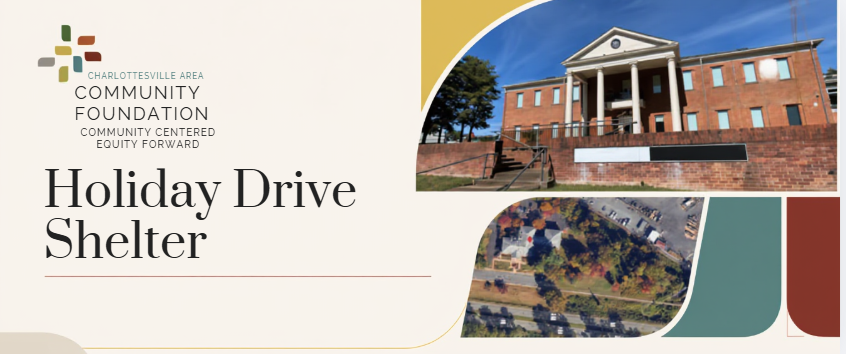
Sanders then turned to the topic of providing more resources to combat homelessness. He said he will not likely offer any more new ideas in this budget cycle because of the city’s purchase of 2000 Holiday Drive.
Council comments
City Councilor Michael Payne said he thinks Council needs to increase the moral commitment each year to adjust for inflation as well as the rising cost of construction.
“If we want to achieve our original goals, you know, you’re talking about a meaningful amount above $10 million annually,” Payne said. “So we need to be adding to it as much as we can.”
However, Payne said any funds received from developers in-lieu of building required affordable units should not count toward the moral commitment. He said if not for government intervention, the only housing that would be built would be that which derives a profit.
“But we really have seen a transformative change in how we invest in what we do,” Payne said. “But there’s a long way to go and I hope we just don’t lose sight of the importance of this.”
Payne also said he was concerned the city has not done enough to purchase land.
Some recent articles:
- CHRA closes on purchase of Dogwood Housing and dozens of other June 2023 Charlottesville property transactions, August 25, 2023
- Charlottesville’s $5.9M purchase of floodplain land complete, December 3, 2023
- Council approves Charlottesville’s purchase of CRHA property on Avon Street, February 11, 2024
- Carlton Mobile Home Park owner accepts Habitat counter-offer day after Council agrees to contribute $8.7M, August 8, 2024
- Charlottesville City Council approves $6.2M building purchase for shelter, Hannah Davis-Reid, VPM News, October 7, 2025
Councilor Natalie Oschrin said she appreciated seeing all of the information lined up.
“I think you also made another really good point that this is expensive, it costs a lot of money,” Oschrin said. “And so we have to be on the lookout for ways that we can increase our revenue for these types of projects, whether that’s general fund transfers or specific affordable housing fund input.”
Oschrin said market rate housing can provide additional tax revenue, and more people living within the city means more people purchasing products and paying sales tax.
City Councilor Lloyd Snook said CRHA and PHA could consider building market rate units to help cover some of the costs of providing below-market rent.
“Clearly if we’re going to not have it always run a deficit, either the city’s got to keep anteing up money every time we turn around, or else they’ve got to figure out a way to make some money of their own,” Snook said.
City Council next meets on January 5.
Before you go: Paid subscribers cover the cost of conducting research for this article which was originally published in the December 22, 2025 edition of Charlottesville Community Engagement. You can either subscribe through Substack, make a monthly contribution through Patreon, or consider becoming a sponsor. The goal of Town Crier Productions is to increase awareness about what is happening at the local, regional, state, and federal government levels. Please share the work with others if you want people to know things.
Discover more from Information Charlottesville
Subscribe to get the latest posts sent to your email.