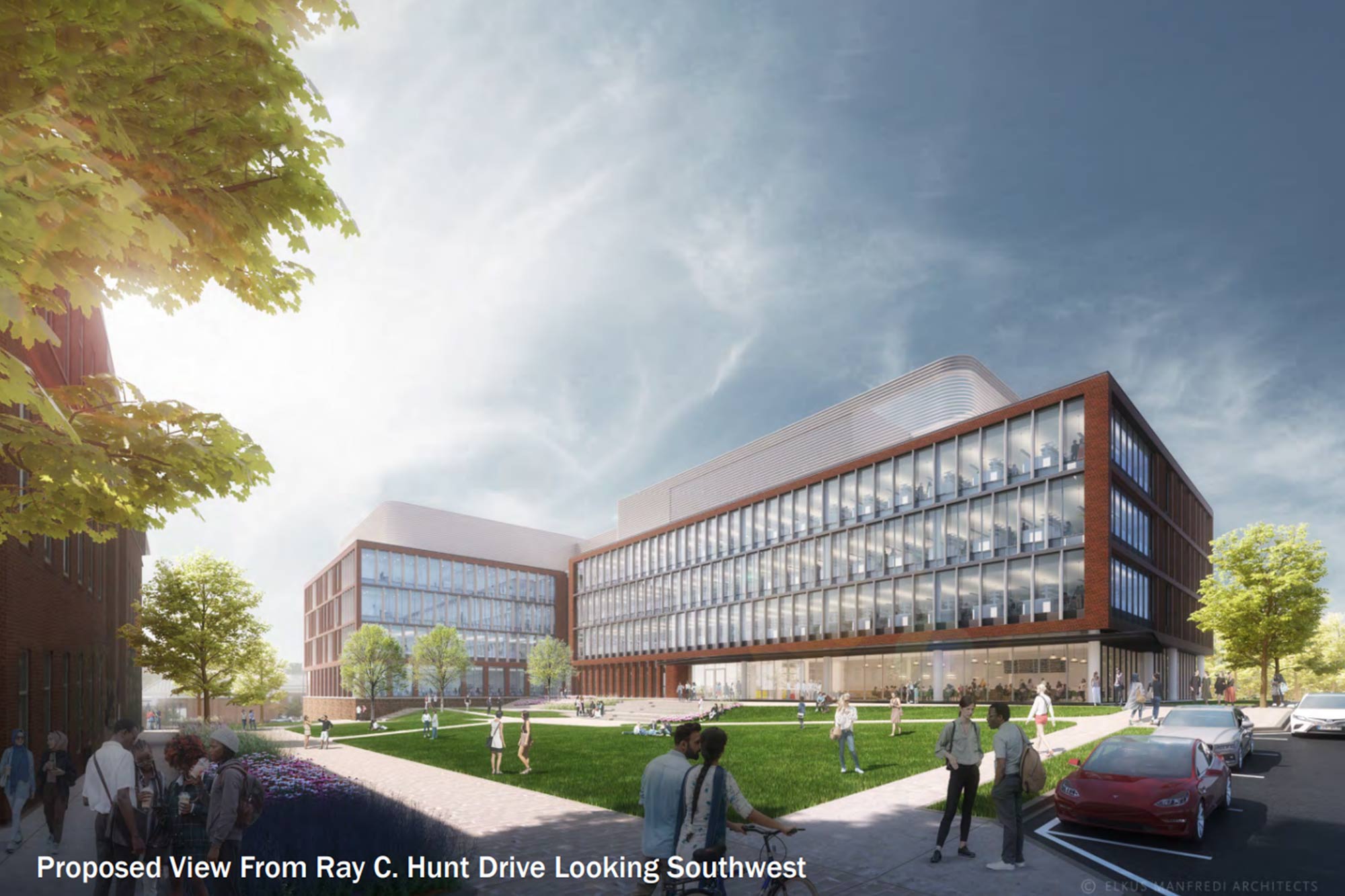
Construction of the new Paul and Diane Manning Institute of Biotechnology is not expected to be complete until 2027, but the first person to run its operations is already on the job.
Dr. Mark Esser began work in May as the first chief scientific officer and director and told the University of Virginia’s Health System Board last week that the Manning Institute will be a catalyst for innovation in Virginia.
“It can accomplish this by really doing five things,” Esser said on June 5. “First and foremost, being that drug discovery and development accelerator. How do we transform the exciting science going on here at UVA into medicines that can one day help patients?
More on the other four things in a minute. Esser earned his PhD in microbiology from the University of Virginia in 1998 and has been in the field ever since. He was introduced to the Health System Board by Dr. Mitchell Rosner, the interim executive vice president for health affairs.
“Mark is responsible for the overall strategic direction and operations of the Institute with a focus on accelerating biomedical research and advancing new treatments from discovery to clinical application,” Rosner said. “Mark brings more than two decades of leadership in the fields of immunology, virology, vaccines and biologics.”

Before returning to UVA, Esser served as vice president for vaccines and immune therapies at AstraZeneca.
Esser said the Manning Institute will attract talent to Charlottesville from scientists and clinicians in the field, will enable industry collaborations across all of UVA, and support biotech entrepreneurship in the community. The fifth thing relates to employment.
“It’s going to create a lot of high quality jobs for folks here in the Virginia life sciences sector, which today is, although small compared to other parts of the country, is an $8 billion industry here in Uva alone,” Esser said.
Esser said there have been revolutions in medicine over the last 25 years since he left UVA.
“Cancer mortality rates have decreased by more than 34 percent,” Esser said. “Been great reductions in heart disease and hospitalization due to heart failure.”
However, Esser said there are challenges ahead for medicine as the Baby Boom generation approach their elder years, adding further strains to health systems across the world.
“Sixty percent of Americans have one or more chronic conditions,” Esser said. “Forty percent have two or more. If no medicines really become available or new treatments, 14 million Americans could be suffering from Alzheimer’s by 2050.”

Esser said the pharmaceutical sector in the United States is a $600 billion industry that will grow to a trillion dollars in 2033. The Institute will be part of the quest to develop new medicines and begin to develop more of them for specific individuals.
“Personalized medical and precision medicine approach is driving really the advance of gene therapies, cell therapies and biologics, which are becoming more and more prominent over the kind of traditional one size fits all small molecule approach,” Esser said.
Esser said UVA is poised to grow into this field. He’s spent his first 30 days on the job meeting with people. He said coming back to academia after time in the industry has prepared him to help train the next generation as they reimagine and reinvent the future.
“Recognizing this is a university and our core mission is to educate the future workforce, whether they go into the private sector or the public sector, public sector, to have really great careers in drug discovery and development,” Esser said.
One of Esser’s initial jobs will also be to network across the industry to build relationships and connections.
“We couldn’t be more thrilled to have Mark here as an industry leader and also understanding research,” said Paul Manning, one of the institute’s namesakes and a member of the Board of Visitors. “We are going to, as quickly as in the next few months, go meet with industry partners, all the big pharma companies in biotech, to try to develop these partnerships early and then showcase some of our research that’s there.”
For more information about construction of the Manning Institute for Biotechnology, take a look at UVA’s Facilities Management page.
Before you go: This story was originally published in the June 9, 2025 edition of Charlottesville Community Engagement. And then it was posted here because that way people will be able to find it in the future should they choose.
Discover more from Information Charlottesville
Subscribe to get the latest posts sent to your email.