The University of Virginia’s Board of Visitors December meeting has come and gone, but the Buildings and Grounds Committee began last Thursday with this observation from chair John Nau.
“The amount of construction that’s going on is amazing,” Nau said. “In my experience when that much is going on at the same time, you need to have eyes and ears on it of more than normal.”
Nau mentioned that UVA planning staff have recently weighed in on two large mixed-use apartment projects that are under Charlottesville’s land use controls, two projects that were deferred on December 4. He said other members of the Board of Visitors needed to be paying attention to what local officials are doing.
“I would bet that the Board is going to begin to become aware of what the city is doing and the impact on height, on traffic, and making our expansions in the future even more difficult and certainly more expensive,” Nau said.
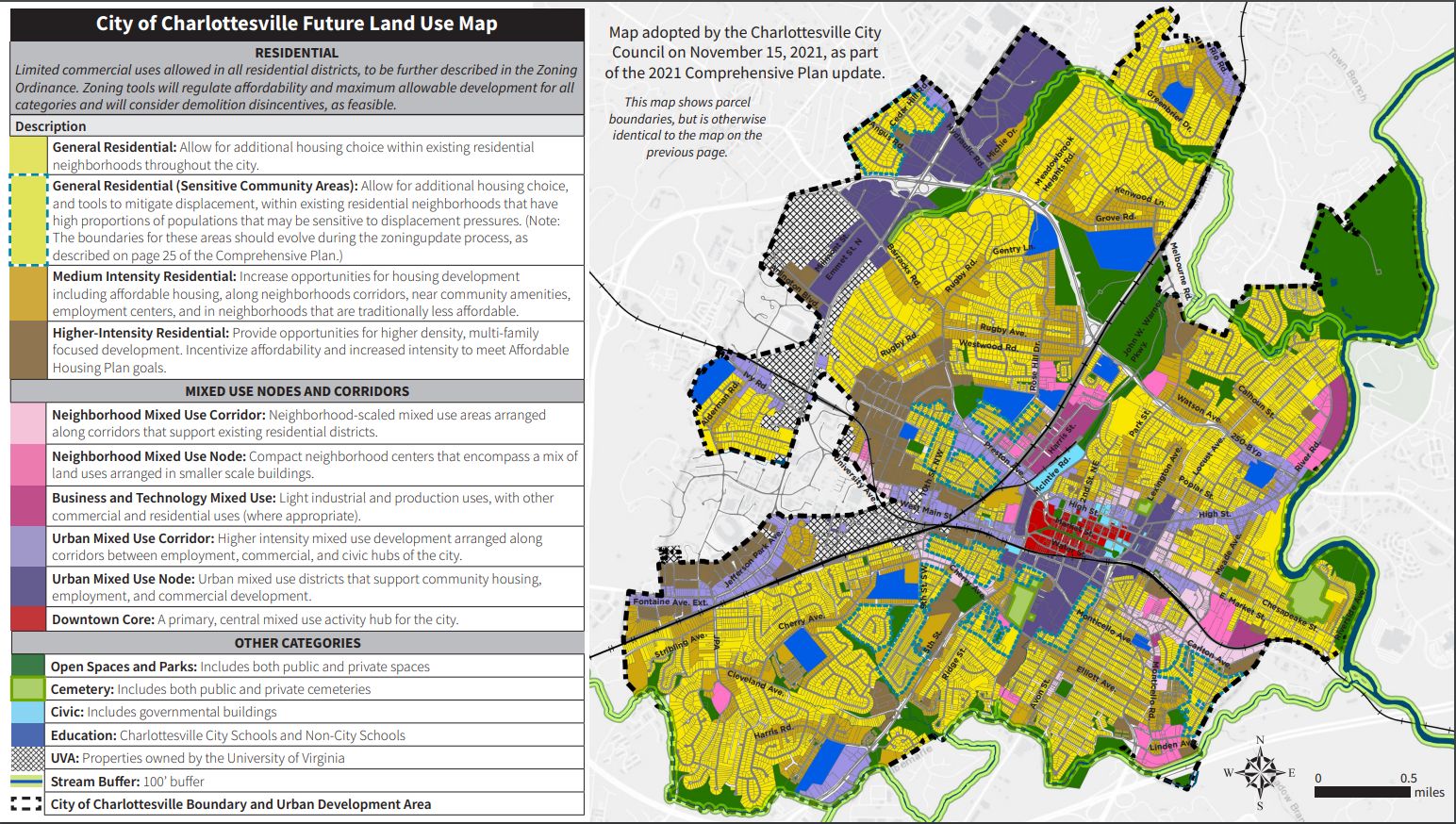
Charlottesville is set to adopt a new zoning code by the end of the year which will allow additional height and development rights across the city, but a majority of Councilors have said they want to restrict heights in entrance corridors to five stories until guidelines can be updated. (read my story)
One of those entrance corridors is Fontaine Avenue, a roadway that will be affected by more intense activities at the Fontaine Research Park.

On Friday, UVA broke ground for the Manning Institute of Biotechnology in the Fontaine Research Park, which is on land bought by the UVA Foundation in 1986 after Albemarle County Supervisors approved a rezoning for a shopping center. There will also be a new parking structure to support the institute.
“It’s the biggest parking lot I think I’ve ever seen,” Nau said. “The good news is that it doesn’t go up 20 stories.”
The consent agenda for the Building and Grounds Committee revealed the extent to which the University of Virginia influences land use in Charlottesville. They approved the naming of a performing arts center to be built in the Emmet-Ivy Corridor to be named after the person who donated $50 million for that purpose.
“The Performing Arts Center is a piece of a larger project that will also hopefully be able to accommodate the music department as well as the museums,” said Colette Sheehy, the Senior Vice President for Operations and State Government Relations.
They also approved the demolition of four structures in the Emmet-Ivy Corridor on land that used to be on the city’s property tax rolls. The University of Virginia Foundation has slowly been purchasing that land over time.
“The commercial buildings are on the site of the Karsh Institute of Democracy and we’re going to be moving forward with that project and site work for that shortly so we would like to demolish those buildings,” Sheehy said.
UVA does not have to ask permission of the City of Charlottesville for these demolitions.
Before you go: The time to write and research of this article is covered by paid subscribers to Charlottesville Community Engagement. In fact, this particular installment comes from the December 11, 2023.
To ensure this research can be sustained, please consider becoming a paid subscriber or contributing monthly through Patreon.
Discover more from Information Charlottesville
Subscribe to get the latest posts sent to your email.