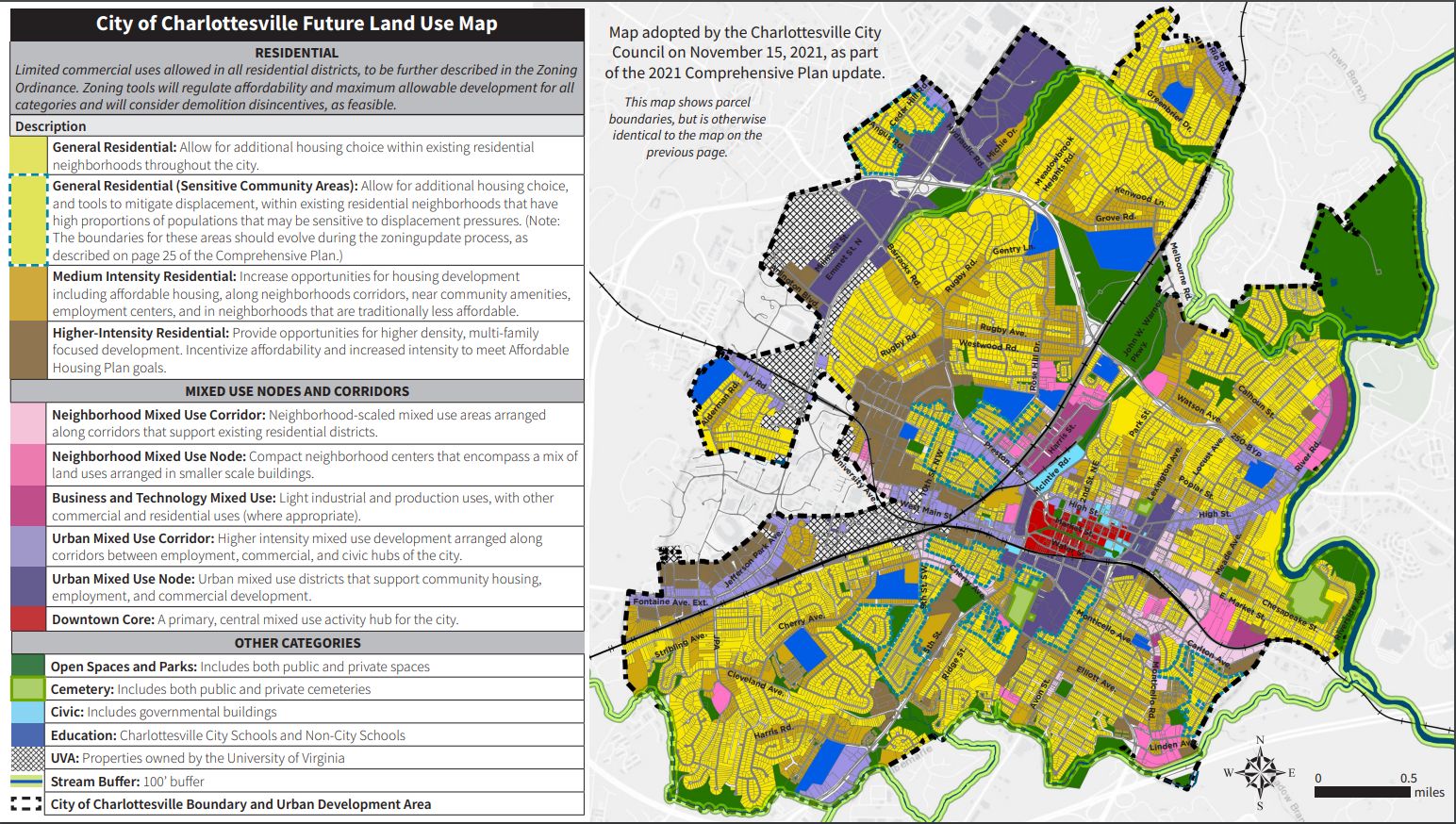
In January of 2020, a firm hired by the City of Charlottesville began work on an ambitious effort to create a strategy for affordable housing, restart the city’s Comprehensive Plan update, and write a new zoning code.
Over the next three years, Rhodeside & Harwell and other groups worked with local stakeholders and the public in a process called Cville Plans Together that resulted in the completion of all three tasks.
In February, City Council adopted the first set of amendments to the Development Code, the name given to the city’s rules for building. These were largely technical in nature with no major policy changes despite a campaign from some groups seeking to reduce available heights in the West Main corridor and other places.
A fresh code review is underway but will continue to be geared toward minor changes with large policy decisions to be reviewed as described in the work plan of the Department of Neighborhood Development Service.
There is also an effort to find ways to realize the full potential of the Development Code. Since implementation there have been very few examples of single family homes being replaced with multifamily structures.
In May, the Planning Commission learned that a new committee would be formed to work with developers on ways to reduce barriers to more homes being built on single lots. Some refer to this ideas as “missing middle housing.”
“This group will be a mix of staff from across the city along with local builders and developers that focus on building missing middle housing types,” said city planner Dannon O’Connell on May 12. “We are looking for one or two Planning Commissioners to be a part of that working group.”
Those Planning Commissioners ended up being Ross Harness and Betst Roettger. The Missing Middle subcommittee met on July 28.
“The goal that we came up with is to identify the technical challenges that are preventing us from seeing more missing middle housing in the community,” Harness said at the August 11 PC meeting. “And as part of that, we defined missing middle as really anything up to 12 units.”
Harness said the group’s first big project is to review rules on utilities. A final report is expected next spring or summer.
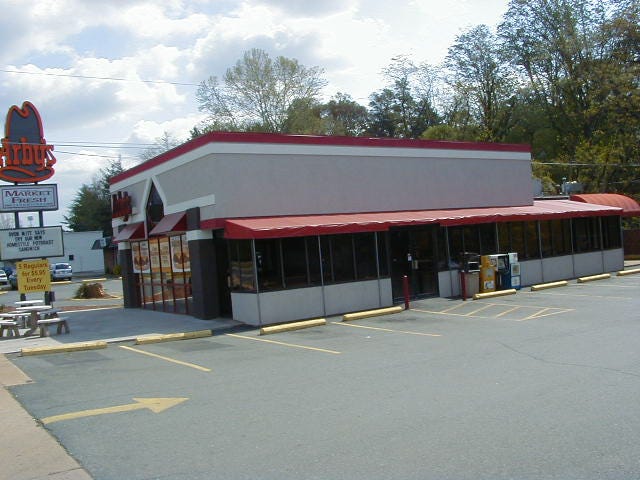
One of the first major development plans to be filed under the new zoning was at 2030 Barracks Road. Greenshire Holdings purchased 2030 Barracks Road in June 2024. The property is a narrow 0.83 acre space zoned Residential-B, which allows up to 12 units per lot if affordability measures are met.
NDS approved a “Development Plan” on August 13, 2025 but the City Council still needs to approve two special exceptions with one being on critical slopes.
NDS is currently without a permanent director after the resignation of Kellie Brown at the end of June. Development Process Manager Matt Alfele gave a brief report including a notification that the next Missing Middle subcommittee meeting is on August 20 and that the code clarification committee will also meet this month.
There was no update on the city’s Environmental Regulations and Policy Review. More information on that can be found on the Connect Charlottesville website.

Before you go: The goal of Town Crier Productions is to increase awareness about what is happening at the local, regional, state, and federal government levels. Please share the work with others if you want people to know things. Paid subscribers cover the cost of conducting research for this article which was originally published in the August 13, 2026 edition of Charlottesville Community Engagement. You can either subscribe through Substack or make a charitable contribution.
Discover more from Information Charlottesville
Subscribe to get the latest posts sent to your email.