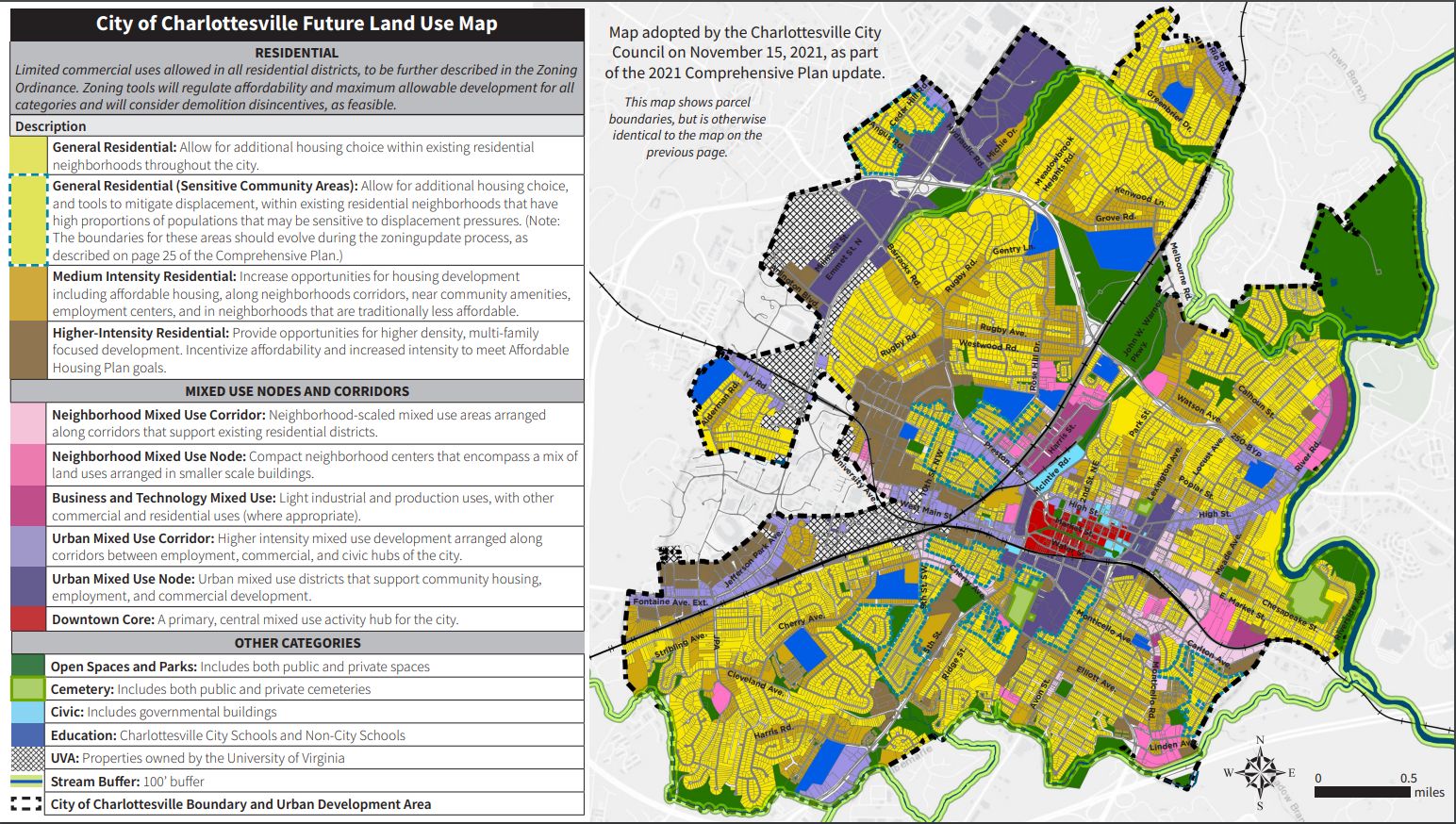
Stanley Martin Homes have begun work building a 45-unit subdivision in the Fry’s Spring neighborhood on land originally planned for development in the 1920’s. The first step was to remove trees and vegetation to prepare lots for single family homes in between Monte Vista Avenue and Azalea Drive.
A series of storms this weekend delivered much needed precipitation but the clearcut landscape resulted in large amounts of stormwater running off downstream.
Someone also filed a complaint with the Virginia Department of Environmental Quality on Monday for 0 Huntsman Run Court, a new roadway part of the development.
“Sediment related to construction at the Azalea Springs Subdivision is entering the stream adjacent to the site,” reads the description in the original report. “Sediment is being deposited on neighboring properties.”
The incident is under investigation. Land disturbance must be compliant with the Virginia Stormwater Management Program and requires a permit. An engineer for Stanley Martin Homes paid the city $1,224 to process a VSMP permit on November 7 as well as a $476 surcharge to the DEQ.
A group of adjacent landowners sent out an information release on August 3 seeking to publicize the incident.
“Unless the Developer is held accountable I am concerned that these events will amount to ‘the cost of doing business’ and nothing more,” said Casey Gioeli.
A request for comment from the city sent on Tuesday afternoon city is pending at publication time.
One of the people quoted in the information release has been in touch with the city regarding the incident and forwarded correspondence.
“City staff visited the site yesterday to document E&S conditions and proceed with the next step in the enforcement process,” wrote Assistant City Engineer David Frazier in an August 4 email. “Sediment discharges were discussed and remediation options.”
Frazier wrote that the city had issued a corrective action report to the “construction activity operator” on July 29 and a notice to comply was issued on July 31. A stop work order has been issued.
The stormwater page on the city’s website explains why efforts are made to stop large amounts of sediment from entering waterways.
“Sediment carries pollutants that have bonded to it into waterways, suspends in the water column and blocks sunlight from aiding in the growth of aquatic vegetation, clogs the gills of fish (sometimes suffocating them) and eventually destroys aquatic habitat in stream beds when it settles,” reads the page.
Before you go: The goal of Town Crier Productions is to increase awareness about what is happening at the local, regional, state, and federal government levels. Please share the work with others if you want people to know things. Paid subscribers cover the cost of conducting research for this article which was originally published in the August 5, 2026 edition of Charlottesville Community Engagement. You can either subscribe through Substack or make a charitable contribution.
Discover more from Information Charlottesville
Subscribe to get the latest posts sent to your email.