Over the next two weeks, members of the Albemarle Board of Supervisors will hear from members of the public at a series of town halls on the proposed budget for FY2027. In late February, County Executive Jeffrey Richardson introduced a $724 million revenue and spending plan that included no new tax rate increases but one built on a rise in assessments.
That changed at the end of a budget work session on March 18 in which four Supervisors voted on a motion to advertise an increase in the personal property tax rate in order to provide dedicated funding for the county’s affordable housing fund.
That decision came at the end of the fourth time this year that the Board of Supervisors had the opportunity to spend time going through the county executive’s recommended budget for the fiscal year in order to ask questions, provide feedback, and make suggestions.
The public hearing on the tax rate and the budget will be held on April 15 and adoption is scheduled for April 22. There’s a lot more time on the calendar, and a lot has happened so far.
Resources to learn more:
- County Executive Jeffrey Richardson’s proposed FY27 budget
- Presentation from the March 9, 2026 work session
- Presentation for March 11, 2026 budget work session
- Presentation for March 16, 2026 budget work session (not covered in this story)
- Presentation for March 18, 2026 budget work session
- Answers to Supervisors’ questions during the work sessions
This story begins with the first of those work sessions on March 9 when Andy Bowman, Albemarle’s assistant chief financial officer, began the process of going through the budget. In addition to providing general guidelines for how the work sessions operate, Bowman told Supervisors that the county’s financial management policies were adopted in November 2019. This allows the use of a “budget stabilization reserve” if necessary.
“The Budget Stabilization Reserve is intended to be among the strategies available in a difficult budget year or unanticipated situation,” reads a portion of the policy. “This reserve may be used from time to time as necessary to meet unanticipated one-time emergencies and unanticipated expenditures required to pay costs necessary to maintain the quality or level of current services or to smooth/offset revenue fluctuations occurring within a fiscal year.”
Bowman said staff considers this to be a difficult year.
“Without use of this budget stabilization reserve, without an increase in any tax rate, there would be a notable reduction in services,” Bowman said.
That would likely include a reduction in personnel for fire and rescue calls. Albemarle has hired dozens of firefighters using a Federal Emergency Management Agency grant program that pays the upfront cost but salaries and benefits for the new hires gradually have to be picked up by localities.


Bowman said AstraZeneca’s announcement in October to invest $4.5 billion in pharmaceutical manufacturing at Rivanna Futures is projected to make future years less difficult from a budgetary perspective. That’s when the funding would be paid back to replenish the reserve for another day.
Included in the capital improvement program for FY27 is a $40.8 million project to provide a second access point to Rivanna Futures. This has multiple sources of revenue.
“The state is committed to provide 20 million to that project,” Bowman said. “The developer, AstraZeneca, has committed to provide $12 million to that project. The Economic Development Authority, they have contributed $500,000 to that. And the remainder of that project is going to be covered by donated right-of-way from the county because the county owns the land at the Rivanna Futures property.”
In recent years, Supervisors have expressed a desire to invest in economic development in order to increase the amount of local tax revenue that comes from commercial business. In 2015, the percentage was 15 percent and that figure dropped to 11.3 percent in 2025.
“The reason this is so important is not just the revenue that comes in, but what does it cost to deliver the services to these various classes of property?” Bowman said. “And so for residential and multifamily, it costs more to serve those than it does to collect tax revenue.”
In 2025, 73.6 percent of county revenues came from residential and multifamily. From the FY26 to FY27 budget, real property tax revenue will increase by $20.5 million in part due to an increase in assessments as well as the impacts of new construction.

Virginia Code requires localities to publish something called the “lowered” rate in a public notice when advertising an increase in revenues from the real estate tax. This is the number required to bring in the same amount of money as the current fiscal year’s budget. For this year, the lowered rate would be $0.842 for every $100 of assessed value.
“If the board were to desire a change in the tax rate, the value of a penny is $3.3 million,” Bowman said,
There are three new police officer positions in the recommended budget at a time when Police Chief Sean Reeves said the department is having staffing challenges after being fully staffed at the beginning of this fiscal year.
“We did lose a handful of officers to the federal government and we’ve seen officers going to retirement,” Reeves said. “This is a national trend of law enforcement professionals retiring at the earliest available opportunity.”
Reeves said there is a trend toward people applying for law enforcement positions who have no business doing so, mentioning that the department recently had an applicant who had a felony sex conviction on their record. He’s hopeful a pay increase in this budget will attract better candidates for a growing county.
“What you’re seeing is last year we had almost 93,000 calls for service, which is a dramatic increase from the year before,” Reeves said. “That’s a 23 percent increase.”
Reeves said 38 percent of those calls came from the public and the rest were initiated by officers including traffic stops, extra patrols, and community service calls.
For FY26, County Executive Jeffrey Richardson proposed a four cent increase on the real property tax rate in part to set aside dedicated funds to pay for public safety officers, including firefighters hired under the SAFER grants.
“Last year was the first budget where we started seeing those grants expire and we started picking up the cost of funding those firefighters locally,” said Caitlin Malcolm, the county’s chief of budget. “Since 2021, we’ve had four grants totaling $12.7 million. And that’s been awarded for 57 firefighter positions.”
Fire Chief David Puckett said the new positions have meant that the county can fully staff the North Garden Volunteer Fire Company 24 hours a day, seven days a week. There’s also an additional ambulance in the Seminole Trail area.
“Since adding the second ambulance, the reliability in that area has increased to 80 percent because ambulances aren’t responding from other areas of the county as frequently,” Puckett said. “We’ve also seen a decrease in response times of almost a minute.”
Puckett said similar service improvements have been measured at North Garden. However, he said there are other needs and he would like to apply for a fifth SAFER grant in order to pay for six additional positions.

Second work session held on March 11
The second work session continued on the same as the first with a discussion on non-departmental spending.
For over 40 years, Albemarle has made an annual payment to Charlottesville as part of a 1982 agreement to halt the city’s annexation of the county. This year the payment will increase by 8.5 percent to nearly $21.9 million governed by a formula.
“The city raised its real estate tax rate in 2024, and that actually has an upward effect on the county’s revenue sharing payment as well as the way the math works,” Bowman said, Albemarle’s deputy chief financial officer, at a March 11 budget work session.
Bowman said Albemarle’s tax base is growing faster than Charlottesville’s and it is likely the payment will continue to increase.
“We know there’s major economic activity planned in the county as well in the future,” Bowman said. “And so it’s one where I would expect that tax base impact will continue to have an upward pressure on that payment.”
Bowman said population is a factor, too. The Weldon Cooper Center at the University of Virginia has recently updated its estimates for the region.
Albemarle County experienced the largest influx of new people with 7,084 new residents since April 2020. The percentage change is 6.3 percent and the estimate is 119,479.
In contrast, Charlottesville’s population increase is only 0.8 percent to a 2025 estimate of 46,923. The Weldon Cooper Center is no longer using its own count for 2020 that assumed an undercount due to the COVID-19 pandemic sending University of Virginia students home.
One of the ways the revenue-sharing agreement could be ended is if Charlottesville ceases to be a city. Now that the city is officially below 50,000, the process to revert to a town in Albemarle County remains an option.

Supervisor Ned Gallaway said changing the agreement would be challenging but he would like there to be some changes. For instance, there could be an adjustment to the Local Composite Index, a formula used by the Commonwealth of Virginia to determine education funding.
“When we send 20 some million dollars to the city for revenue sharing, our ability to pay in the local composite index is not adjusted down by that 20 some million dollars,” Gallaway said.
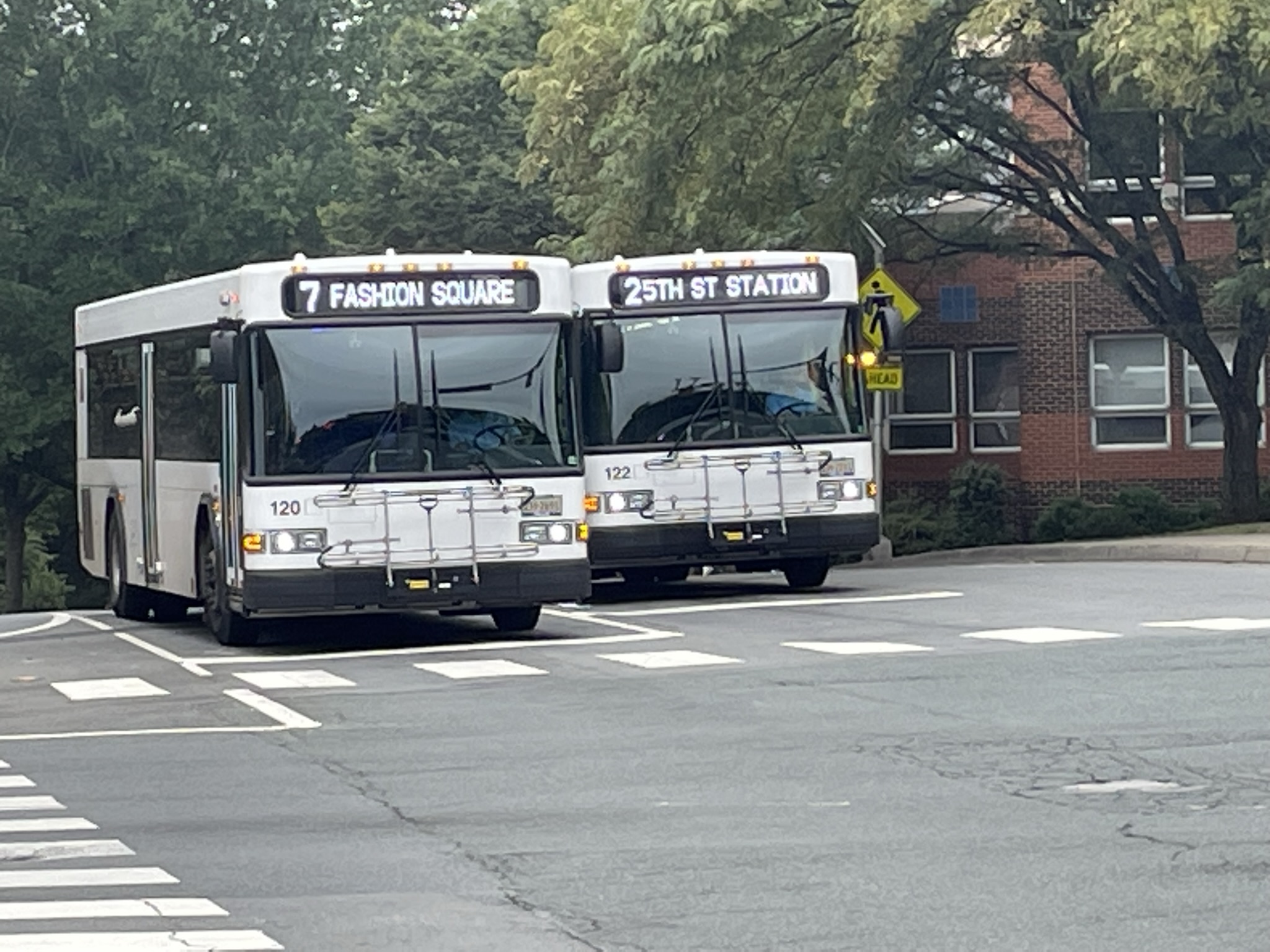
In recent years, Albemarle has also been contributing more to Charlottesville Area Transit, an agency fully owned and governed by the City of Charlottesville. In FY25, Albemarle contributed $1.86 million and nearly $2.7 million in FY26.
“The county share for the Charlottesville Area Transit program is increasing in the recommended budget by about $562,000,” said Caitlin Malcom, Albemarle’s chief of budget.
The recommended figure in the draft budget is $3,243,187, a 21 percent increase over the current year. Malcolm said the increase is Albemarle’s contribution to a plan to increase the number of drivers to 106 that City Council first learned about in December.
This amount is separate from a line item for MicroCAT, an on-demand service provided by CAT that was launched in the fall of 2024 as part of a demonstration grant with the Virginia Department of Rail and Public Transportation. FY27 will be the first year that there is no state funding. That funding meant the city could not charge a fare. Staff recommends a change beginning in January 2027.
“We’re recommending to start with a simple fare structure,” Malcolm said. “And that would increase revenue and also have the potential to improve service efficiency for MicroCAT. So the proposed fare structure would start with a base rate of $2 per ride for a single passenger.”
At the end of the March 11 work session, Supervisors voted a second time to designate a portion of Premier Circle as a revitalization area to assist the Piedmont Housing Alliance in their application for low-income housing tax credits. They had adopted a resolution on March 4 but that used the wrong parcel number for the property.

Decisions made at fourth work session
On the afternoon of March 18, 2026, the Albemarle County Board of Supervisors voted on tax rates to take to public hearing after the fourth in a series of work sessions. The elected officials have the option of adding around $1.7 million to the budget after agreeing to advertise a higher personal property tax rate.
But first, they learned of various changes made to the budget since County Executive Jeffrey Richardson presented it to Supervisors in late February.
“When the budget is printed and recommended by staff in February, that is a point in time estimate,” said Caitlin Malcolm, the county’s chief of budget. “It’s pretty standard that after that time, there are changes that are made by various agencies that participate in the budget process, and staff bring those adjustments back to the board as recommended technical adjustments.”
There were three changes that reflect lower payments that Albemarle would make to outside agencies based on various adjustments now that more information is known, as well as one that is higher. These were:
- The Albemarle Charlottesville Regional Jail would receive $258,827 less
- Charlottesville Area Transit would receive $150,814 less and a majority of Supervisors reached a 5 to 1 consensus to put this money into a fund reserved for public transportation with a specific use to be decided later. Supervisor Mike Pruitt thought the money should be added to the general fund because he does not like to put money in reserve.
- The Blue Ridge Juvenile Detention Center would receive $44,136 less
- The Reclaimed Hope Initiative would receive $40,000 more
This provided initial revenues that could be applied to further spending.
At the end of the third budget work session on March 16, Supervisors had asked how much additional revenue could be brought in by tax rate increases. That information was provided in writing. One thing to note is that tax rates apply to the calendar year which would make additional money available in the current fiscal year.
“If the Board were to decide to add a penny to that tax rate, for every penny added, it would generate $1.67 million of one time funding in FY26 based on the way the tax calendar year works,” Malcolm said.

Supervisor adjustments
During the work sessions, Supervisors wanted to know more information about the recent performance of the Albemarle County Emergency Relief Program. This program helps households with one-time needs and was created with funds that came through the American Rescue Plan Act with a total of $1.5 million. The next budget anticipates adding another $360,000.
Malcolm said a total of $263,174 was disbursed from the fund from July to December, the first half of the fiscal year.
“Of that amount, we’ve had 396 households apply for the funding and 214 have been approved,” Malcolm said. “Those 214 approvals have been 68 percent for eviction avoidance and 31 percent for utility shutoff avoidance. In addition to that, 188 individuals have received housing navigation assistance.”
No direction was given at this work session.
Another remaining item to be balanced is a difference between what Albemarle County Public Schools has requested and what will be in the Supervisors’ budget. Andy Bowman, Albemarle’s Chief Financial Officer, said there is a $2.3 million gap and he presented several options to proceed.
Close to the end of the meeting, Supervisors voted 5-1 to move forward with what Richardson had recommended.
Albemarle County funds dozens of nonprofit agencies through a competitive process and every year there are some who do not get what they had requested. There was interest in providing additional funding for the Foothills Child Advocacy Center and the Therapeutic Docket run by Offender Aid Restoration but a definitive decision was not made.
The Charlottesville Ballet had asked for $103,000 and ended up being recommended for $0. There was consensus to provide $2,500 to the Charlottesville Ballet to match the current year and add an additional $3,000 to the Charlottesville Band for a total of $8,000.


Richardson’s recommended budget included $250,000 for the Dogwood Vietnam Memorial Foundation as part of their campaign to build a new parking lot and pedestrian bridge to improve accessibility to the site in McIntire Park. The Foundation asked for $600,000.
“Any extra money we can put in beyond $250, I would appreciate that because this is a constituency who is important and does a lot of work for our county and fought for us,” said Supervisor Ann Mallek. “And I would really like to support them as much more as we can get.”
Staff claimed that Albemarle’s recommended contribution of $250,000 matches one from the City of Charlottesville, but Council has only agreed to contribute $105,000 toward the project. In January, Council voted 3-2 to adopt a resolution agreeing to accept the infrastructure if it is built.
On March 18, there was a majority of Supervisors willing to contribute more to the memorial if the city also increased its share. More information as it comes in.
Tax rate discussions
Supervisor Michael Pruitt said he has made it a goal to get Albemarle to contribute $10 million a year into the affordable housing fund. When the work session got around to the topic of what tax rates to advertise, he floated a suggestion to bring in around $6.6 million a year for the fund.
“I think it would also be prudent to advertise an additional $0.01 real estate tax and an additional 29 cent personal property tax, which is the approximate equivalent,” Pruitt said.
When a locality advertises a higher tax rate, that does not mean the elected body will approve that higher amount. Supervisor Bea LaPisto-Kirtley said she was against advertising any increase in part because property assessments in Albemarle were up again this year.
“I don’t want to cause that anxiety, frankly, amongst our citizens,” LaPisto-Kirtley said. “I don’t think we need to do it. So I would not be in favor of doing that, and I would not be in favor of saying, yes, we’re going to advertise this.”
Supervisor Fred Missel was also opposed to advertising an increase but said the county needs to plan how to spend more in the future on housing.
“I think we need to think more aggressively about that, but we need to plan for it,” Missel said. “We need to get to a place where it’s predictable, because then the community will be able to anticipate that’s where we’re headed.”
Missel in his first budget cycle as is Supervisor Sally Duncan. She said she would support a one cent tax increase in part because Charlottesville pays more toward housing.
“We need a way to create the money for this,” Duncan said. “If we really don’t have it in our budget, how are we going to get the money for this?”
Mallek said she could not support a real property tax rate increase.
“The burden on the residents and the renters because everybody’s rent went up last year after the 4 cent tax increase happened has just been a real burden for this year for basically everybody,” Mallek said.
Supervisor Ned Gallaway pointed out that a decision to advertise a higher tax rate was not the same as adopting one and that advertising the additional rates would allow feedback on the topic of housing at the six town halls to be held before the next public hearing.
“I certainly have seen affordable housing be just I said it the other day to someone that it just seems to be taking up a lot of oxygen on a lot of issues across a lot of different silos,” Gallaway said.
Then it was time to make motions.
Supervisor Pruitt made one to advertise a one cent increase on the real property tax rate with all of the proceeds dedicated to the housing fund. The motion failed to pass on a 3 to 3 vote.
Pruitt made a second motion to increase the personal property tax rate by 29 cents with all of the funds dedicated to housing. Same result.
“I mean, we could just play the game where I keep throwing out new numbers until I get a bite,” Pruitt said.
Pruitt got that bite when Missel said he would entertain a 15 cent increase in the personal property with all of that going to the housing fund. This would generate about $1.7 million. A motion passed 4-2 with Mallek and LaPisto-Kirtley voting no.
A motion to adopt an amended FY27 budget for advertisement passed 5-1 with LaPisto-Kirtley voting no.
There will now be five more town halls where people can learn more about the budget in person. The first was held at the Center at Belvedere on March 19.
“I just want to remind supervisors and the public that this is basically outlining the constraints that we will now work on for the rest of the budget,” Gallaway said. “The only real item that got changed there obviously was under will be coming with the personal property for affordable housing.”
Those town halls are:
- March 19 at 6 p.m. at the Center at Belvedere (event has passed)
- March 23 at 6 p.m. at Western Albemarle High School
- March 25 at 6 p.m. at the County Office Building at 5th Street
- March 26 at 6 p.m. at Yancey Community Center
- March 30 at 6 p.m. at Lakeside Middle School
- April 2 at 6 p.m. at Albemarle High School
Before you go: The goal of Town Crier Productions is to increase awareness about what is happening at the local, regional, state, and federal government levels. That includes a focus on the budget of communities in the Thomas Jefferson Planning District Commission.
This article is a little different because it is made up of three segments across three editions of Charlottesville Community Engagement. This post has been written to take previous coverage to tell the story of how decisions were made. This is a core function of Town Crier Productions, a company formed in 2020 to do just this work.
Please share the work with others if you want them to know more about how budgets in Albemarle County are put together. To support the work, you can make a paid subscription through Substack or make a charitable contribution.
Discover more from Information Charlottesville
Subscribe to get the latest posts sent to your email.