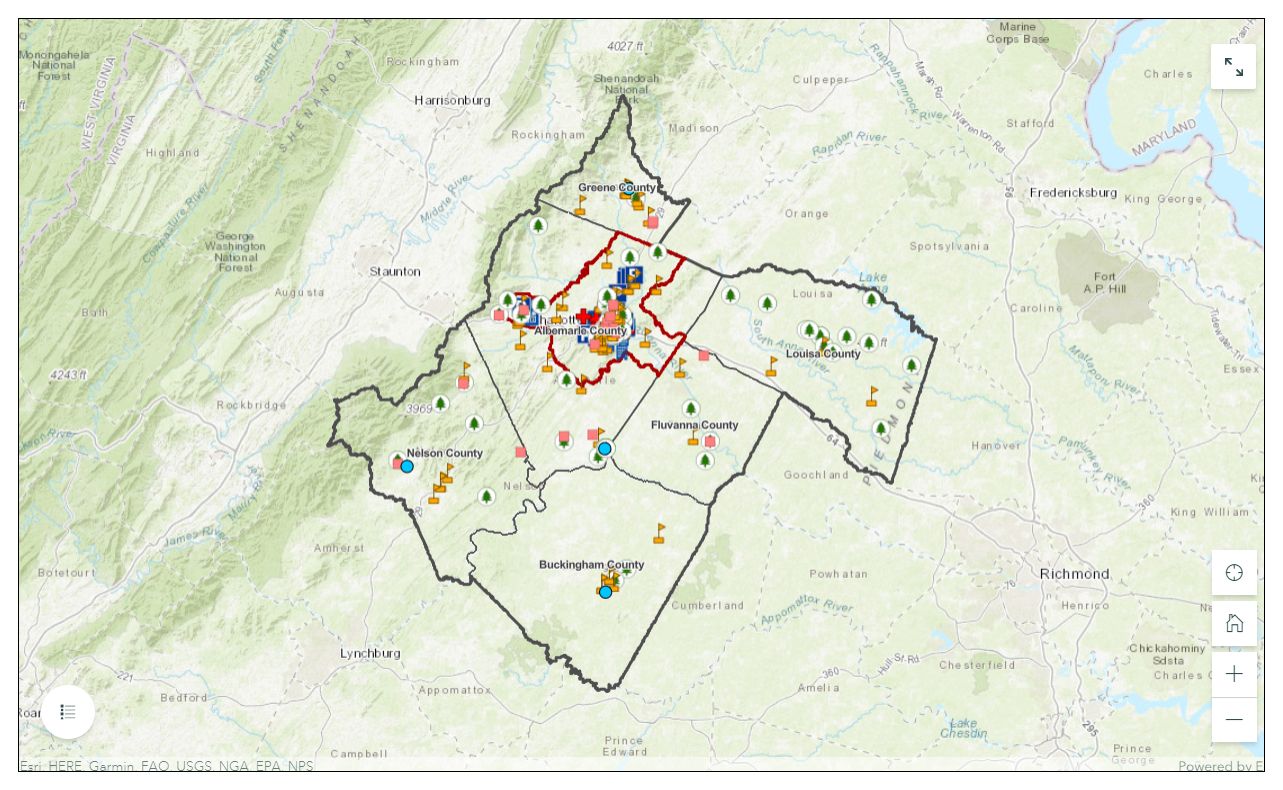
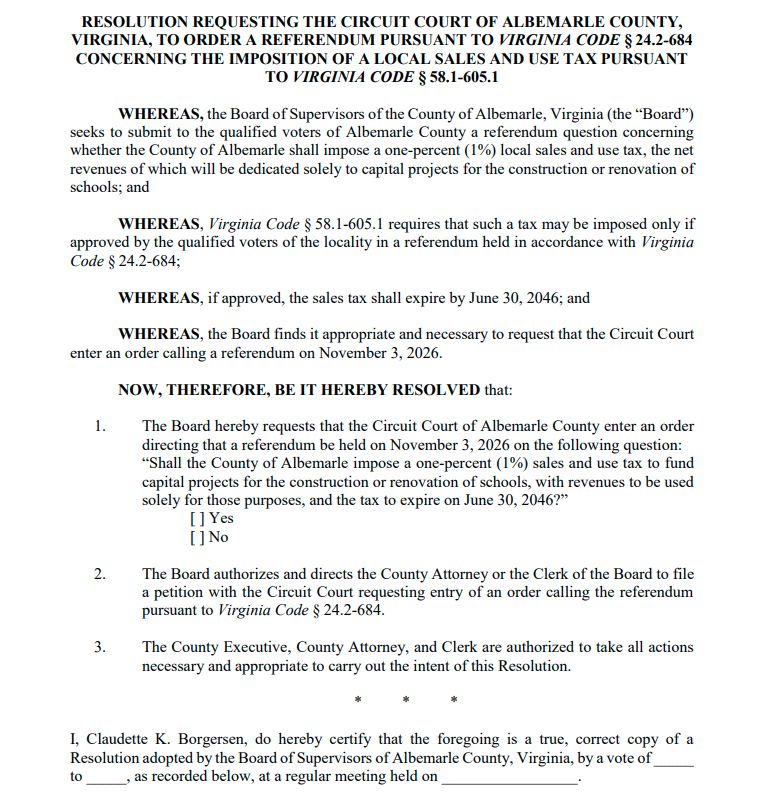
There were a lot of big ideas discussed at the May 21, 2025 meeting of the Albemarle Board of Supervisors.This newsletter has summaries of two of them and others will hopefully follow later this week.
For decades, the county has had a close eye on growth and implemented policies in the early 1980’s to limit where development could go.
One of the work sessions that afternoon was to review a report known as a Cost of Community Services Study that calculates how much the county spends to provide services for different kinds of zoning districts and how much real estate tax is collected for each category.
“You assign revenue and expenditures to particular land uses and you compute that ratio,” said
Terry Rephann, a regional economist with the Weldon Cooper Center for Public Service at the University of Virginia.
Albemarle’s latest version was produced in late 2023 after the county asked for additional information to help inform the Comprehensive Plan update.
These studies were initially conducted by a nonprofit called the American Farmland Trust who wanted to demonstrate that residential development costs more for localities because people demand more services than open space.
The Weldon Cooper Center began doing them in the mid 2000’s. Rephann cautioned that these are snapshots of a point in time.
“For instance, we’re not saying all housing is going to be a fiscal deficit for you,” Rephann said. “There could be ones that are very, very good in terms of generating more revenue than expenditures.”
Data for the 2023 study is based on the county’s audited books for 2022, officially known as the Comprehensive Annual Financial Report. (take a look here)
For that year, residential land brought in over $264.8 million in revenue, or 70.18 percent of the total tax receipts. The county spent over $346.7 million in services, or 90.11 percent of total expenditures.
Commercial brought in 27.32 percent of revenues or over $103 million. Services provided cost nearly $33 million, or 8.57 percent.
Agricultural and open space brought in $9.42 million but only cost $5.06 million in services.
Rephann said the biggest factor for why residential costs so much is the need to provide a public education for students from kindergarten to 12th grade.

Supervisor Bea LaPisto-Kirtley said the information is helpful as it shows that more people moving here will mean larger budgets.
“People will say, well, build more houses,” LaPisto-Kirtley. “Okay, that’s good. We do need more housing, but then that also costs us more in services. So people just need to understand that.”
This particular study does include any information about the role the University of Virginia plays. UVA is primarily in Albemarle County but does not directly contribute tax revenue. Rephann said there’s not a lot of objective data, but the role of UVA is significant.
“People are in Albemarle county, retire here because of their connections to the University,” Rephann said. “So it’s one of the things that drives up your housing costs, makes housing less affordable, but also contributes more.”
Rephann said there are many amenities that drive the economy such as provide consumers in the form of students. He said if UVA disappeared, other economic development factors would also vanish.
“What’s going to happen to the commercial businesses that are supported by the students?” Rephann said. “And so there are these indirect spin off effects, these tax revenues that are contributed, faculty, staff, students supporting spin off businesses that come out of the Licensing Ventures group, et cetera, wouldn’t be there anymore and so forth.”
For more details on how UVA-related entities pay Albemarle, there’s this story from March 27, 2024.
To watch the presentation on the Cost of Services Study, here’s a link to the video of the full meeting. You should be able to scroll through the interface to get to the meeting item you want.
Before you go: This story was first heard on WTJU in the June 14, 2025 edition of Charlottesville Community Engagement. It was then in the podcast version that went out that day, and then in the June 16, 2025 print edition. It could be argued it should be been posted here around the same time, but we’re in no mood to argue.
Discover more from Information Charlottesville
Subscribe to get the latest posts sent to your email.