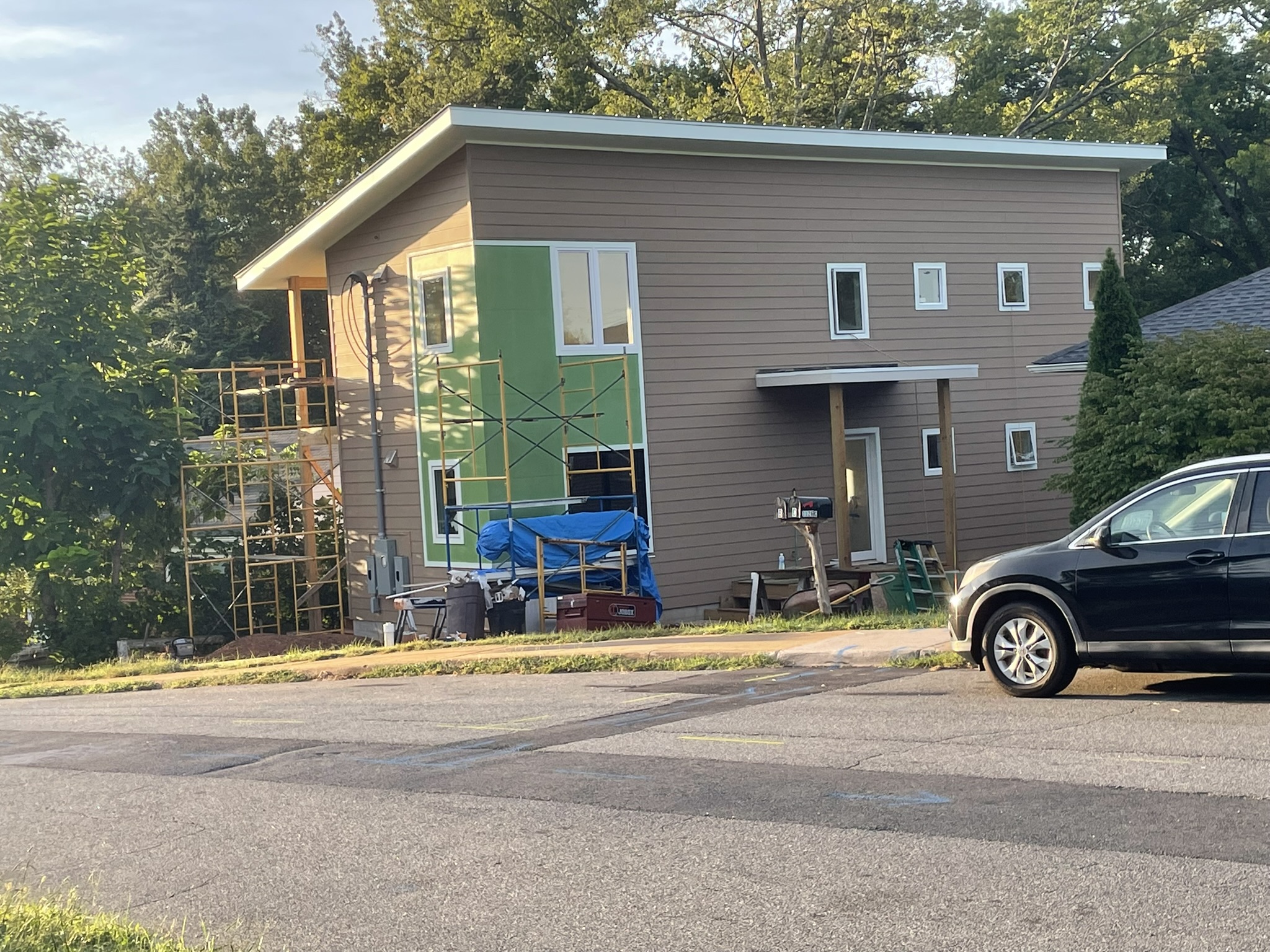
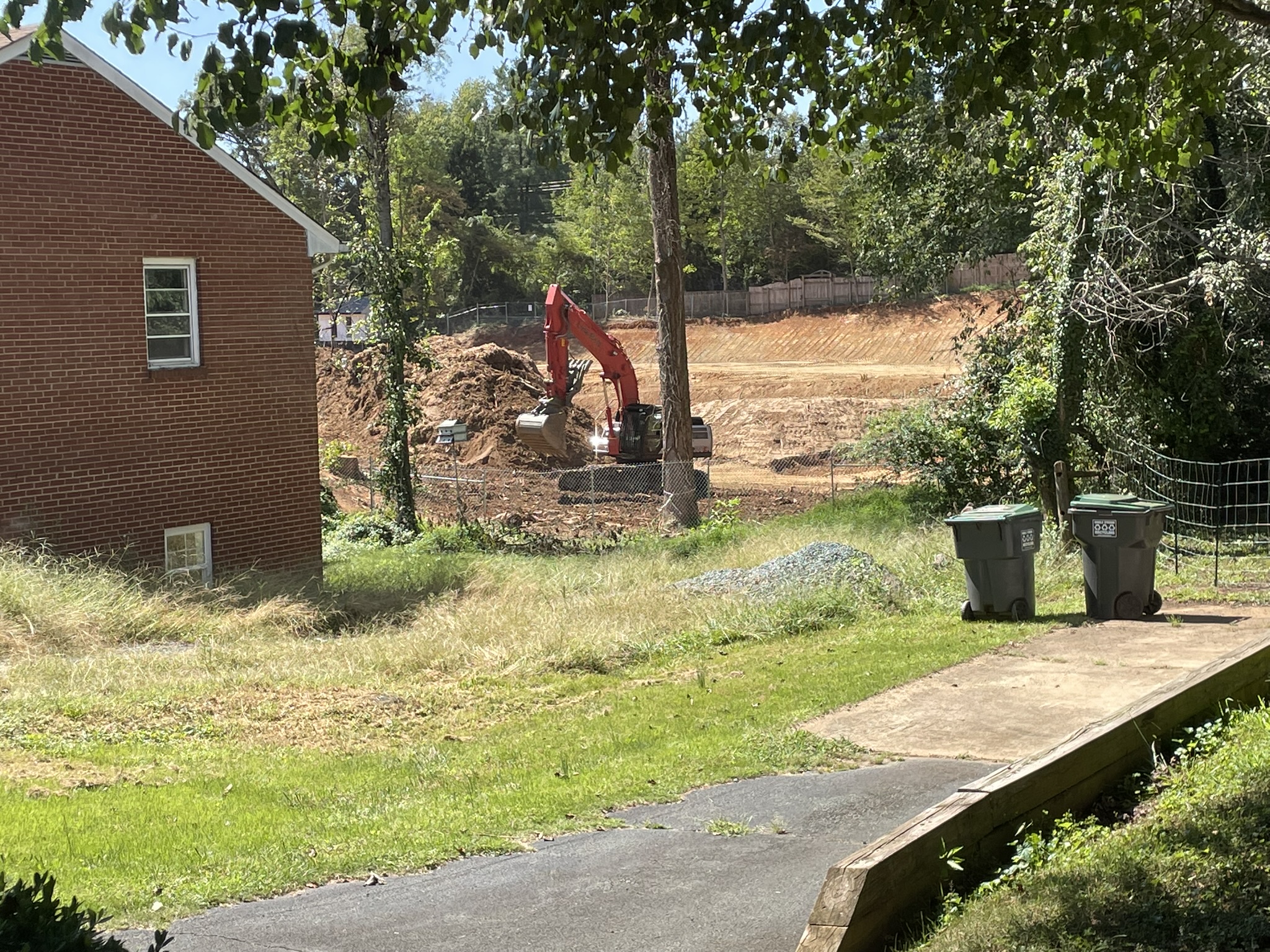
When Charlottesville City Council adopted a new zoning code in late 2023, the new rules eliminated much of the role that they and the Planning Commission play in determining the fate of development projects as well as how they are designed.
However, the new Development Code retained historic and architectural design control districts and the Board of Architectural Review continues to play a role in determining what happens there as well as on individually protected properties.
Perhaps the biggest example of the BAR’s power is a vote in December to deny a certificate of appropriateness for a seven-story building in Fifeville that sought to incorporate two protected structures into the design. City Council will take up an appeal in the near future.
Under the new zoning, developers meet with city staff in preliminary meetings to discuss potential projects. These are not open to the public. However, if a project is within the jurisdiction of the BAR, preliminary discussions are public.
On February 18, the body saw two projects with the first being a proposal to construct nine townhomes at 528 Valley Road. An entity called AVP 528 Valley LLC purchased the 0.47 acre site in September 2023 for $868,000. The property is Residential-B and the project is by-right except for the need for the BAR to sign off due to this being in the Oakhurst Gildersleeve ADC district.
“Existing on this site is a colonial revival brick dwelling that was constructed in 1937,” said Jeff Werner, the city’s preservation planner.
Werner said the house will remain and the new units will be constructed in three new buildings.
“This is an example of where we’re heading with the new code of development, looking at higher density infill adjacent to single family, what had been single family dwellings or certainly a single family dwelling neighborhood,” Werner said.
The BAR’s review is called for in section 5.2.7 of the Development Code as this is technically an addition of structures to a property in an ADC. Werner wanted members of the BAR to decide on parameters for their review.
“Do you want to look at this as an addition?” Werner said. “I know it’s not an addition but look at it in terms of being subordinate to the primary structure.”
The buildings are being designed by the Gaines Group and architect Adrian Strong said the project is purely new construction.
“We did approach the project from a standpoint of preserving the existing house there and not touching,” Strong said. “So that’s really what this is in response to the city zoning and what’s being allowed in the residential lots and trying to squeeze in that needed housing stock.”

BAR Chair James Zehmer said that he also sees this project as new construction but said the body still has a role to play.
“We should certainly kind of take the house into consideration as we’re looking at these buildings,” Zehmer said. “But to me, it’s new construction.”
That means that the BAR can look at the massing and scale of the new structures and can suggest alterations. Strong was asked to explain how the design fits in with design guidelines for the Oakhurst Gildersleeve ADC.
“Because of the zoning, we do have a minimum but also a maximum setback from the road,” Strong said. “So these structures do have to get closer to the road.”
Strong said the scale has been reduced somewhat in response to nearby buildings and the design is intended to match.
“And then looked at some of the colors from the neighborhood to really pull in some of the existing greens, some green roofs, green shutters throughout the neighborhood that we tried to emulate with this, but also make it look like it’s new stock and it’s not trying to replicate something that’s existing there,” Strong added.
One licensed architect on the BAR had notes on one of the buildings closest to the street.
“This building feels like it’s too far forward and too big on the street,” said Katherine Snider Tabony. “This is just sort of a kind of my gut reaction.”
Carl Schwarz, also a member of the Planning Commission, had other direction for the first building.
“Is there a way to break the massing down?” Schwarz asked. “So yes, either treat it like townhouses or something so it’s more vertical in its break-down so it doesn’t feel quite so wide. Or maybe there’s a way to modulate the facade a little bit so it’s not so flat.
Schwarz was not as concerned about the other two buildings. He did say that the vinyl windows being suggested for the project would not be approved because they are not allowed in the guidelines.
The second project is for a vacant lot in the 700 block of Lexington Avenue in the Martha Jefferson Historic Conservation District. The property is 0.181 acres and zoned Residential-B. The owners want to build a single family house.
The design showed a carport and several members of the BAR expressed concern. Schwarz said the active depth requirements in the Development Code might prevent that from being allowed.
“Maybe there’s an exception somewhere that I missed, but my understanding is that for 65 percent of the lot width has to be building without cars in it,” Schwarz said.
Others were more in support of the carport.
Both items will come back to the BAR when formal applications are filed.

Before you go: The goal of Town Crier Productions is to increase awareness about what is happening at the local, regional, state, and federal government levels. Please share the work with others if you want people to know things! Paid subscribers cover the cost of conducting research for this article which was originally published in the February 26, 2026 edition of Charlottesville Community Engagement. You can either subscribe through Substack or make a charitable contribution.
Discover more from Information Charlottesville
Subscribe to get the latest posts sent to your email.