Charlottesville’s new zoning code intentionally reduces the role that elected and appointed bodies play in deciding whether multifamily buildings can be built on land that formerly could only contain one residential unit.
However, there are still government venues where neighbors can voice their objections. That’s one role that the Charlottesville Board of Architectural Review played at a meeting on May 22, 2025.
“We are hearing an administrative modification today,” said zoning administrator Read Brodhead. “Administrative modification is something new in our development code.”

Charlottesville is not flat which means there are times when a developer needs to make adjustments to fit buildings into parameters allowed by the city. Under the old code these were known as variances, but now they are known as administrative modifications. The zoning administrator can grant permission for any physical dimension standards in the code to be increased or decreased by up to 15 percent.
“How much building coverage can be taken up on a site, entrances into the building, how farther spaced apart,” Brodhead said. “And in this case, it is addressing the build-to width of the building.”
The “build-to” width is defined in the code as “the cumulative building width that occupies the build-to zone relative to the width of the site at the street lot line” and the purpose is “”to facilitate the creation of a convenient, attractive, and harmonious community by regulating the placement of buildings along the public realm so that buildings frame the public realm with a consistent pattern of development.”
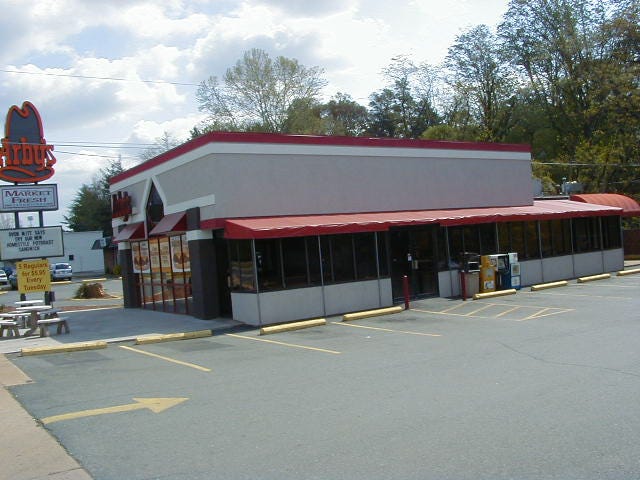
In June 2024, Greenshire Holdings LLC purchased undeveloped land at 2030 Barracks Road for $581,500. The 0.83 acre parcel is zoned Residential-B which allows 12 units as long as half of them meet the city’s affordability parameters.
The company filed a major development plan with the city’s Department of Neighborhood Development Services that anticipates subdividing the lot into two, allowing for two 12-unit buildings to be built. Prior to the adoption of the new Development Code, this would have required a rezoning and most likely a special use permit.
The Planning Commission and the City Council still have to review and approve special exceptions and this project is seeking to waive a requirement that the buildings face the street.
The Planning Commission will take that up on June 10 but there is no public hearing.
That’s a process separate from the administrative modification requested for the build-to width. Under Virginia Code, the city must notify adjacent property owners if such a request is pending. If any objections are received, the decision on granting the administrative modification goes to the Board of Zoning Appeals.
“I will note I sent five letters out to adjacent property owners and got four objections,” Brodhead said.
Three of the property owners attended the BZA meeting and had the opportunity to make a public comment. However, the BZA must consider three criteria in their determination. Does the standard impose a hardship on the developer? Do other properties share the hardship? Would the modification affect other properties?

In the case of 2030 Barracks Road, one of the two buildings would only take up 61.1 percent of the frontage rather than the 65 percent required by the code.
Brodhead said he felt the modification was justified because all three criteria had been met.
As a public hearing, applicants have the opportunity to make their case.
“This is a request to build a smaller building,” said Kelsey Schlein of Shimp Engineering. “We’re basically requesting a building reduction of one and a half feet effectively.”
Without the modification the project would have less green space, would require a taller retaining wall, and there would be slightly less sidewalk.
David Marold of Greenshire Holdings said his intention is to build more housing so more people can live within the city. He originally came to Charlottesville to work for the The Judge Advocate General’s Legal Center and School.
“One of the unique things about working at the JAG school is that I found out of over a hundred employees here, these are military officers, these are high level GS employees,” Marold said. “There were only about six that lived in the city.”
Yates Nobles expressed broad opposition to the level of density envisioned close to a busy intersection.
“Twenty-four units with a minimum of 50 residents plus their guests and deliveries and emergency vehicles brings traffic to a standstill when crossing Barracks Road to enter this road,” Noble said.
Noble also objected to the amount of trees that will be cut down. Another pending permit is one to remove 67 trees from the property.
Katie Kishore said the project is asking for too many special exceptions and modifications.
“The developer is requesting a change of location of the driveway, a change of location of the city’s crosswalk, a special exception to build on the slopes, a special exception to omit front entry features, a special exception to eliminate tree canopy, and most importantly today, a build to width modification,” Kishore said. “This hardship has been created by the developer because he wants to split the two lots in order to increase profit.”
When the decision was before the BZA, Keller noted the group does not have much latitude.
“We have a very limited purview which doesn’t extend to traffic or environmental considerations,” Keller said. “We’re all getting our heads around this code and the new opportunities that are available under it.”
Keller said she understood the objections, but noted that Council made the decision to allow a denser city.
“It’s something that the entire community needs to understand,” Keller said. “The development rights vested in their properties have changed along with those of their neighbors and within their surroundings. It’s something we all have to get used to, particularly when we’re in neighborhoods that were once R-1 and now they’re Residential-B.”
The BZA’s vote was unanimous.
Before you go: This story was originally published in the May 27, 2025 edition of Charlottesville Community Engagement. This is a slightly different version than one that ran in C-Ville Weekly. I recycled one quote. The point of all of these stories is to give people a play-by-play of how Charlottesville’s new Development Code is implemented. If you want that sort of work to continue, support the business how you can.
Discover more from Information Charlottesville
Subscribe to get the latest posts sent to your email.