In an era of shifting norms, Charlottesville City Manager Sam Sanders took a moment before City Council’s public comment period on December 16 to address a previously floated idea to use city funding to help launch a low-barrier shelter on Cherry Avenue.
Sanders was unable to attend a December 12 meeting of the Fifeville Neighborhood Association at which three members of City Council were present to hear concerns from some in the community.
“I have committed to come to the Fifeville Neighborhood Association meeting in January and I recognize that a number of people are planning to speak this evening on this subject,” Sanders said.
Before people spoke, Sanders called on speakers to not villainize people who are homeless in the community and he had seen people who were doing just that.
“I think it’s also important for us to appreciate that no decision has been made and while it may feel like a decision has been made, no decision has been made,” Sanders said. “It is a concept that we are looking at, seriously looking at, because it is a viable opportunity to bring a year-round low-barrier shelter to this community.”

Sanders said the city went through a volatile situation when there was an encampment at Market Street Park in the fall of 2023 and since then he has been working to identify ways to increase capacity.
“I have been working on this issue since then,” Sanders said. “It is not a new issue. There have been some folks who have been surprised by the idea that there’s a discussion about a low-barrier shelter in this community. I’ve been talking about it for a year.”
- Sanders outlines work plan, homeless intervention strategy, October 9, 2023
- City Manager Sanders provides update on Charlottesville’s efforts to assist the unhoused, September 12, 2024
- Charlottesville City Manager Sanders announces upcoming “community interventions” including $5 million for the Salvation Army, October 23, 2024
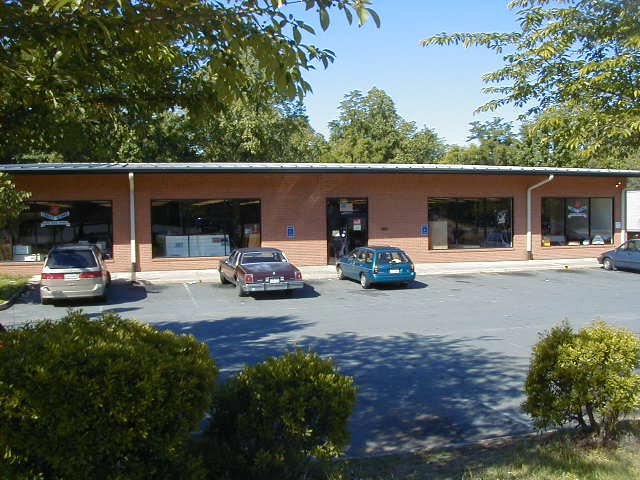
Sanders said he wants to help as many people as he can live inside and not outside and he is not looking to harm neighborhoods and he understands no one will want to volunteer to welcome the shelter into their community. He said the conversation is happening through discussions with the Salvation Army about the possibility of converting their thrift store.
Ben Eppard, a resident of 7 ½ Street SW, took issue with a media account that appeared to state that the entire neighborhood was opposed to the idea. He was present at the December 12 FNA meeting.
“There were a few people who voiced that complaint,” Eppard said. “The thing that kept being said over and over again was ‘not beside the playground’ which is understandable especially as we heard from the Salvation Army that the whole goal of the low-barrier shelter is to serve people that may be on… sex offender lists, etc.”
Eppard suggested that the Salvation Army consider expanding their family shelters on Cherry Avenue and putting the low-barrier shelter on Ridge Street, away from Tonsler Park. He said this was the first time many in the Fifeville neighborhood had heard the idea.
Sander’s written report for the December 16 meeting including information regarding how the Charlottesville Fire Department and the Charlottesville Area Rescue Squad has begun to track incidents involving the unhoused.
“Our records show that over the last six months, CFD and CARS have responded to 38 unhoused patients monthly on average,” reads the report. “The top three findings of attendants in charge on these incidents were non-traumatic pain (17.6 percent of calls), alcohol abuse (16.4 percent of calls), and bodily injuries (11.7 percent of calls).
Later in the meeting, Council agreed with Sanders’ recommendations to spend $3 million of the city’s unspent American Rescue Plan Act funds on the Salvation Army’s Center of Hope project.
“This is a part of capital campaign, part of the kickoff, I believe,” said Chris Cullinan, the city’s finance director. “The total project is something like $22 million in total. So this is sort of a upfront investment to hopefully leverage additional dollars to get that project going.”
If it proceeds, one way the costs of the Cherry Avenue project might be covered is through the annual surplus that is expected. Council also got a briefing on the annual audit but did not get specifics about how money is available.
“I am comfortable in saying that we did end FY24 with a surplus, but again, we need to let the audit process play out and get that final number,” Cullinan said.
Council will vote on the year-end appropriation sometime in January.
Before you go: The time to write and research of this article is covered by paid subscribers to Charlottesville Community Engagement. In fact, this particular installment is from the December 19, 2024 edition of the newsletter. To ensure this research can be sustained, please consider becoming a paid subscriber or contributing monthly through Patreon. There will be new options in 2025 if you’d like to wait. Just please know I’m glad you’re reading!
Discover more from Information Charlottesville
Subscribe to get the latest posts sent to your email.