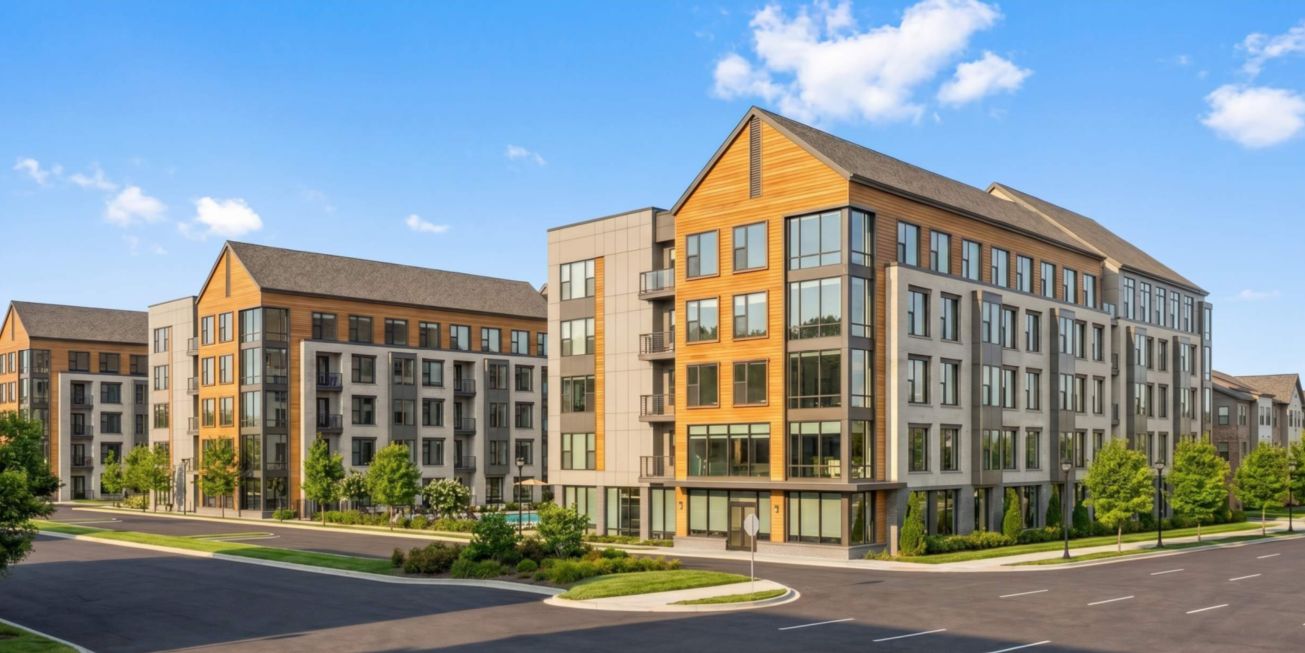
One of the biggest land use stories in November concerned a proposal to redevelop the Violet Crown cinema at 200 West Main Street with a residential building that would be 184 feet tall. That’s allowed under Charlottesville’s new Development Code if certain conditions are met, but those conditions have nothing to with the Board of Architectural Review.
Jeffrey Levien of Heirloom Development has a contract to purchase the property and on November 19, 2024 the BAR held the first pre-application conference to provide feedback on the early stages of a design proposal.
“This is a request to construct a new building at this site which presumably would require the demolition of the existing building, which would require a COA because it is designated contributing,” said Jeff Werner, the city’s historic preservation planner.
A COA is a Certificate of Appropriateness that the BAR must grant because the property is within one of the city’s architecture design control districts. Demolition would be just one step as the appointed body would also have to sign off on the design.
During a preliminary application conference, the BAR may provide feedback but Werner said their comments are not binding.
“For example, the BAR might express consensus support for certain materials, identify features that require revision or clarification, or request additional analysis, et cetera,” Werner said. “But such comments will not constitute a formal motion and the result will have no legal bearing, nor will it represent an incremental decision on the required COA.”

This proposal comes at a time when the city’s new Development Code is less than a year old and so far there have only been a handful of “major development plans” to take advantage of new allowable heights.
“It’s a very important first test of our code because what I want to discuss tonight is like, do we want to unlock the development of this property?” Levien asked at the beginning of his presentation.
Levien said he needs to first know if the BAR would grant a COA for demolition and then he needs to know if they would support the massing and scale he proposes. While the new development code has stripped out the role the Planning Commission and City Council play in individual projects, the new rules give the BAR some amount of discretion in the Downtown Mixed Use district in which 200 West Main is located.
“In Downtown Mixed Use (DX), where the BAR has authority, the maximum height is determined based on BAR review using their design guidelines,” reads section 2-125 of the Development Code. “In areas outside of BAR authority, the maximum height is determined by the maximum number of stories and feet allowed by the zoning district.”
Anyone who disagrees with whatever decision the BAR makes can appeal to City Council.
To design the building, Levien said he needed to know how high he could go and have that decision locked down. He said he didn’t want to waste money on a design that could never get approved.
“I didn’t know where to start, but we have to start the conversation if we’re going to test this code,” Levien said.
One item to take into consideration with tall buildings is the sunlight they may block at different parts of the day. One of the items in the November 19 was a shadow study intended to help the BAR with their decision. Levien also made a pitch for how a residential building would fit in with the future of the Downtown Mall.
“The city’s mission is designed to provide more housing,” Levien said. “This is what this project does. The Violet Crown is a jewel. It’s a jewel that’s just become outdated as far as a business model in the world of theatres. That’s my opinion based on a lot of fact.”
BAR member Cheri Lewis took a few minutes to read directly from the guidelines for demolition and you can follow along in the BAR’s guidelines. She stopped about halfway through.
“Excuse me as I go on and on, but this is important stuff, guys,” Lewis said. “This is what we should be talking about tonight. The applicant wants us to demolish. He’s not. He’s stood up and not given us a reason. So I just want to refocus this. I’ll be done in about a minute.”

After hearing the list, BAR member Ronald Bailey said he didn’t think demolition of 200 West Main Street would violate the guidelines. Planning Commissioner and BAR member Carl Schwarz agreed.
“I’m not sure I would have much trouble accepting a demolition,” Schwarz said. “There’s not much left of that building that I think dates to the department store that used to be there.”
Levien has previously gotten approvals from the BAR to demolish the existing shopping center at 218 West Market Street as well as the building where Brown’s Lock and Key is located. Later in the meeting, he pointed out that demolition is tied to getting a building permit for the next building.
“I do want to point out to Ms. Lewis that as I’ve done in the past, I will completely give a full COA of answering all those questions and I believe like those will be answered and those will be satisfied,” Levien said.
BAR Chair James Zehmer agreed that this proposal is a test case and the appointed body will proceed cautiously given its location.
“The Downtown Mall is on the National Register of Historic Places so we need to do this thoughtfully and carefully,” Zehmer said. “If it moves forward, I think that the BAR certainly does have the right to exercise its authority to limit the height of this building to within two stories of the existing height of the buildings on the Downtown Mall.”
Members of the BAR sought a more detailed shadow study and to get a determination from the city’s tree experts on what effect a lack of light may have on their health. That will be a major discussion point on Tuesday.
Schwarz said he felt the building should be stepped back from the Mall and that any height should be toward the Water Street end of the property.
“Personally, to me, density downtown does not necessarily mean density right up on Main Street,” Schwarz said. “It could mean density on the two parking lots on Water street or we have another parking lot that Woodard owns on Market Street. There’s various locations that are downtown that would greatly increase the number of people downtown that aren’t necessarily right on the Mall.”
Toward the end of the conversation, Levien said City Council agreed to 184 feet as the tallest possible height in the Downtown Mixed Use zone. That was a long process that resulted in the Development Code.
“That’s the rules right now, “Levien said. “The exception to the rule is that you have the power to reduce that and I respect that. I am just trying to get to the point of what that means because it’s either going to mean a project’s viable and we can activate this mall and change a lot of things holistically about this Mall.”
While Werner had warned the BAR that they cannot dictate any of the uses in the building, Lewis had asked if there would be retail on the mall side because she wanted some sense of what the new structure would do for the Mall.
“We do have a purview over [the building] and certainly how this big building interacts and impacts our Downtown Mall,” Lewis said. “That is our purview. And that’s why I asked that question.”
Levien said he could counter with the amount of economic benefits that might come from a residential structure on the mall, but he just wanted to know what building envelope the BAR would approve.
Toward the end of the discussion, Zehmer summarized what had been said.
“I think there’s a general feeling that demolition of the existing structure would be allowed,” Zehmer said. “Again, you’d have to provide the proof of the benefit to do that and the reasoning why we should allow it. I think, as some of us have summarized, I think stepping back is something we should explore, especially on the Main street downtown mall facade.”
Zehmer said there should also be a stepping back on Second Street SW and that facade on the Mall should be at human scale.
Levien said the conversation was helpful.
“I think the city did a phenomenal thing,” Levien said. “It took a wide shot at zoning. The question is, can we put it into practice because if it’s theoretical, it doesn’t mean anything to anybody.”
The conversation continues on Tuesday, December 17, with another pre-application conference. For some more details, here’s an overall preview of today’s meeting.

Before you go: The time to write and research of this article is covered by paid subscribers to Charlottesville Community Engagement. In fact, this particular installment is from the December 16, 2024 edition of the newsletter. To ensure this research can be sustained, please consider becoming a paid subscriber or contributing monthly through Patreon. There will be new options in 2025 if you’d like to wait. Just please know I’m glad you’re reading!
Discover more from Information Charlottesville
Subscribe to get the latest posts sent to your email.