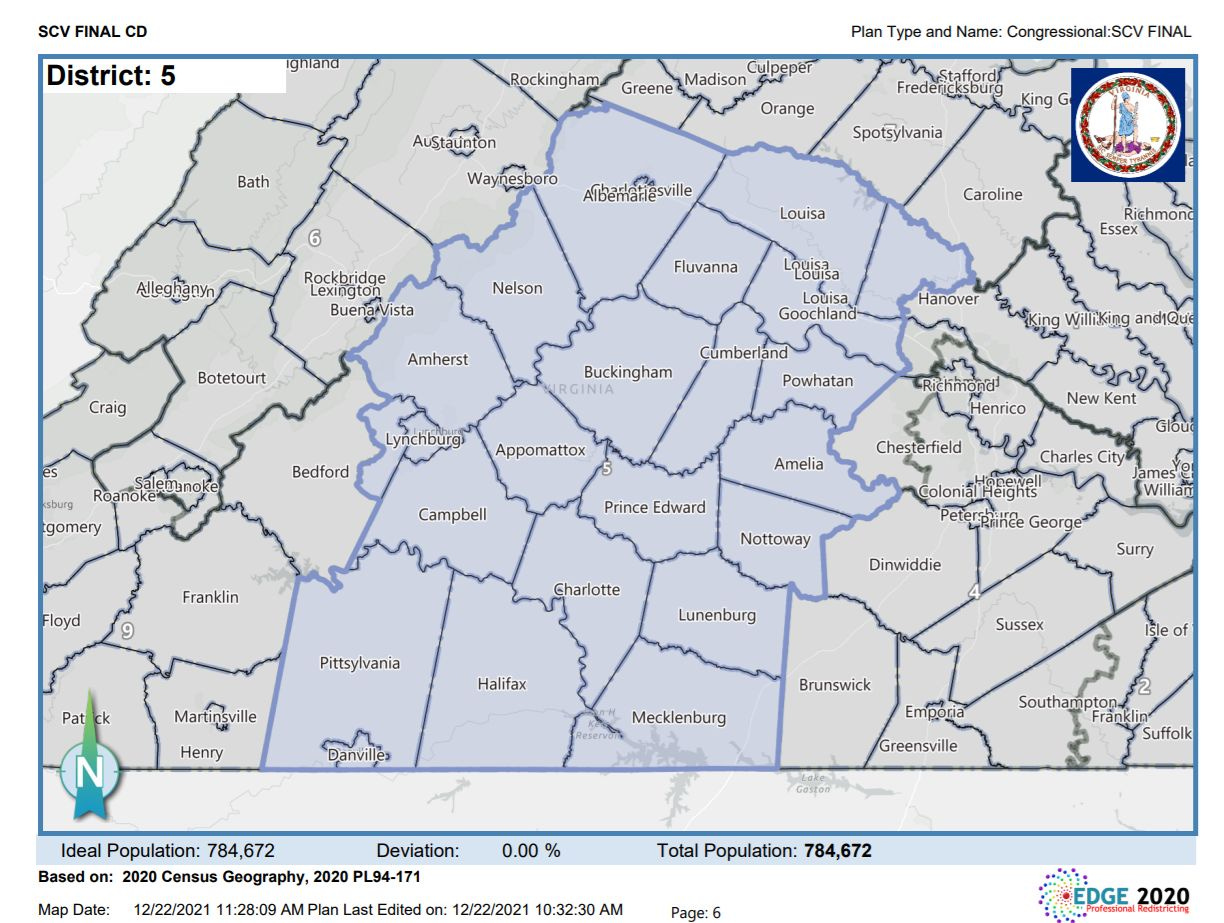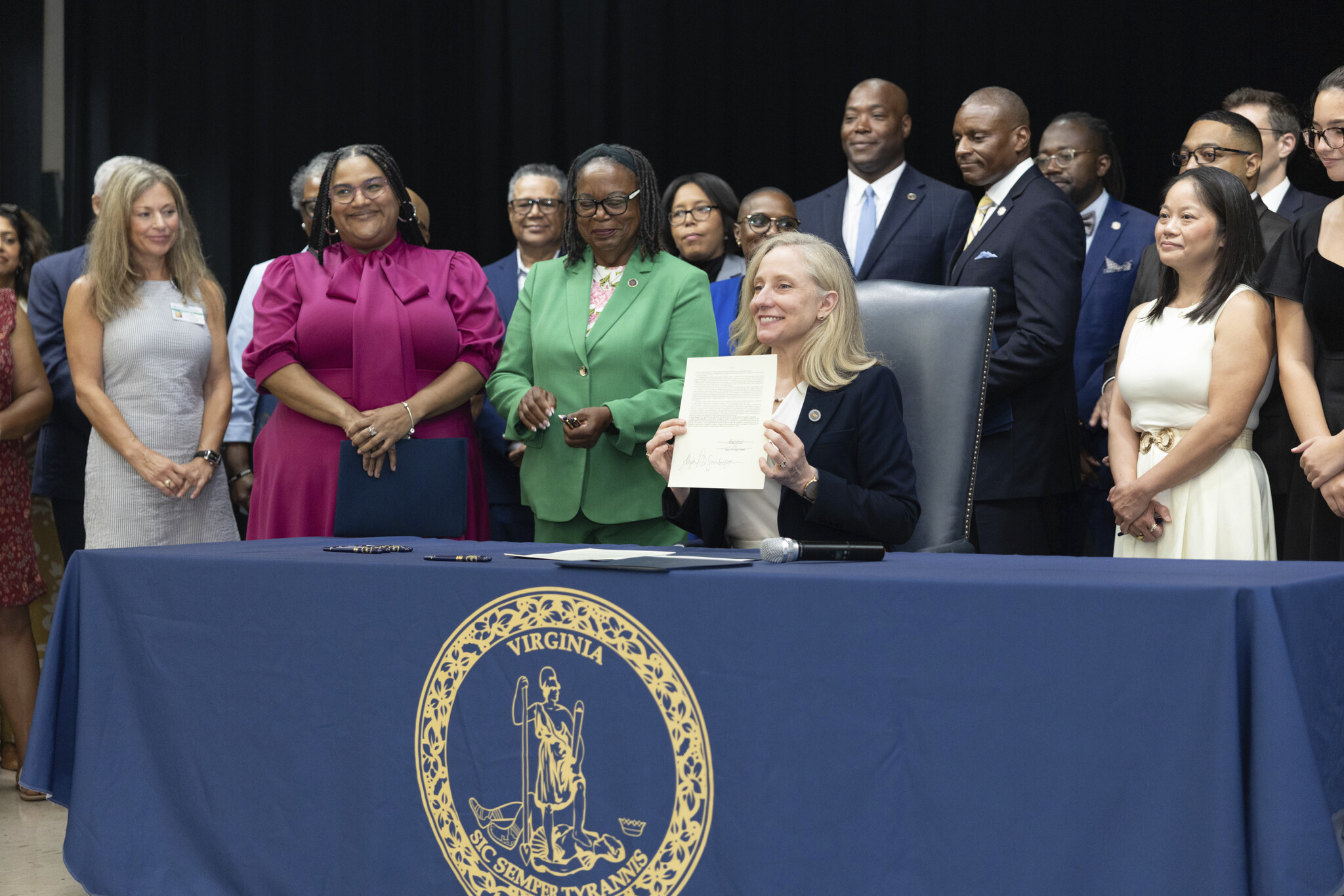
Electoral boards all across Virginia are still processing the results of primary elections for U.S. Congress. As the canvass continued Thursday, Governor Abigail Spanberger honored the 61st anniversary of the Voting Rights Act with a ceremonial signing of bills intended to secure upcoming elections.
“In the decades since the Voting Rights Act became law, Virginia has made remarkable strides,” Spanberger is quoted in an information release. “Our democracy is strongest when every eligible citizen can participate — and I’m proud that the bills I signed today reflect that.”
President Lyndon B. Johnson signed the Voting Rights Act on August 6, 1965 which prevented state and local governments from writing rules that restricted and suppressed Black voters, a common practice in many southern states for much of the 20th century.
“No voting qualification or prerequisite to voting, or standard, practice, or procedure shall be imposed or applied by any State or political subdivision to deny or abridge the right of any citizen of the United States to vote on account of race or color,” reads Section 2 of the Act.
The ceremony also honored the 60th anniversary of Harper v. Virginia Board of Elections when the United States Supreme Court ruled that Virginia’s poll tax was unconstitutional. That practice would not allow a person to register to vote until they paid a fee.
Other similar cases had been consolidated into Harper including one filed by Evelyn Thomas Butts. Her daughter was on hand at the ceremony in Norfolk according to the release.
“My mother fought the poll tax because she understood that democracy fails when eligible citizens are prohibited from participating,” said Charlene Butts Ligon. “She also understood that winning a legal victory was not enough. After the court case, she continued registering, educating, and organizing voters. That responsibility now belongs to us.”
Legislation signed at the event is intended to strengthen voter protections.
- HB215 requires Virginia to be enrolled in the Electronic Registration Information Center. Former Governor Glenn Youngkin withdrew in 2023. Learn more in this VPM article. This passed the House of Delegates 63 to 36 and the Senate 21 to 18.
- HB319 and SB658 requires the Department of Elections to convene a work group to study automatic voter registration. HB319 passed the House of Delegates 61 to 31 and the Senate 21 to 16.
- HB773 extends the time someone has to correct a procedural mistake on an absentee vote, a process known as curing. This passed the House of Delegates 63 to 36 and the Senate 21 to 18.
- HB967 amends the Voting Rights Act of Virginia to strengthen language about voter dilution and voter suppression. This passed the House of Delegates 62 to 35 and the Senate 21 to 18.
- HB972 amends the rules for the voter registration list and requires registrars to notify someone if their registration is about to be canceled. We’ll likely hear more about this one in the future. This passed the House 64 to 34 and the Senate 21 to 19.
- HB1244 allows for someone to request an emergency absentee ballot if they are hospitalized. This passed the House 92 to 5 and the Senate 24 to 16.
Before you go: The goal of Town Crier Productions is to increase awareness about what is happening at the local, regional, state, and federal government levels. Please share the work with others if you want people to know things. Paid subscribers cover the cost of conducting research for this article which was originally published in the August 7, 2026 edition of Charlottesville Community Engagement. You can either subscribe through Substack or make a charitable contribution.
Discover more from Information Charlottesville
Subscribe to get the latest posts sent to your email.