

For many fiscal years, the renovation of Buford Middle School and the replacement of the Belmont Bridge were theoretical projects with hours of meetings debating the right way to proceed.
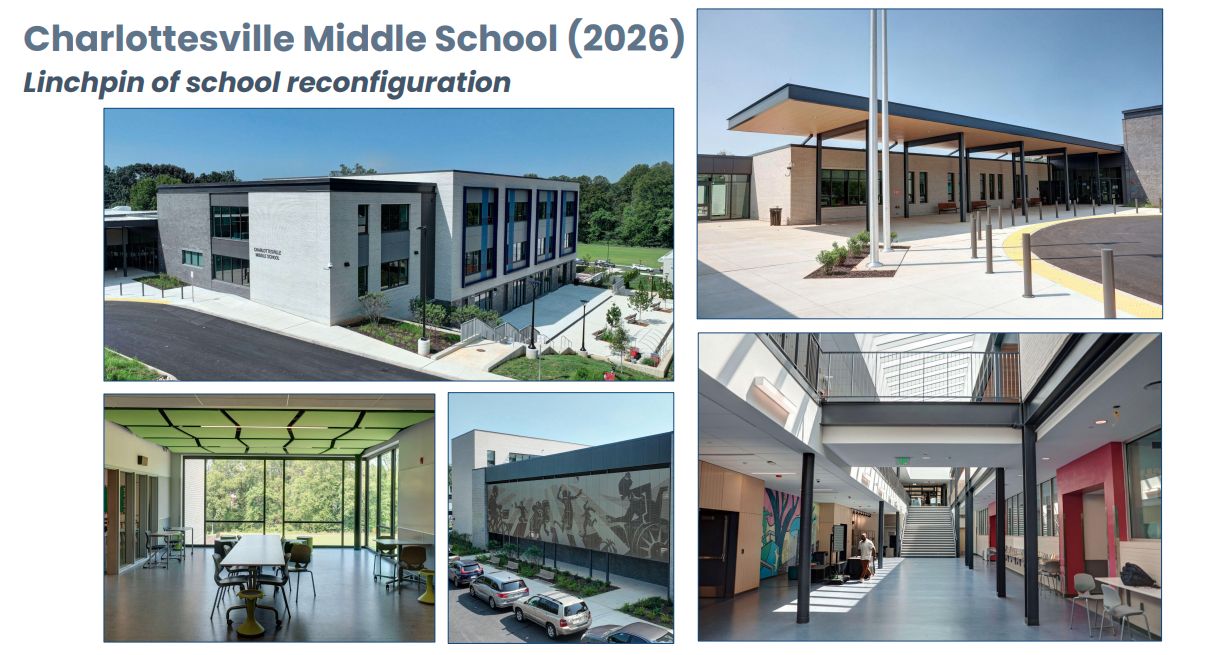
Last week, Charlottesville Mayor Juandiego Wade presided over both the “topping out” ceremony for new structures that will be part of the renamed Charlottesville Middle School as well as the ribbon-cutting for the mostly finished Belmont Bridge.
Wade was a member of the School Board from 2006 to 2021 and was on the School Board when the architectural firm VMDO was hired to implement a long-planned expansion to add enough room for sixth-graders to attend.
“We got here to this point because VMDO, City Council, and the School Board, they listened,” Wade said at the Buford event. “They listened to what we had to say but more importantly they listened to what the students and residents had to say and I think that’s the only way we can move forward as a city.”
Wade thanked the construction crews working for the firm Nielsen for working in the heat to build the school. (Special thanks to Maggie Glass and 29NBC for providing audio from the event)

Twenty-one hours later, Wade was on hand to commemorate the official opening of the third bridge to cross the railroad tracks on the eastern end of Downtown Charlottesville.
The total cost for the project is $38 million according to the Virginia Department of Transportation’s Six-Year Improvement Program with $33.8 million of that in construction.
“Belmont Bridge is a gateway into downtown,” said Steven Hicks, the city’s public works director. “This project is a major investment that will last a hundred years.”

Planning for this replacement has been underway since late 2008 when a cost-benefit analysis indicated a new structure would be more effective in the long run. Planning got underway but hit a snag when a campaign began to build an at-grade intersection or an underpass instead.
Council finally agreed to proceed with a bridge replacement in July 2014 but then the firm hired to design and build the bridge went out of business. The project lay dormant for a couple of years until the city hired the firm Kimley-Horn to begin the planning process from scratch.
“The opening of the bridge that we are part of today was not designed just to use move vehicles but was designed to provide multimodal access to public transportation that specifically integrates bicycling and walking,” Hicks said.
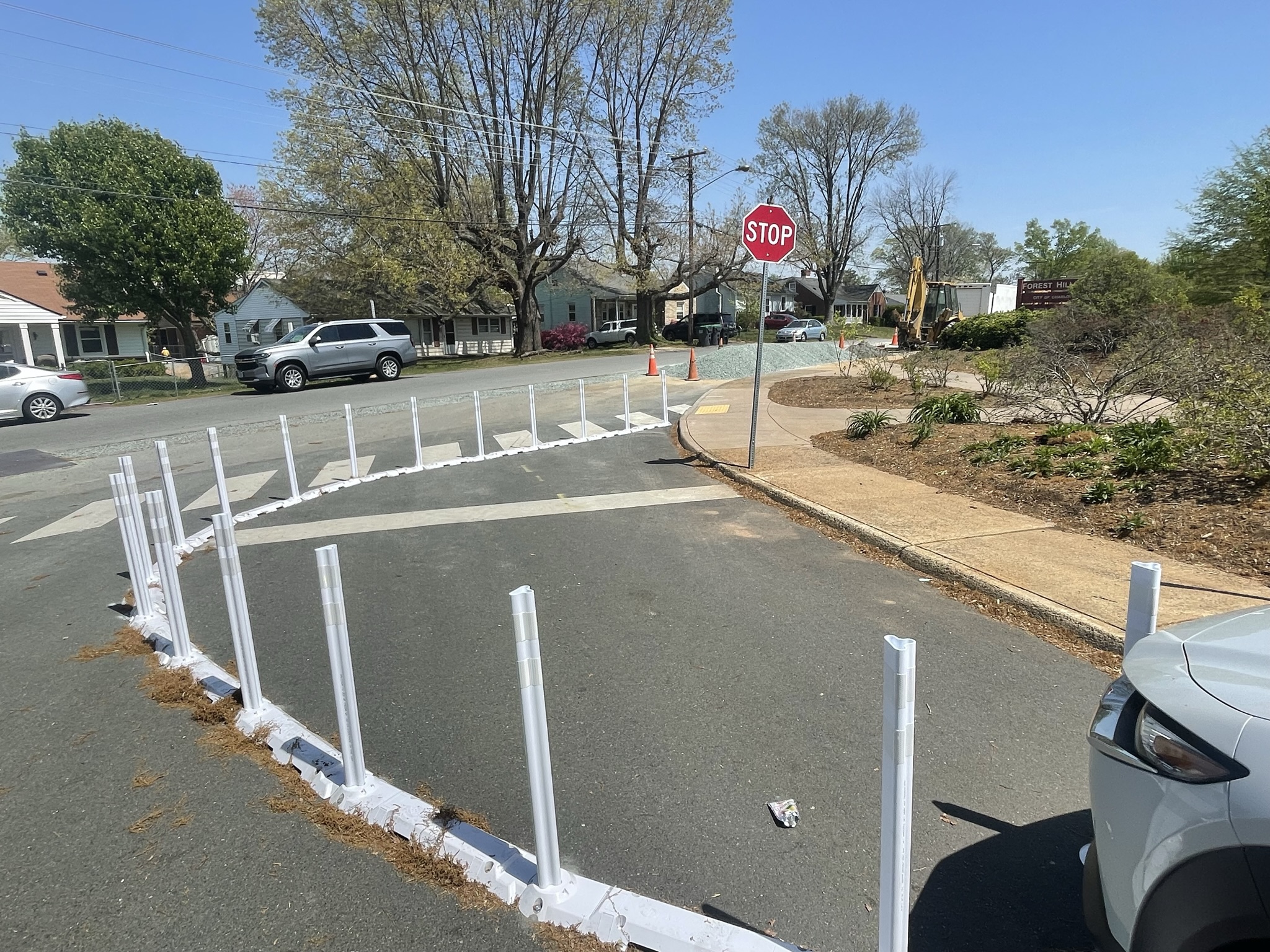
At 267 feet in length and 62 feet wide, the new bridge is shorter than the previous bridge from 1962 and includes a protected bike lane on the western side.
“We created an innovative and architectural design and the bridge has a separated pedestrian, vehicle, and bicycle lanes,” Hicks said. “Two eleven-foot travel lanes, one in each direction. Seven foot bike lanes and ten foot pedestrian lanes. And we preserved the views to the mountains and of the railroad tracks.”

The city also got a waiver from the Buckingham Branch Railroad to not have to install a fence to stop people from throwing items onto the tracks.
The bridge was built by Caton Construction and there is a list of remaining items that need to be completed. Hicks said he did not have time to thank all of the workers but was able to describe what material went into the bridge.
“They installed 535,000 pounds of reinforcing steel, poured 158 tons of structural concrete, installed eight miles of underground electrical wire and fiber optic cable, constructed 23,000 square feet of retaining wall, and moved ten million pounds of aggregate and laid more than 80 million pounds of asphalt,” Hicks said.
Mayor Wade said he could get use to such ceremonies and that the two events together show a new direction for the city. He said for many years he felt the bridge would never be replaced.
“This is proof that Charlottesville, we can get things done as we work together as a community, when we work together as the public to get input to get the design that you want,” Wade said.
The bridge planning did not start on City Manager Sam Sanders’ watch but the completion of the project is the first major infrastructure project the city has delivered in some time. He understands there is at times community pessimism regarding the city’s ability to get things done.
“I want to change that,” Sanders said. “I want to make sure that we don’t spend too much more time thinking about what won’t happen in the city and what can happen in the city.”
Sanders said another example will be the creation of a sidewalk priority list that Council will discuss later on today.

Before you go: The time to write and research of this article is covered by paid subscribers to Charlottesville Community Engagement. In fact, this particular installment is from the July 1, 2024 edition of the newsletter. To ensure this research can be sustained, please consider becoming a paid subscriber or contributing monthly through Patreon.
Discover more from Information Charlottesville
Subscribe to get the latest posts sent to your email.