Localities in Virginia along with all other levels of government have to comply with rules when they seek to hire companies or organizations to provide services or goods. This requires public notice and participation in transparent platforms through a competitive bidding process.
However, a provision of state law allows contracts to be awarded on an emergency basis in some circumstances.
“The public body shall issue a written notice stating that the contract is being awarded on an emergency basis, and identifying that which is being procured, the contractor selected, and the date on which the contract was or will be awarded,” reads section F of 2.2-4303.
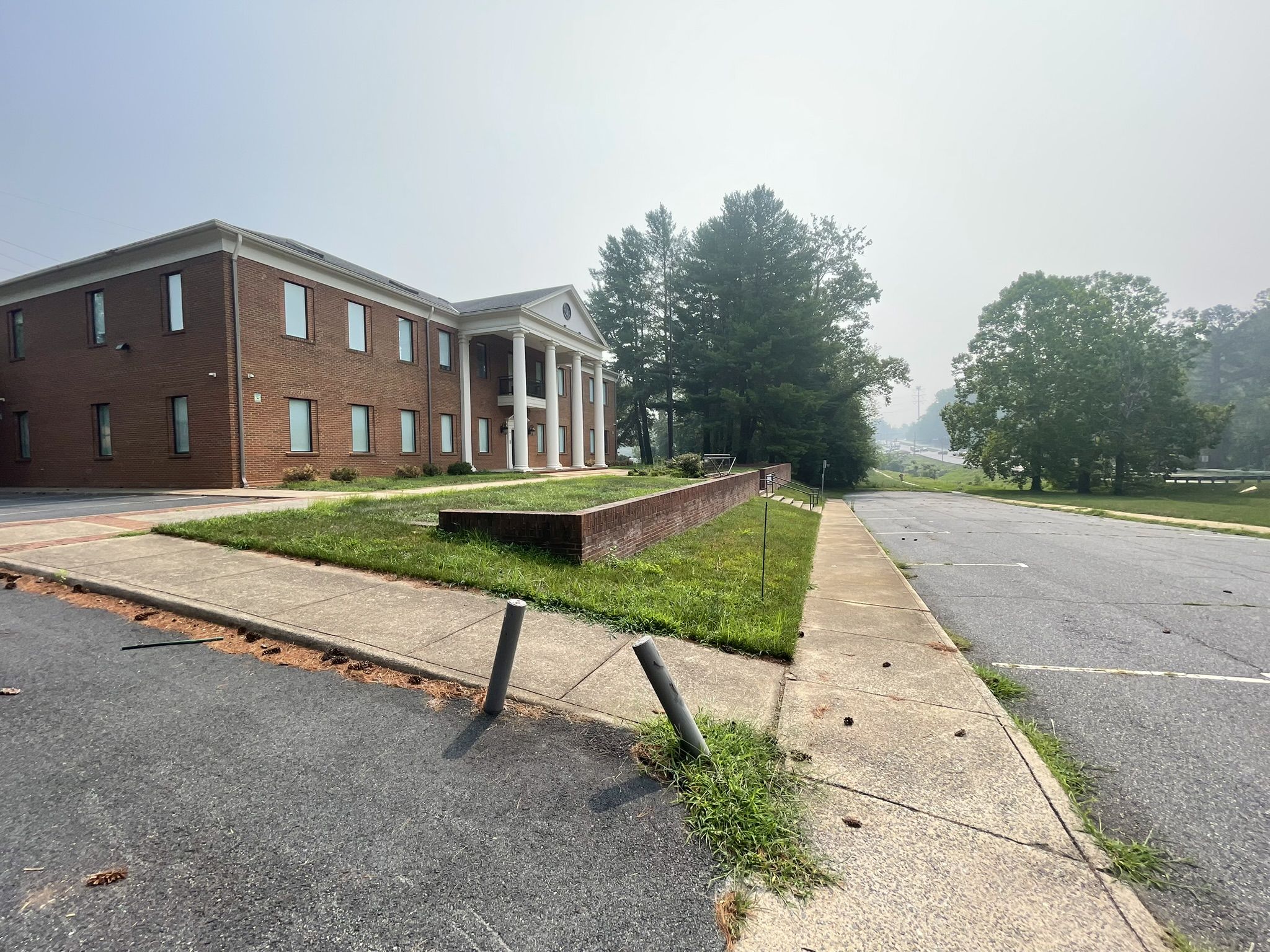
The City of Charlottesville did so on August 26, 2026 when they issued a notice of an award to a subsidiary of Central Arizona Shelter Services for “Operation of Low-Barrier Emergency Shelter at 2000 Holiday Drive.”
A “Shelter Operating Services Agreement” was signed on August 21 which notes that the city purchased 2000 Holiday Drive for a permanent low-barrier shelter.
“While that long-term project is being developed, the City seeks to use a limited portion of the building as a temporary emergency shelter in connection with the planned closure of an encampment along the Rivanna River and to assist other homeless individuals located in Charlottesville,” reads the first page.

The contract states that CASS will mobilize to accept guests for the emergency shelter according to a separate license agreement by September 1.
“Operator shall provide the mobilization, shelter operation, case management, housing navigation, reporting, and transition services described in Exhibit A,” reads the services agreement.
The contract caps payment to CASS at just over $3.2 million through August 31, 2027. On August 3, City Council authorized the use of $4 million from the city’s Capital Improvement Plan contingency fund for this purpose. The payment works out to $425,091.33 for start-up costs and the first month to be followed by a monthly payment of $181,693.13 each month.
Support from the Bama Works foundation is anticipated, according to page 18 of the contract.
The balance will be used for other housing services. Afton Schneider, the city’s director of communications and public engagement, said a request for proposals will be issued for that work.
“Our focus has been strictly on safely and effectively opening the shelter,” Schneider said in an email. “We will revisit direct-to-housing options in the future.”
More details
Section 4.7 of the contract states that CASS must make efforts to work with the multiple nonprofit organizations that currently provide support services related to homelessness.
“Operator shall seek to integrate the Program into the existing local homelessness response system and avoid unnecessary duplication of services,” the section reads. “Except as required by law or a binding condition of Program funding, this Section does not grant the Continuum of Care or any constituent entity authority to direct or supervise Operator, approve or veto operational decisions, or modify this Agreement.”
Exhibit A begins on page 11 of the contract sets out the parameters of work, such as that the population are to be over the age of 18 with a maximum residency of 120. There’s also a definition of what the low-barrier model is to be.
“Access is not conditioned on sobriety, treatment, or religious participation, income, employment, identification, or local residency. Operator may enforce lawful, behavior-based rules reasonably for safety and operations.”
The contract states that CASS can deny admission for a variety of reasons but solely due to intoxication.
CASS will be responsible for providing staff and for providing a “written opening-readiness report.” An operating and planning staff must also be completed within five days of opening.
Staff will be on-site at all times and one of their jobs will be to keep guests from accessing other parts of the building. Smoking and vaping must take place outdoors.
Reports are due to the city on the 10th of each month with occupancy rates. CASS must report a “serious incident” within two hours.

Before you go: The goal of Town Crier Productions is to increase awareness about what is happening at the local, regional, state, and federal government levels. Please share the work with others if you want people to know things. Paid subscribers cover the cost of conducting research for this article which was originally published in the August 17, 2026 edition of Charlottesville Community Engagement. You can either subscribe through Substack or make a charitable contribution.
Discover more from Information Charlottesville
Subscribe to get the latest posts sent to your email.