Every quarter, City Manager Sam Sanders joins a Zoom call with representatives from the city’s neighborhood associations. The most recent edition took place on October 9 and Charlottesville Community Engagement obtained a summary.
The first question came from a Venable resident who asked if the city could do more to let residents know how they can join their neighborhood associations.
“This could have contact info for all neighborhoods on one side and the map on the other side,” the summary reads. “This could be sent as an insert in a monthly utility bill once a year.”
The city responded that there are no plans to do so.
“We believe that recruitment and engagement of residents in the activities of the neighborhood associations is a responsibility of those neighborhood associations,” reads the response. “We may be able to consider social media posts related to neighborhoods and that idea could be discussed with the City Manager’s Office.”
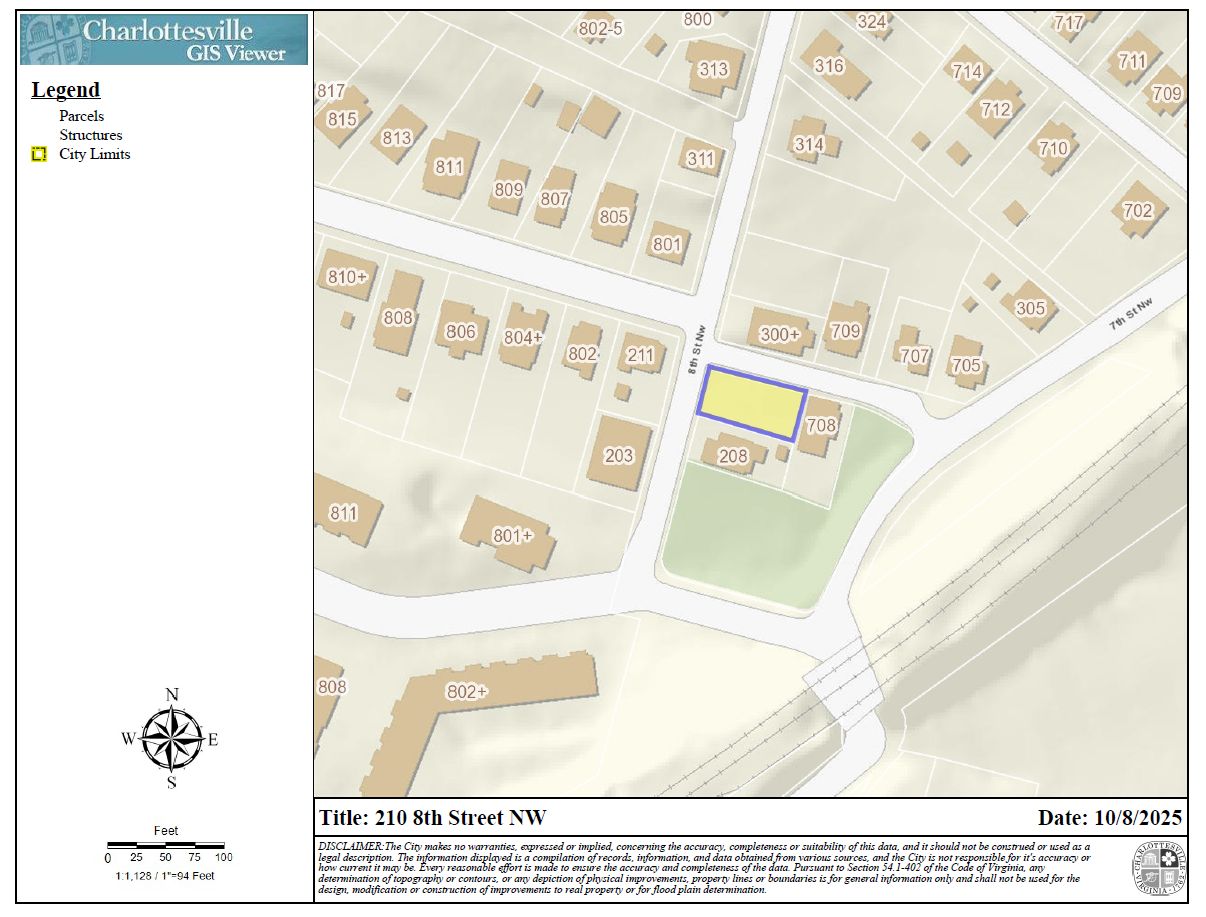
If you are a city resident who wants to know what official neighborhood you are in, take a look at the city’s GIS viewer. Enter your address and there’s a field for “neighborhood” on the summary page.
There are also several sub-neighborhoods not officially recognized by the city. You can find out more about these on the city’s website. Here are some resources:
- Fact sheets on the city’s officially recognized neighborhoods
- Learn more about Neighborhood Leaders
- Neighborhood Map
The City of Charlottesville recently awarded a contract to the firm Block by Block to clean and maintain the Downtown Mall. One resident from the Kellytown Neighborhood Association asked how the firm would work with unhoused people who store belongings on the mall.
“The mall ambassador team will serve as friendly guides, caretakers, and problem-solvers to make our downtown area safer, cleaner, and more welcoming,” reads the response. “While the ambassadors will be engaging and friendly to all, they will be instructed not to move any personal belongings they may encounter.”
City Council approved the $1.2 million to cover the cost to hire Block by Block in June when they appropriated partial usage of $22.4 million in surpluses placed in a contingency fund. Another $425,000 was spent to hire two outreach workers to assist with the unhoused population.
“If any belongings do require moving, this team, in conjunction with [the Charlottesville Police Department] would handle it,” the city’s response continues.
Another person from the Fry’s Spring neighborhood had a question about the Central Water Line project that is set to get under construction later this month.
“How are all the affected residents—renters as well as owners, users of non-electronics as well as the latest mobiles—going to be informed?” asked the resident.
The city said the Rivanna Water and Sewer Authority is taking the lead on that project and are required to keep roadways open while crews dig up streets to install the new pipe.
“Road and sidewalk detours and closures will be coordinated and approved. Information regarding the project will be conveyed by press releases and communication with neighborhood association leaders,” the response continues.
A press release sent out earlier this month announced the first set of construction reports and I used it for the basis of a story in yesterday’s newsletter that is now posted to Information Charlottesville.
Another Fry’s Spring asked the city if they would consider converting a multifamily apartment complex on Stribling Avenue into something to support a new employer to be located in the Fontaine.
“It seems possible that the Biotech Institute at the Fontaine Research Park might bring an influx of well-paid workers,” reads the question. “How would the taxes the city collect compare if that project was ‘upscaled’?”
City Council approved a rezoning in April 2022 for up to 170 residential units on Stribling Avenue, as I reported at the time. A final subdivision plat is pending with the city’s Department of Neighborhood Development Services.
“The housing development referenced on Stribling Avenue is private sector driven, and the city has no direct influence as to the mix of housing offered,” reads the city’s response. “A comparison of tax revenue would require a study.”
In response to a question about speeding on Harris Road, the city said the traffic engineering division has recently obtained a tool which allows staff to see speed trends in real time.
“This gives us the ability to vet requests and make targeted interventions far more quickly than we have been able to in the past,” reads the response.
Other tidbits from the meeting:
- VDOT is conducting a STARS study in the area around the U.S. 250 / U.S. 29 interchange. STARS stands for Strategically Targeted Affordable Roadway Solutions and this active project is also looking at the U.S. 29 corridor from Barracks Road to Woodbrook Drive. A public engagement session had been expected this fall but the report states it will now take place sometime in early 2026. Take a look at the study page here.
- One question asked about the data center being constructed at the Fontaine Research Park. The location is within Albemarle County, not Charlottesville, and owned by the University of Virginia so it does not need any approval from local authorities. For more information, here’s a story I wrote in March 2025.

Before you go: The time to write and conduct research for this article is covered by paid subscribers to Charlottesville Community Engagement. In fact, this particular installment comes from the October 17, 2025 edition of the program. To ensure this research can be sustained, please consider becoming a paid subscriber or contributing monthly through Patreon.
Discover more from Information Charlottesville
Subscribe to get the latest posts sent to your email.