


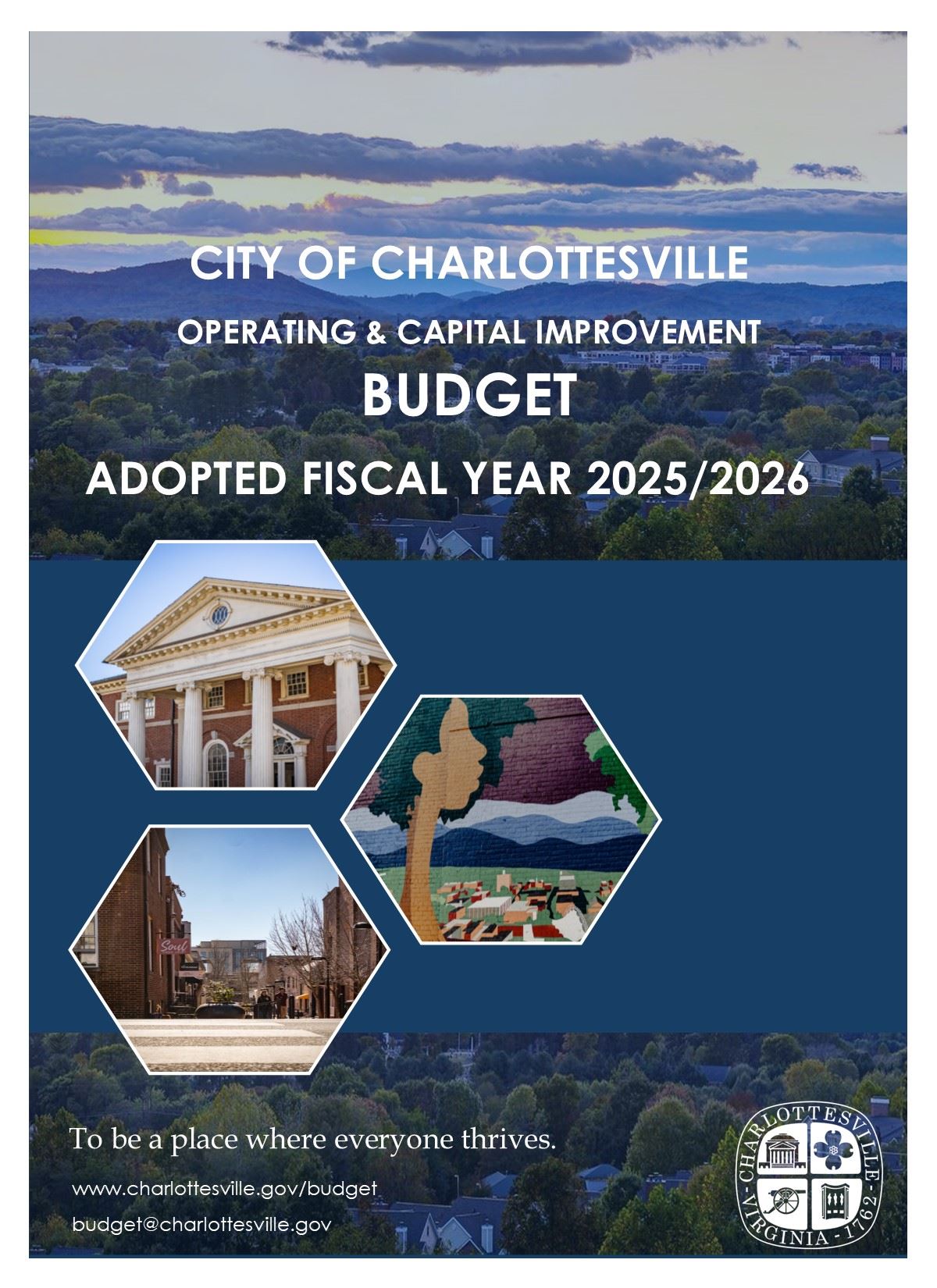
On Tuesday, Charlottesville City Council approved the second reading of a resolution to place a $22.4 million surplus from fiscal year 2024 into a contingency fund.
When asked by City Councilor Michael Payne for a sense of when the money would be allocated, Charlottesville City Manager Sam Sanders said he has no date in mind.
“At this moment I’m not rushing to prepare a recommendation,” Sanders said.
Sanders said that is because there is still much uncertainty about what federal funding is at threat of being withheld by a federal executive branch that is seeking to defund many programs. There have been several lawsuits, but so far the Trump administration is insisting they have the ability to circumvent the other two branches.
“We need to do some internal homework and that is underway to try and find out what are our federal resources that are within our current budget that are part of our proposed budget that I’ll be bringing to you on the Fourth of March,” Sanders said.
Sanders said the city may be able to use the surplus to offset potential reductions, but he also warned that some programs may need to be cut. He said he did not want to alarm the public because so far there is no certainty about what will happen.
On Tuesday, Charlottesville City Council also got an update on the city’s finances through December 31, 2024. That day was the end of the second quarter of the fiscal year and that gives half a year of data to assess how closely revenue and expenditures are going according to budget.
Budget Director Krisy Hammill said revenue growth is not as strong as it has been in recent years.
“This revenue report is showing a slight revenue surplus of just over $2.4 million, or 1.13 percent of the budget,” Hammill said. “Last year in comparison to this time, we were talking to you about a revenue surplus of 9.4 million DOL dollars, or just a little over 4 percent.”
Through December 31, the city brought in $2.2 million more than expected in the real estate tax and nearly $1.18 million from the personal property tax. The other two taxes with rates under Council’s control have brought in less than expected.
“We have not seen this for quite a while,” Hammill said. “Both the lodging and meals tax, despite tax [rate] increases in 2025, are both trending down. In addition, our sales tax is weakening, or, excuse me, is below our budget projection. And then there’s a slight decrease to the cigarette tax as well.”

Council also got a briefing from Kevin Roddy of the firm PFM Financial Advisors. He said this is a very uncertain time.
“When we look at the overall themes out there, it’s just a really difficult time to where the economy is going to go with the new policies, the changes to trade regulation, fiscal spending,” Rotty said. “It’s just, it’s really hard to, you know, project the direction and the various variables and how they’re going to react to each other.”
Rotty cited the February 2025 economic forecast from the Weldon Cooper Center at the University of Virginia which projects slower growth in the gross domestic product (GDP). A definition on Wikipedia defines GDP as “a monetary measure of the market value[1] of all the final goods and services produced and rendered in a specific time period by a country[2] or countries.”
“It’s going to increase, but it’s going to be at a slower rate than it has been recently,” Rotty said. “Job growth is going to decelerate, meaning that there is going to be job growth again slower than what it has been. Certainly the potential for the reduction in the federal workforce, they echo in there.”
Rotty said two of the biggest threats to the economy are a total federal government shutdown as well as a potential default by the United States Treasury in paying its debt payments.
“That’s never happened,” Rotty said. “We keep our fingers crossed that that’s not going to happen and that Congress will come to some sort of resolution. But again, these are uncertain times. It’s going to be a political battle and so hopefully we don’t get to that point.”
Here are some other items that Rotty and other financial advisors are looking at:
- Local governments may lose a federal tax exemption on municipal bonds, which would raise the cost of borrowing. The exemption runs out at the end of the year unless Congress extends it. Rotty said interest rates in the last bond sale were 3.15 percent, but without the exemption it would be closer to 5 percent.
- Pending tariffs on steel could potentially increase capital costs as they would likely increase the cost of construction.
- Interest rates continue to increase and that may affect the city’s bond sale pending for later this year.
Rotty urged Council to be careful.
“Just continue to carefully monitor your budget,” Rotty said. “Be cautious. I know we had a large surplus. Budgets are done so far in advance. It’s difficult to plan there. But all expectations are that it’s going to be a much more slow growth than we’ve seen in the past.”
Charlottesville City Manager Sanders said the presentation was intended to make sure Council knows that the changes at the federal level will reverberate into the local one.
“We have serious work ahead as the world changes,” Sanders said. “And that’s what’s happening.”
Sanders will present his recommended budget on March 4.

Before you go: This particular segment comes from two stories that went on in different editions of the Charlottesville Community Engagement newsletter. The first was in the February 20 edition and the second will be in the February 21 edition which has not yet been published. This is all part of the madness that is Town Crier Productions.
You can also listen to this report on SoundCloud.
Discover more from Information Charlottesville
Subscribe to get the latest posts sent to your email.


Thank you… I wonder will city council honestly make cuts to.budget or full speed ahead!