In the weeks after a woman was killed crossing Elliott Avenue in early October, Charlottesville officials announced they would be working on a plan to address areas of the city known to be unsafe for pedestrians and bicyclists.
Transportation Planning Manager Ben Chambers gave an update to the City Council on January 21, 2025 on what is being called “Charlottesville’s Safer Streets Strategy.”
“First, we looked at a vote that y’all took back in May, which committed the city to a goal of eliminating roadway fatalities by 2045 and halving the number of serious injuries that happen in that time frame,” Chambers said. “Obviously, in October, we learned that we have a lot of work to do.”
A driver struck and killed 64-year-old Mamawa Samai as she was crossing the street shortly after dusk. There are no lights at the crosswalk.
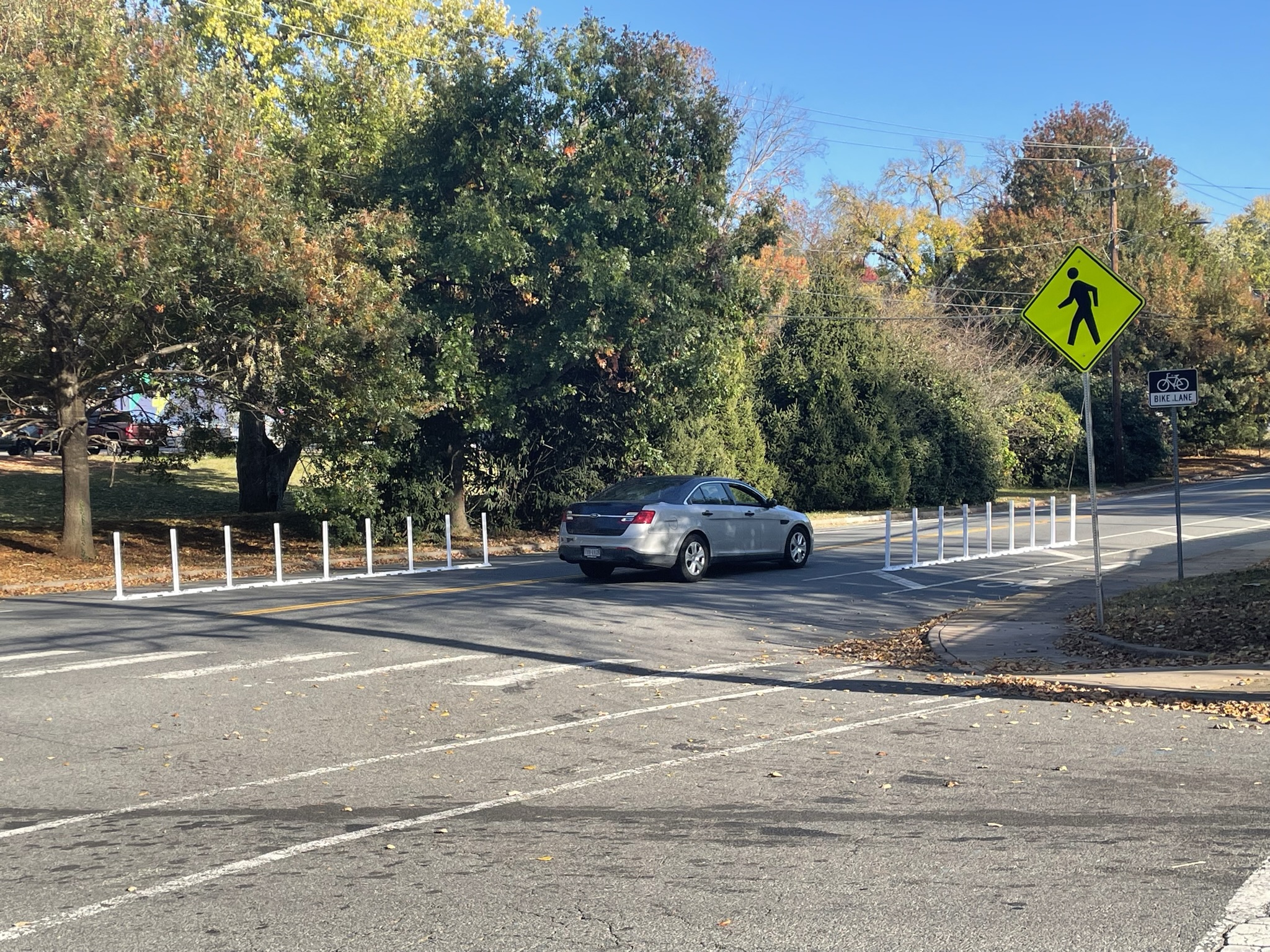
Poles were soon installed at the intersection of Elliott Avenue and South First Street to make the crossing more visible. Chambers said other areas are also being studied.
“We realized there’s probably a lot of opportunities for us to do that throughout the city,” Chambers said. “And so we’ve been looking at places where we could improve street crossings, both at uncontrolled intersections and signal controlled intersections.”

Chambers said the city is also reviewing the city’s speed limits because the faster a vehicle is traveling, the more likely a pedestrian will be killed if struck. But to lower speeds, the city will also need to do more traffic calming to bring down the design speed of roadways.
“The issue is we haven’t done a lot of traffic calming in the past,” Chambers said. “We have a traffic calming manual, but a lot of the suggested things in that manual we haven’t been able to implement.”
All of the work is now being done under the umbrella of Safer Streets Strategy which will be conducted in three phases and some of the proposed work is currently unfunded. There will also be a lot of public engagement.
“We’re going to be asking you for more opinions on more transportation projects moving forward,” Chambers said. “That’s both telling us what design alternatives we’re going to need, where we should be making speed limit changes, where we should be putting traffic calming, we’ll be deploying surveys, we’ll be deploying new information on our website so that you can track projects and track plans as they’re being developed.”

The first phase will include specific projects including a demonstration project on East High Street and reducing lanes on Fifth Street SW down from four lanes. There will be a meeting on the East High project at Burnley-Moran Elementary School on February 25 and one for the Fifth Street road diet in late March.
West Main Street will also be re-striped.
“We are looking to do a restriping project that will help provide protected bike lanes there,” Chambers said. “That will give us a sense of how much does it cost us to design one of these things and then how much does it cost to deploy one of these things?”
There will also be an effort in the Fifeville neighborhood to do some traffic calming. The city will also ban right turns at red lights at some intersections but only when a pedestrian hits a button to turn on a notification.
“Other times when there’s no pedestrians, people can just make the right on red like they always would,” Chambers said. “But as soon as there’s a pedestrian present, we want to make sure that that intersection is as safe as possible as we can make it.”
The city’s Bike and Pedestrian Advisory Committee were asked to suggest locations for these and Chambers said he will return with a list for Council in the future when the list is whittled down from around 90.
“These are intersections like Preston and Cabell, Greenleaf/Del Mar/Oak Leaf, Cherry and Fifth, slip lanes at Ridge and Preston, and Carlton Road, and Monticello Road,” Chambers said. “These are probably places that you’ve heard a lot from your constituents about.”
State law now allows localities to reduce speed limits below 25 miles an hour and that might be a possibility in some areas. Some of these might be on what Chambers refers to as a “yield street” where speed would be capped at 15 miles an hour.
“It’s supposed to be streets where it’s too narrow for two cars to pass each other,” Chambers said. “We’ve got a lot of streets like that in town.”
Arterial streets might be lowered from 35 to 25 miles an hour, but Chambers said a lot of traffic calming work would need to be done. Planners are also working with the police and fire departments to make sure they can still pass through whatever traffic calming measures are installed.
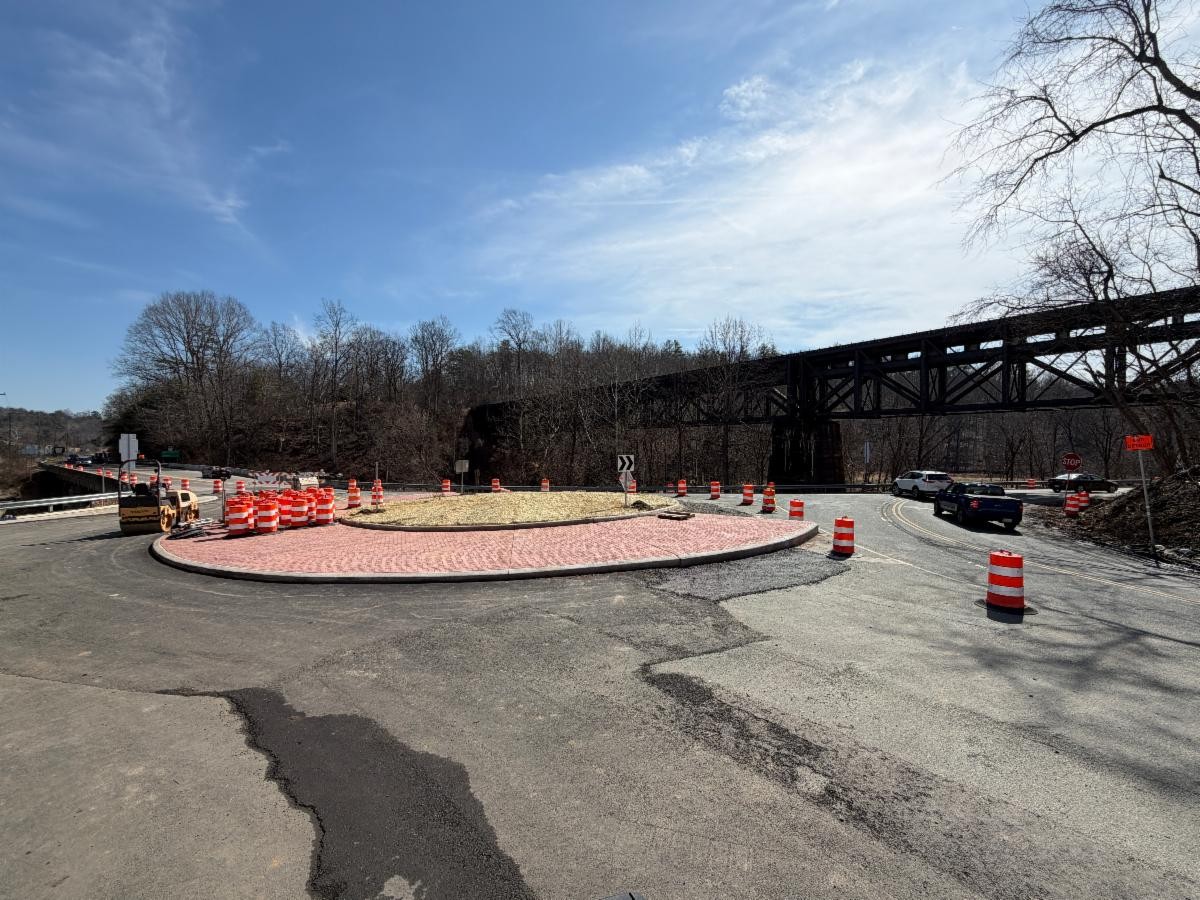
There is also the potential of converting some intersections into mini-roundabouts.
The planning effort comes at a time when the Trump administration has signaled funding priorities will be shifting. Chambers did not have a specific dollar amount for any of the items.

Before you go: This article was originally sent out as part of the Charlottesville Community Engagement newsletter in the January 29, 2025 edition. Both are functions of Town Crier Productions. You can support the work by purchasing a paid subscription or contributing monthly through Patreon. You can also send in a check or send an email, but drop me a line first.
Discover more from Information Charlottesville
Subscribe to get the latest posts sent to your email.