


It is a common practice in Virginia for wastewater utilities to sell or donate part of their leftover product for agricultural use.
“Sewage sludge is the solid, semisolid or liquid materials removed during the treatment of domestic sewage in a treatment facility,” reads the Virginia Department of Environmental Quality’s website on biosolids.
According to the DEQ website, sludge can only become biosolids after the material has been treated according to state and federal standards. On January 14, three Albemarle residents appeared before the Planning Commission to ask for tougher standards to ensure that what are called “forever chemicals” are not in the mix.
“As a native of Albemarle with red dirt under my nails and in my veins, I implore you to consider testing and monitoring for PFAS on land where biosolids have been previously applied in Albemarle County,” said John Watkins of Covesville.
Watkins claimed that new evidence is coming out that suggests the spreading of biosolids as fertilizer comes with health risks. Shawn Cossette of southern Albemarle said she was concerned about the effects on groundwater and called for a full ban in the county.
The final call came from Kim Swanson, a two-term member of the Albemarle County Service Authority from the Rio District. She asked for language in the Comprehensive Plan to address the county’s position on biosolids.
“A community which plans well and values water resources for all county residents will discourage land practices that can contaminate both groundwater supplies and source water for our treatment plants,” Swanson said.
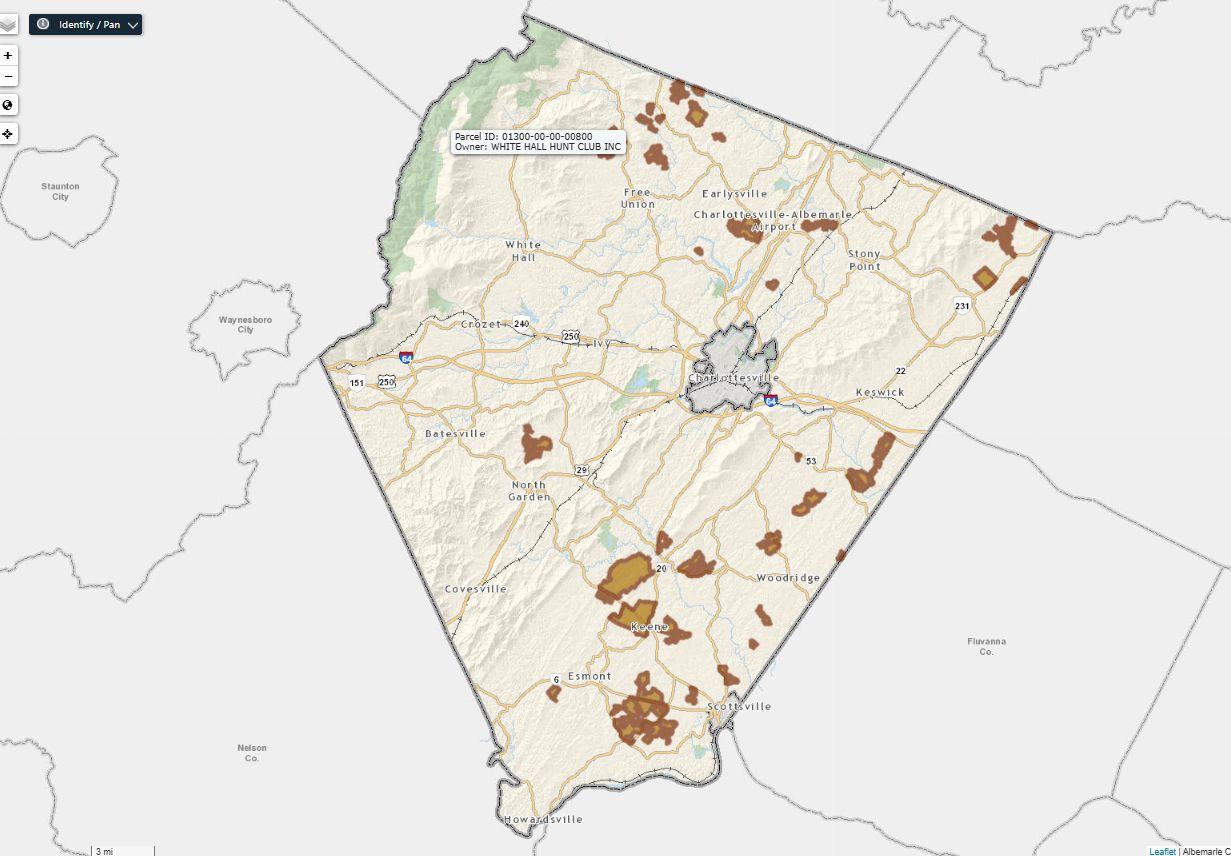
Photo credit: An active GIS layer in Albemarle County’s mapping system lists the areas where there are active permits allowing the application of biosolids (Credit: Albemarle)
Members of the Planning Commission do not always respond to comments from the public, but Commissioner Karen Firehock responded that the state of Virginia will not let any counties ban the practice.
“The only thing that we can do is, for example, there are conditions in which you can object to spreading of biosolids in inappropriate areas,” Firehock said. “One of those areas is in floodplains or areas that are used for active recreation.”
Firehock said she objected to a recent application in Albemarle County that was near an active canoe facility on the James River. She claimed that permit had been denied.
The DEQ has been managing biosolids since 2008 after the General Assembly transferred control from the Department of Health. Legislation in 2007 also required nutrient management plans for lands where biosolids are applied, introduced the idea of unannounced inspections, and required that all applicators are certified.
In this year’s General Assembly session, Delegate Chris Runion (R-35) has introduced a bill that would exempt institutions of higher education from any permit requirements for application on land it owns. HB2517 has not yet been referred to a committee.
Several speakers also addressed the Albemarle County Board of Supervisors today. More on that when this story goes to Information Charlottesville.
This is my first story on this topic in a long while. Here are some previous stories from Charlottesville Tomorrow.
- Landowners concerned about dumping of D.C. sewage in Albemarle, Sean Tubbs, January 31, 2011
- Sewage waste applied next to Carrsbrook neighborhood, Sean Tubbs, May 31, 2011
- Albemarle Supervisors briefed on state biosolids rules, Sean Tubbs, July 6, 2011
- Biosolids legislation not likely in coming General Assembly session, Sean Tubbs & Kurt Walters, December 21, 2011
- As biosolids applications begin, practice still has champions and detractors, Ian Lamb, July 1, 2012
- Company applies to spread biosolids on Scottsville farms, Emily Hays, November 12, 2018
Before you go: This article was originally sent out as part of the Charlottesville Community Engagement newsletter in the January 15, 2025 edition. Both are functions of Town Crier Productions. You can support the work by purchasing a paid subscription or contributing monthly through Patreon. You can also send in a check or send an email, but drop me a line first.
Discover more from Information Charlottesville
Subscribe to get the latest posts sent to your email.

There are several bills in this session of the GA that address parts of this issue. It has been my experience that Town Councils, water authorities, Planning Commissions, and supervisors all follow the lead of VDEQ and VDH for issues that the EPA has so recently weighed in on (see 01/14/2025 EPA Draft Risk Assessment on Pollutants in Sewage Sludge) so those commissions, authorities, and councils will only follow the lead. Sewage sludge needs testing prior to application but also so do the influents and effluents from Waste Water Treatment Facilities.