The University of Virginia is more than halfway through an initiative to reduce greenhouse gas emissions and use fewer resources during this decade. Approved by the Board of Visitors, the 2020-2030 Sustainability Plan includes several goals including one to reduce waste by 30 percent by 2030 relative to 2010 efforts.
Today the Virginia Department of Environmental Quality awarded UVA $536,539 as part of an overall $8 million distribution of funds to colleges and universities for efforts to reduce food waste through rescue and composting.
“DEQ is pleased to provide funding and partner with Virginia’s higher education institutions to address food waste,” an information release quotes DEQ Director Mike Rolband.
The funding comes from the United States Environmental Protection Agency’s Climate Pollution Reduction Grant program. The highest award given is over $3.5 to Virginia Tech for construction of an industrial scale composting facility rated to process 2,700 tons a year.

UVA’s award comes with a community component.
“This award includes support for food storage equipment, funded student positions for food rescue and composting operations, and new community compost drop-off locations to increase access to composting for Charlottesville residents,” the release continues.
According to the grant application, the money will be used for a variety of other purposes as well:
- A full-time food waste reduction program coordinator and fund paid student positions
- A new scanning system will be implemented to track food waste at dining halls in real-time
- Cold and hot storage equipment will be purchased to augment the capacity of UVA Food Assist to recover food that would otherwise be thrown away
According to the 2024 annual report from UVA Sustainability, UVA attained 35 percent reduction from 2010 levels that year.
Composting is mentioned in the implementation chapter of Albemarle County’s recently updated Comprehensive Plan.
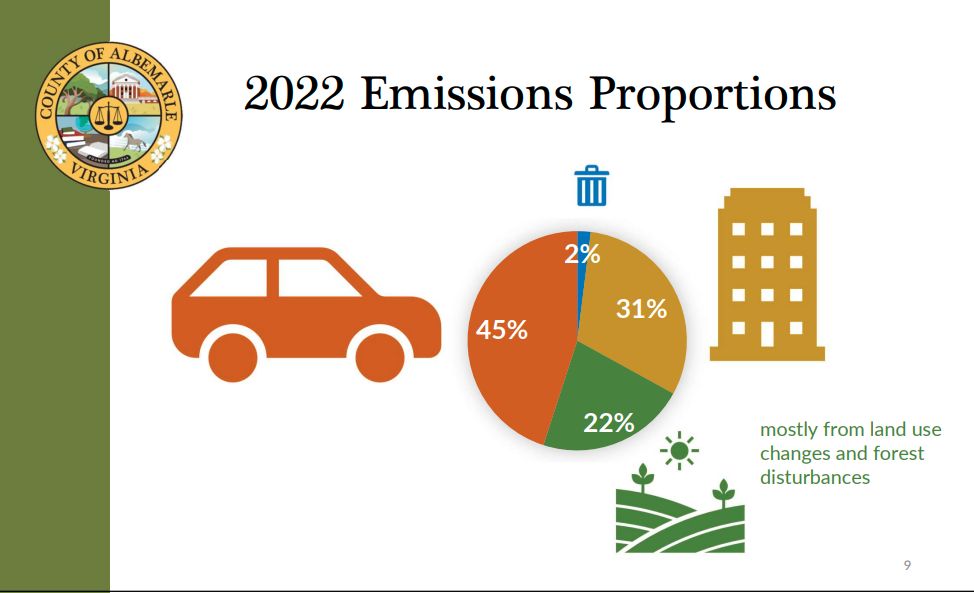
- Objective 8 of the Community Facilities and Infrastructure chapter states: “Objective 8: Reduce greenhouse gas emissions through reductions to the waste stream, increasing recycling, and composting “
- Action 12F of the same chapter states: “Partner with community partners/organizations to increase the use of composting and share information on how to reduce food waste.”
Composting is also in Charlottesville’s Comprehensive Plan in the Environment, Climate, and Food Equity Chapter. Goal 8 of that chapter is on materials recovery and waste management and Strategy 3.2 is worth a look.
“Assess the success of current public and private recycling efforts and explore opportunities to expand public and private recycling (including appliance collection), composting, source reduction, other waste stream diversion, and other waste management innovations,” reads page 72.
Visit the DEQ’s website for more information on the food waste program.
Before you go: The goal of Town Crier Productions is to increase awareness about what is happening at the local, regional, state, and federal government levels. Please share the work with others if you want people to know things. Paid subscribers cover the cost of conducting research for this article which was originally published in the April 20, 2026 edition of Charlottesville Community Engagement. You can either subscribe through Substack or make a charitable contribution.
Discover more from Information Charlottesville
Subscribe to get the latest posts sent to your email.