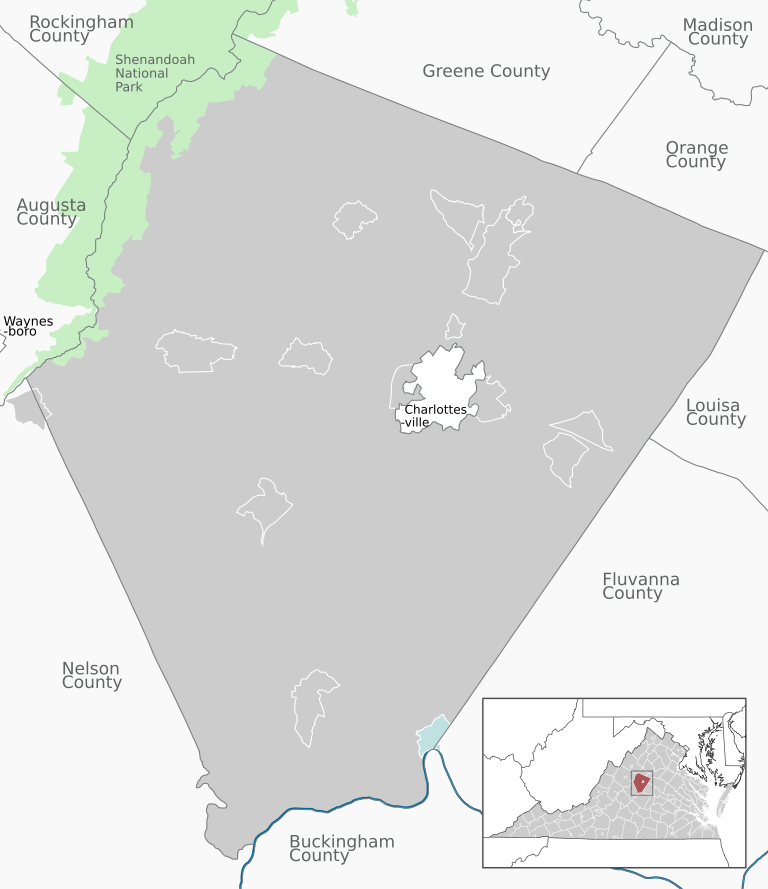
I present to you a geographic question that I do not know the answer to and one I’ve been wanting to know for a while. If one locality completely surrounds another, how can calculate the exact length of the perimeter?
As longtime readers know, localities in Virginia are completely separate from each other. There are regional bodies that have no direct authority over the decisions made by a City Council or a Board of Supervisors.
I’d like to know the exact length of the city-county perimeter to aid me in my hope to write out a definitive list of areas where shared land use planning might be beneficial. The effectiveness of a plan is only as good as implementation.

I’ve not put that list together yet in part because there hasn’t been a joint meeting of the Albemarle and Charlottesville Planning Commissions since 2018.
That changes this week when the two bodies will gather at 5:30 p.m. in Room 241 of the county’s office building at 401 McIntire Road. This meeting can be watched online. (meeting info)
The two groups will get a presentation from Resilient Together, the name given to joint climate action planning coordinated by staff from Albemarle, Charlottesville, and the University of Virginia.
“Natural hazards do not stop and start at the jurisdictional boundaries between Charlottesville and Albemarle County,” reads the website. “Studies have shown that we have similar vulnerabilities and challenges. Collaborating will help us to produce better, stronger results.”
Some background materials:
- Preparing for Resilience – An Overview of Albemarle County Climate Change Impact
- Albemarle County Climate Vulnerability and Risk Assessment
- City of Charlottesville Climate Risk and Vulnerability Assessment
- The October 2024 Progress Report on Resilient Together
- Resilient Fairfax: Climate Adaptation and Resilience Plan
The two Planning Commissions will be asked to weigh in broadly on land use strategies such as compact development and conservation of natural resources to provide ecosystem services. More intense residential development theoretically provides more people for public transportation and land under conservation can capture carbon and provide clean drinking water.
“Use more compact development and other techniques to increase walkability and accessibility, which increases transportation options during climate hazards, decreases transportation cost burden and supports baseline public health,” reads one of two prompts.
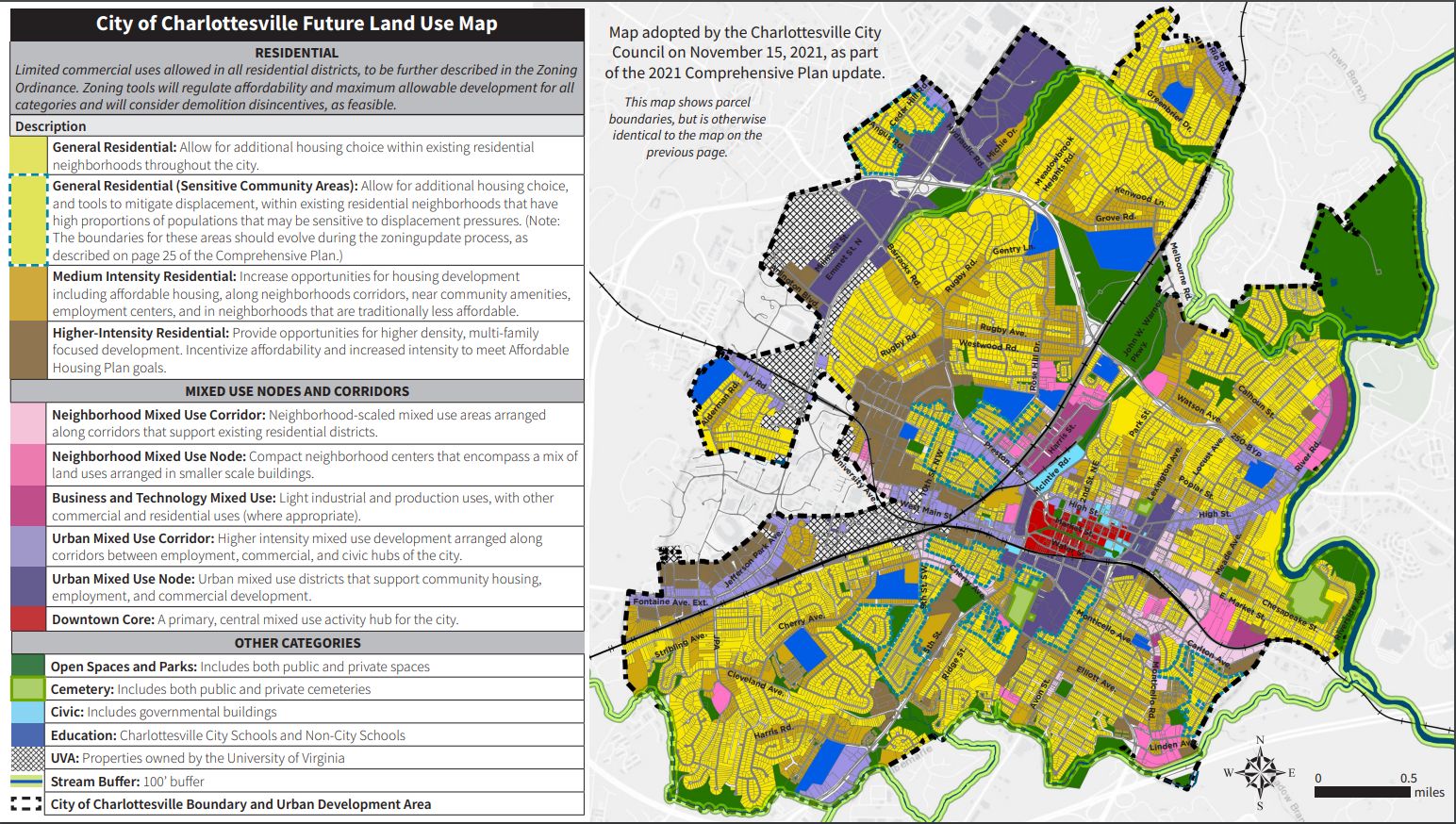
For that to work, there will need to be a lot of coordination during each jurisdiction’s scrutiny of individual projects that are right on the border. Let’s take a look at two different development proposals on U.S. 29 along the perimeter in areas where Comprehensive Plans of communities call for large numbers of new residential housing.
At a rezoning public hearing in late July, at least one Albemarle Planning Commissioner expressed disappointment that the applicant for a rezoning at 1193 Seminole Trail in the county was not seeking a higher number of apartments in a new building slated on the property. The Comprehensive Plan would allow much more than the 165 units proposed by Up Campus Properties.
One of the factors in the developer’s decision to build only 165 units was an inability to develop a connection to Hillsdale Drive, a parallel road called for in the Places29 Master Plan to help create a grid network to take traffic off of U.S. 29.
The parcel immediately to the south in the City of Charlottesville does connect to Hillsdale. David Dies of Up Campus Properties told the Planning Commission he was hopeful an easement would be made.
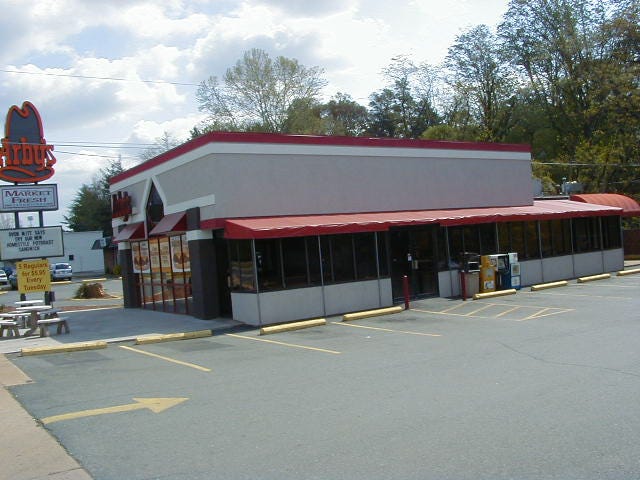
During this conversation, there was no mention of the fact that the City of Charlottesville is processing a final site plan for 1185 Seminole Trail, the current home of the Hibachi Grill. This would be for a 250 unit apartment complex that was submitted under Charlottesville’s previous zoning code. The project’s status is unclear from the city’s development portal.
This is just one example of an area where coordination is crucial to get the infrastructure to match so that whoever ends up living there is the sort of urban design that this community’s planning documents have called for for decades.

Another area of focus could be the Broadway corridor in the county that extends from Charlottesville’s Belmont-Carlton neighborhood. Albemarle’s economic development office has done land use planning work there to encourage industrial and business uses. Carlton Avenue is becoming a more urban street with two new apartment buildings constructed in the last ten years. The redevelopment of the Carlton Avenue Mobile Home Park by Habitat for Humanity and Piedmont Housing Alliance will further transform the entire area.
How many other areas along the Albemarle Charlottesville border are places that could benefit from mutual planning and shared information?
Joint meetings of the two groups used to be more frequent. Here are some stories written over the years:
- City-County Planning Commissions discuss transportation and University issues, Sean Tubbs, Charlottesville Tomorrow, September 26, 2007
- Albemarle officials call for joint planning along Rivanna River border with Charlottesville, Sean Tubbs, Charlottesville Tomorrow, August 2, 2012
- City, county planning commissions finalize joint goals, Sean Tubbs, Charlottesville Tomorrow, January 16, 2013
- Albemarle and Charlottesville planners tackle Franklin Street slopes, Charlottesville Tomorrow, June 24, 2015
- City, county planners briefed on Woolen Mills rezoning proposal, Sean Tubbs, Charlottesville Tomorrow, October 25, 2016
- City, county planning commissions focus on affordable housing, Josh Mandell, Charlottesville Tomorrow, January 25, 2017
What thoughts do you have on regional collaboration? What thoughts do you have on planning? Leave a comment, drop me a line!
In other meetings:
- The Nelson County Sheriff’s Department continues its series of Senior Safeguard Sessions at the Calvary Baptist Church at 8408 Thomas Nelson Highway. (meeting info)
Before you go: The time to write and research of this article is covered by paid subscribers to Charlottesville Community Engagement. In fact, this particular installment is from the October 28, 2024 Week Ahead edition of the newsletter.
Discover more from Information Charlottesville
Subscribe to get the latest posts sent to your email.