This time last year, the Charlottesville Planning Commission was continuing to deliberate a new zoning code for the city intended to make it easier for developers to build more units without seeking permission from City Council.
In late September, the group gathered in a City Hall conference room to get a debrief on how the new Development Code has been working since it went into effect on February 19 of this year.
The first question came from the Planning Commission’s newest member.
“I’m curious to see how things are going,” said Danny Yoder, a resident of the 10th and Page neighborhood. “Are things being permitted? Is what we hoped we would see actually materializing?”
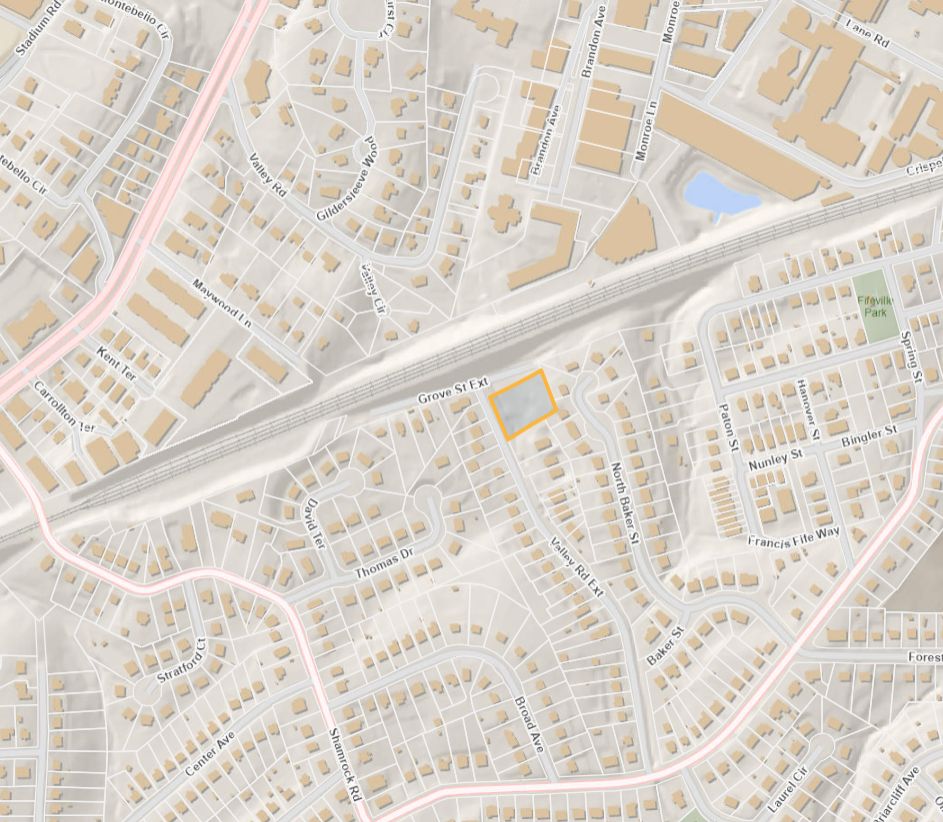
Missy Creasy, the Deputy Director of Neighborhood Development Services, said that Planning Commission Chair recently signed the first official creation of a “sublot” which is defined in the code as “a parcel of land, existing with other sublots on a single lot, intended for the purpose of the transfer of ownership or possession or for development.”
These sublots are allowed are only allowed in residential districts and are one of many new innovations in a zoning code that’s only seven and a half months old.

Creasy said there have been at least 40 formal pre-application meetings with developers pursuing projects under the new code and these are held on Wednesday meetings.
“We’ve regularly filled them up,” Creasy said “We’ve had lots of less formal, those are on the schedule kinds of things. That doesn’t count, you know, some one off conversation or somebody stopping in. So we’ve had quite a few of those as well.”
Creasy said developers who were working under one set of constraints are now learning what new constraints will be under the Development Code.
“Someone will bring in kind of a small, obscure lot and want to put a whole bunch of things on it, Creasy said. “And then the realities of what it would take from an infrastructure standpoint have caused a little bit of hesitation on a few, but a number of them have also worked through those. And we’re slowly getting applications formally being turned in.”
Those realities include fire access, water and sewer availability, and whether the application provides what the city expects in terms of sidewalks and other aspects of the public realm.
The new Development Code came with a new portal that people can use to look up applications. Creasy said a plan is to upgrade this and create an interactive map to help people find out what buildings are being proposed and where.
Creasy worked for the city the last time Council voted in a new zoning code back in 2003. She said that time it took around ten years for some aspects to come into fruition such as taller buildings on West Main Street.
During the Planning Commission’s deliberations, Commissioner Rory Stolzenberg was a major proponent of a new zoning code that would create a Charlottesville with more building area. He noted that there has only been one application seeking to build on one of the mixed-uses zones and that project has been proposed to have nine units, one below the threshold to trigger the city’s affordability requirements.
“I’m definitely not in like, freak out mode about it yet, but I am starting to get a little concerned,” Stolzenberg said.
As an example, Stolzenberg cited a project at 915 East High Street which is in the Node Mixed Use 10 zoning district. As I reported for C-Ville Weekly late last year, the developers are seeking to build a five-story building with 192 units. They can do so because the project is still eligible to be built under the old zoning which does not include a requirement that ten percent of units be rented or sold below market levels.
“The new ordinance lets them build twice as tall but they don’t want to, presumably largely because of that inclusionary zoning requirement,” Stolzenberg said.
Creasy said the city’s Office of Community Solutions and the Office of Economic Development are studying tax abatement programs for developers who do choose to pursue projects that require affordable units.
Michael Joy, the University of Virginia’s non-voting representative on the Planning Commission, said that much of what will be built in the next two years will be under the old zoning such as the Verve Charlottesville and 2117 Ivy Road.
“I think the challenge is in the next couple of years, some of the biggest, most high profile developments don’t reflect the new zoning,” Joy said. “So there’s going to be a lot of confusion for people.”
Joy suggested the city keep the public up to date by highlighting some of what’s being built. As an aside, writing about the zoning is one of the primary purposes of Charlottesville Community Engagement. Stay tuned!
The Planning Commission next meets on October 8.
Before you go: The time to write and research of this article is covered by paid subscribers to Charlottesville Community Engagement. In fact, this particular installment is from the October 1, 2024 edition of the newsletter. To ensure this research can be sustained, please consider becoming a paid subscriber or contributing monthly through Patreon.
Discover more from Information Charlottesville
Subscribe to get the latest posts sent to your email.