In a city where many feel the municipal government has a strong role to play in solving community issues, staff is charged with finding ways to pay for all of the programs elected officials want to support.
On September 16, the five members of Charlottesville City Council got an early look at how various departments are getting ready for a fiscal year that won’t begin for over nine months.
“Staff is already working on the budget,” said Krisy Hammill, the city’s director of budget and performance management. (read the presentation)
The FY26 budget will build off a FY25 total budget of $251,948,630 that is a 10.29 percent increase over the FY24 budget. Part of the increases are related to collective bargaining as this is the first year in which some city employees are now unionized.
Departments seeking capital improvements must make their requests by October 4 and must make their proposals for new spending by November 1. City Manager Sam Sanders will hold a budget forum on December 12, shortly after the Planning Commission reviews a draft capital improvement program. Council will have a joint meeting with the School Board on December 19 and then again on February 10.
Sanders will put together a draft budget to present to Council on March 4. Between now and then, departments will have the chance to explain how they are working toward meeting Council’s strategic goals. Council adopted a framework for those goals in September 2023.
“It’s important that over the next remaining years as we get through the five years that that’s reflective that each of our budget cycles should really do its best to attach to those,” Sanders said.

A key date along the way is January 30 which is when staff expect Council to settle on a real property tax rate they would be comfortable with for 2025.
“We would like for you to commit at that point, what, if any, increase in the tax rate you would like to advertise,” Hammill said. “That is not a decision date. That is just what would be the maximum. We can always go down from what we advertise, but we can’t go up once we advertise.”
For a historical sense of what that meeting might be like, take a look at the February 1, 2024 story I wrote with the title “Increased compensation for Charlottesville employees could mean tax rate increases in 2024.”
Before January 30, 2025, staff wanted to get a sense of what Council wants in the next budget.
“I think, through the course of several different meetings, we’ve heard several big ideas, big questions from you all that we intend to address in a more detailed way throughout the budget process,” Hammill said.
The first question to Council was when they will talk about the impact of those ideas on the city’s long-term financial health. There was no discussion of this on Monday.
A second question is how the city might support “large community events” that are part of the city’s quality of life. There was also no discussion of this on Monday.
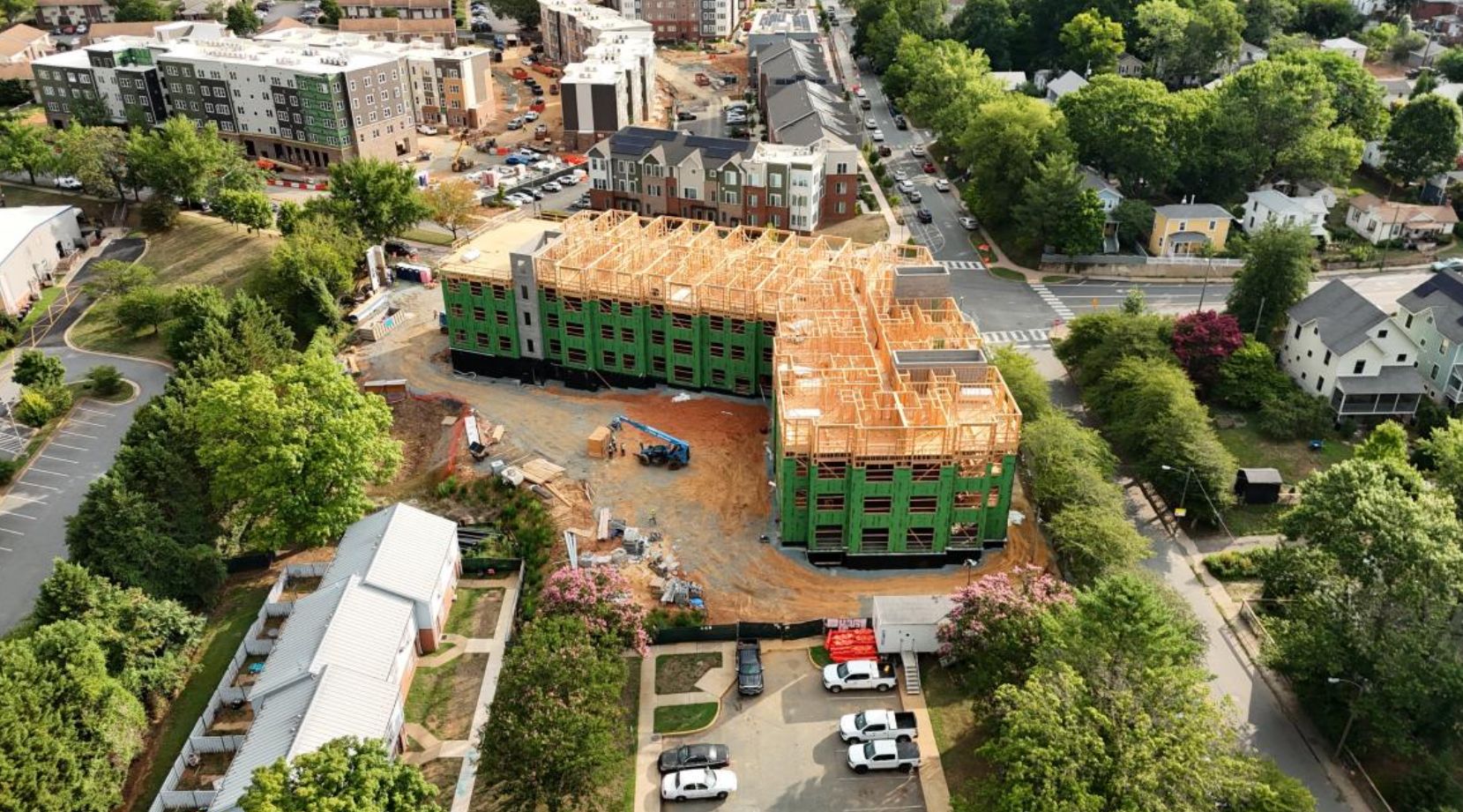
A third question is when the city might see benefits from the contributions into the Charlottesville Affordable Housing Fund from developers who opted to pay a fee rather than build units guaranteed to be rented or sold below market.
“There [are] two projects that we have right now that are making payments in lieu for affordable housing contributions,” said James Freas, the deputy city manager for operations. “Those are the Verve and 2117 Ivy. The Verve is on the hook for $6.8 million. That will be delivered before issuance of the first certificate of occupancy.”
The Verve’s site plan was just approved by the Planning Commission and Freas said the payment will be made in 2026 or 2027.
The student housing building planned for 2117 Ivy Road will contribute $3.25 million and Freas said that site plan should be completed soon and their payment is also expected in 2026 or 2027. A third project at 2005 Jefferson Park Avenue has been delayed due to a change in ownership and Freas did not know when that payment might come in.
Another question related to how the stormwater utility fee is spent. Council voted 4-1 in February 2013 on an ordinance to create the fee as I wrote about at the time for Charlottesville Tomorrow.
“That overall program consists of three parts,” Freas said. “The capital improvement program, maintenance of the overall system, and then our regulatory compliance portion. That’s the part where we make sure that development projects are consistent with our stormwater requirements.”
Freas said there will be a celebration from 10:30 a.m. to noon on September 24 on the completion of a streambank restoration for Schenks Branch in the Botanical Garden of the Piedmont. More information here.
“It’s a great example of where those funds go, the type of project those funds go to,” Freas said.
A sixth question is how much the city should spend to implement the new zoning ordinance and to further advance the construction of subsidized housing.
“We’re about eight months into implementation of the new zoning ordinance,” Freas said. “I think there’s been a lot of lessons learned already around what that looks like on a day to day basis with a variety of different projects that are coming in through the door.”
Freas said he will have more details about what the Department of Neighborhood Development Services and the Office of Community Solutions might want or need in a few months.

The FY2026 budget will be put together in a different environment. Federal pandemic-relief funding is running out and staff currently does not expect as large a property assessment as previous years.
“We are not anticipating big numbers like we have seen,” Hammill said.
Assessments were up an average of 5.61 percent in Charlottesville in 2024, as I reported in January.
The city is anticipating a surplus for FY24 and Council will learn more about that in November or December.
Sanders said the cost of collective bargaining will continue to be felt in the budget as the fourth of six bargaining units negotiate their contract and city schools present the results of their negotiations.
“The Teamsters contract is going to be the largest bargaining unit of the four we will have as as of FY 26 so that’s going to come at a nice cost for us to absorb along with what we are going to be able to anticipate by the school sharing with us what their numbers are going to look like,” Sanders said.
The fourth bargaining unit covers employees in the Department of Public Works, Department of Public Utilities, Department of Parks and Recreation, Fire Department, and Office of Community Solutions. Read my story from March 20 for more information. Negotiations will begin in October.
Sanders said implementing the homelessness intervention strategy will also come with a high price tag and Council will see those recommendations in mid-October. He said beginning the budget review process now is crucial to communicate what could be another large budget increase next year.
“We’re starting early because we have to,” Sanders said. “We can already see that the list is already building. It has a little, little more momentum than I might like it to have at this moment for the many things that we need to start considering.”
Sanders said he is still hopeful he can bring forward a budget that does not require a tax increase.
“I’ll say that up front, that I never start there,” Sanders said. “I don’t really like to end there either. But if I have to, it’ll be at [Council’s] direction. And my goal will be to give you options so that we can figure those things out and try to avoid it being anything that is too significant for folks to be able to adjust to.”

Vice Mayor Brian Pinkston said he wanted staff to be “open-minded and flexible” in finding new revenue, using as one example the last minute decision to increase the personal property tax rate earlier this year. He suggested one possibility would be to increase the fee that residents pay for trash pick-up.
“If we’re subsidizing things, we’re subsidizing things, but let’s at least be thoughtful and own up to what we’re subsidizing versus not,” Pinkston said.
Sanders said staff will be coming back to Council on potential changes to trash service as well as changes to fees for parking.
“We put that as a list of analysis work to do, and before we get through the end of this year, you will hear those results and be able to have that information to take into consideration,” Sanders said.
Sanders said if Council is willing to change items like that, this is the time to do it rather than as the budget is ready for public review.
One change in this upcoming budget is a cap of $150,000 per program for organizations who seek resources through the Vibrant Community Fund. Nonprofits can apply for more than one program.
If there were five main stories told through Charlottesville Community Engagement, one of them would be on the development of the city’s budget. Keep reading to learn how this year turns out, and consider becoming a subscriber. If you want to read dozens of stories from the past four years, visit Information Charlottesville.
Before you go: The time to write and research of this article is covered by paid subscribers to Charlottesville Community Engagement. In fact, this particular installment is from the September 19, 2024 edition of the newsletter. To ensure this research can be sustained, please consider becoming a paid subscriber or contributing monthly through Patreon.
Discover more from Information Charlottesville
Subscribe to get the latest posts sent to your email.