

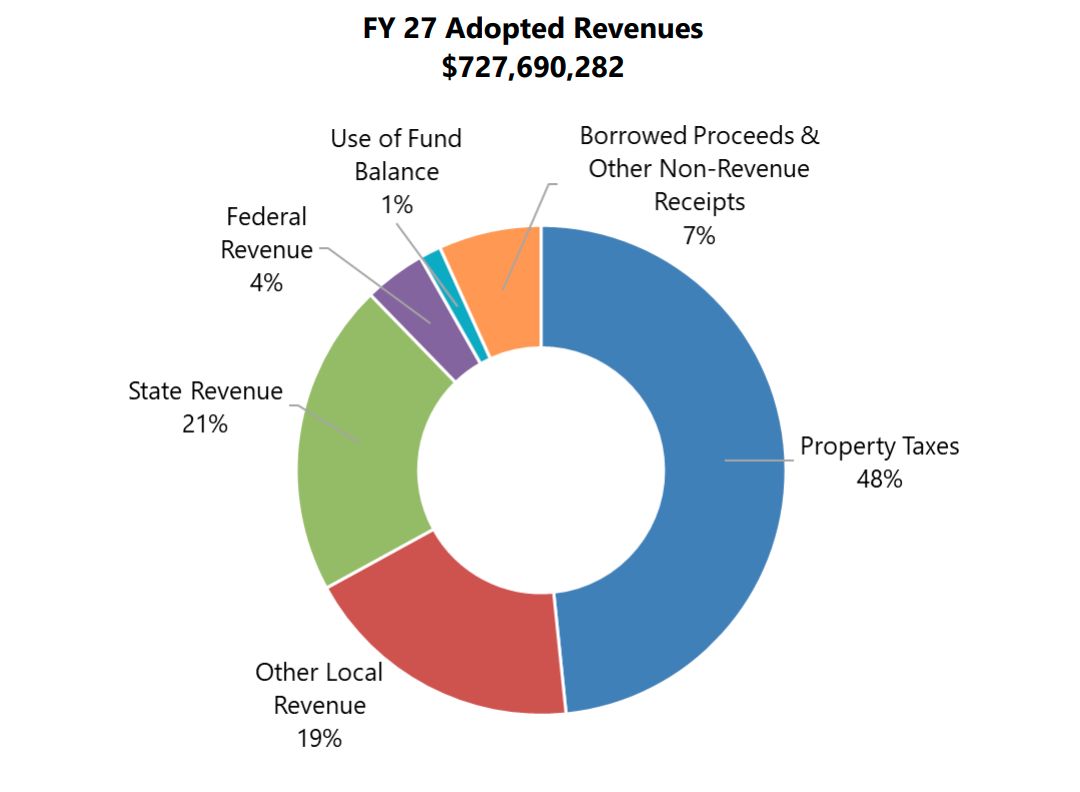
Albemarle County has published the adopted budget for the year that begins today and worth reading as the nation celebrates its democracy.
“The Adopted Fiscal Year 27 combined capital and operating budget totals $727,690,282, balanced on a personal property tax rate of $4.28 per $100 of valuation and a real property tax rate of $0.894 per $100 of assessed value,” writes County Executive Jeffrey Richardson in the executive summary.
Albemarle Supervisors adopted the budget on April 22, 2026.
Though Albemarle faced a revenue gap as the budget was being developed, Richardson declined to increase either the personal property tax rate or the real property tax rate. Instead, the county is utilizing its Budget Stabilization Reserve to continue to fund services that have expanded in recent years such as additional firefighters and medics.

Richardson is betting that a continued emphasis on economic development and business expansion will bring in additional revenues. The first of AstraZeneca’s two manufacturing plants is expected to come online in 2029.
“In the longer term, FY29 through FY31, our fiscal outlook is expected to strengthen as diversification and budgeting strategies take effect and the tax base evolves,” Richardson continued.
In recent years, Albemarle has expanded the number of public safety personnel through a series of federal grants through the Staffing for Adequate Fire and Emergency Response program offered by the Federal Emergency Management Agency. Eventually localities have to pick up the costs, and the FY2026 budget was built on a real property tax rate increase of four cents. You can learn more details in this story I wrote in the spring of 2025.
The net cost for fire and rescue services in FY2025 was $23,898,505 and authorized 170 full-time equivalent positions. The budget that begins today has that net cost at $31,702,469 208 full-time equivalents.
Last week, a new batch of recruits graduated from the county’s firefighter training program.
“ACFR held a recruit school for a total of 16 recruits, all of whom received training on emergency medical technician skills, firefighter survival, car seat installation, emergency vehicle operations, and other skills necessary for success,” reads a June 24 information release announcing a pinning ceremony the next day.

Of the $727,690,282 in revenue, three percent goes to the City of Charlottesville as part of the revenue-sharing agreement approved by city and county voters in 1982. The exact amount is $21,880,462, an 8.5 percent increase over FY26.
County government spends 45.1 percent of the total amount and 51.9 percent goes to public schools. Those amounts include capital expenditures.
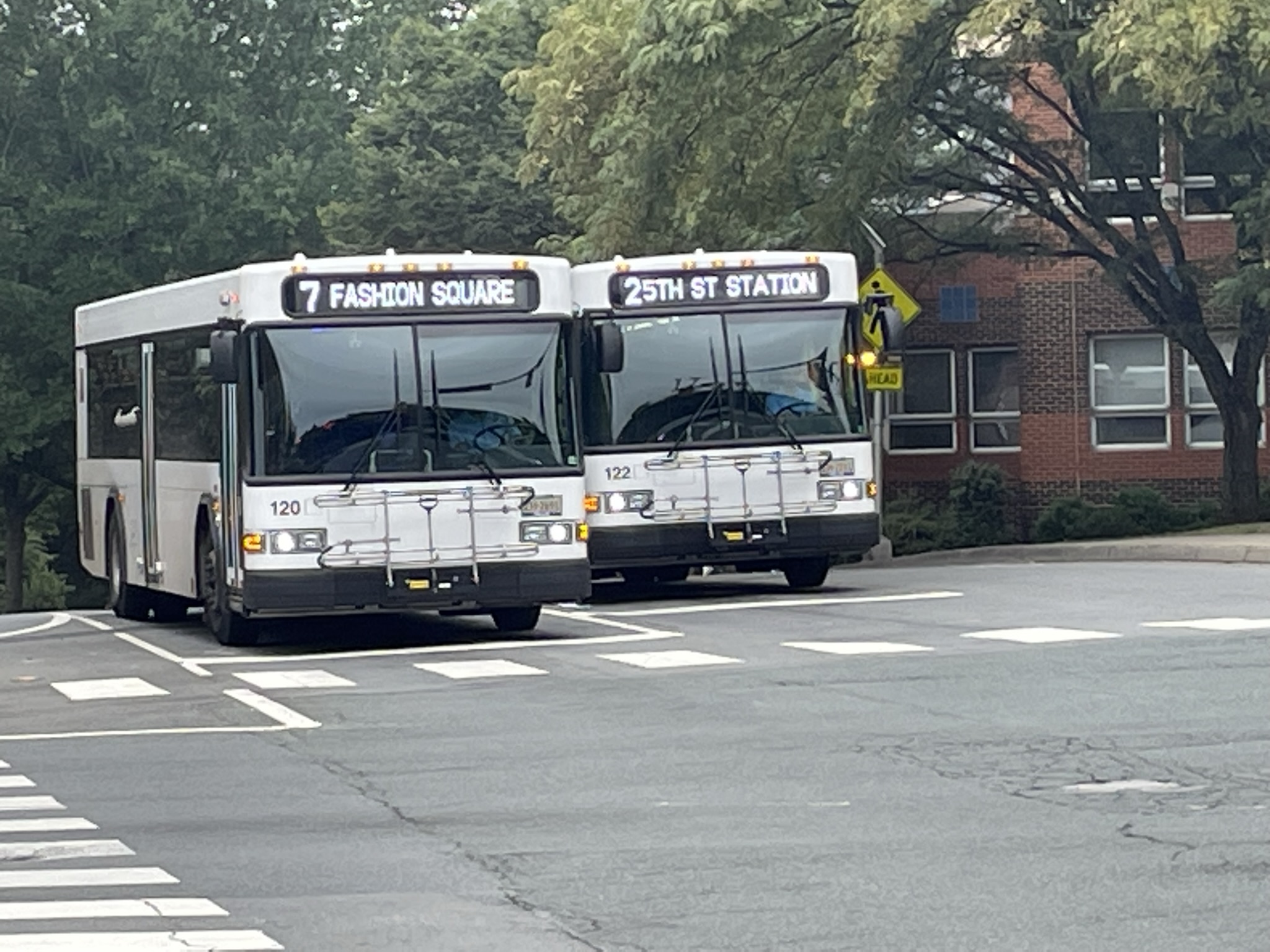
The budget for FY2027 has a 15.3 percent increase for Charlottesville Area Transit with a total of $3,092,373. That does not include $1.442 million set aside to consider a microtransit pilot for this fiscal year. There’s an additional $150,814 set aside for a “transit contingency.”
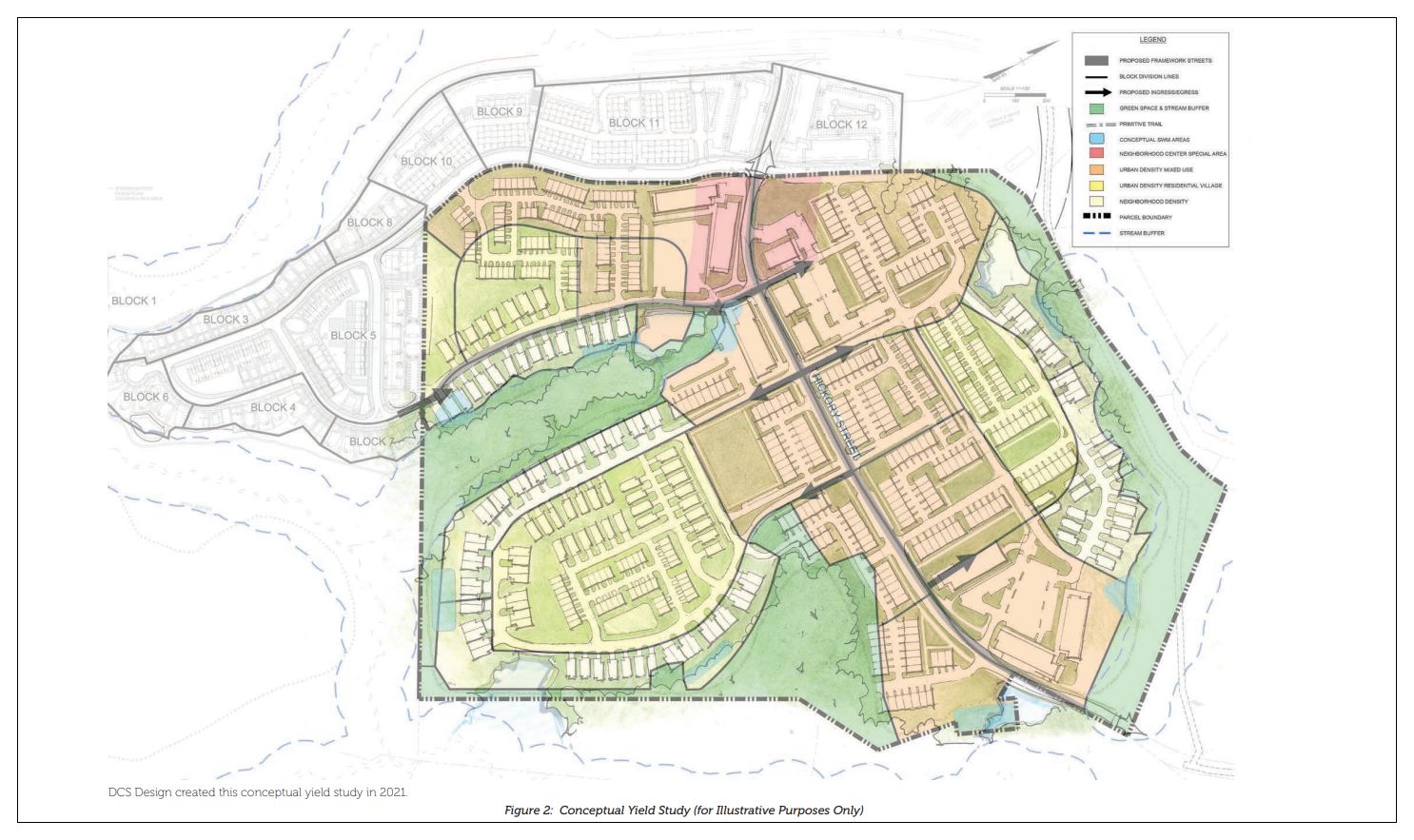
The five-year capital improvement program includes $95,789,006 in capital spending in FY2027 including the use of about $49.1 million in planned borrowed proceeds. Another $20.2 million comes from the Commonwealth of Virginia in the form of a payment for the extension of Boulders Road to serve the Rivanna Futures project. That’s about half the cost.
There’s also another $13.6 million programmed for the completion of Eastern Avenue in Crozet.
The entire five-year plan is around $362.16 million. For FY27 that includes $4.4 million toward an additional elementary school in the northern feeder pattern with another $64.3 million programmed in FY28. There’s a placeholder of $8 million programmed for FY2031.
Now, who’s ready to track what happens this year?
Any questions?

Before you go: The goal of Town Crier Productions is to increase awareness about what is happening at the local, regional, state, and federal government levels. Please share the work with others if you want people to know things. Paid subscribers cover the cost of conducting research for this article which was originally published in the July 1, 2026 edition of Charlottesville Community Engagement. You can either subscribe through Substack or make a charitable contribution.
Discover more from Information Charlottesville
Subscribe to get the latest posts sent to your email.