Meetings of the Charlottesville City Council begin with a work session at 4 p.m. that offer more time for elected officials to learn about particular issues facing the city. Sometimes these include presentations from University of Virginia students and other times staff are the ones in front of the dais. (meeting info) (agenda overview)
The first item at the September 3 meeting is presented by Jalane Schmidt, an associate professor of religious studies at the University of Virginia and the director of the Memory Project.
“The Memory Project is rooted in projects centered on Charlottesville, which in the past years has become a pivotal space in defining and shaping broader debates about memory in the United States,” reads the website for the initiative, which is part of the Karsh Institute of Democracy and is partially funded by the Mellon Foundation and the Ford Foundation.
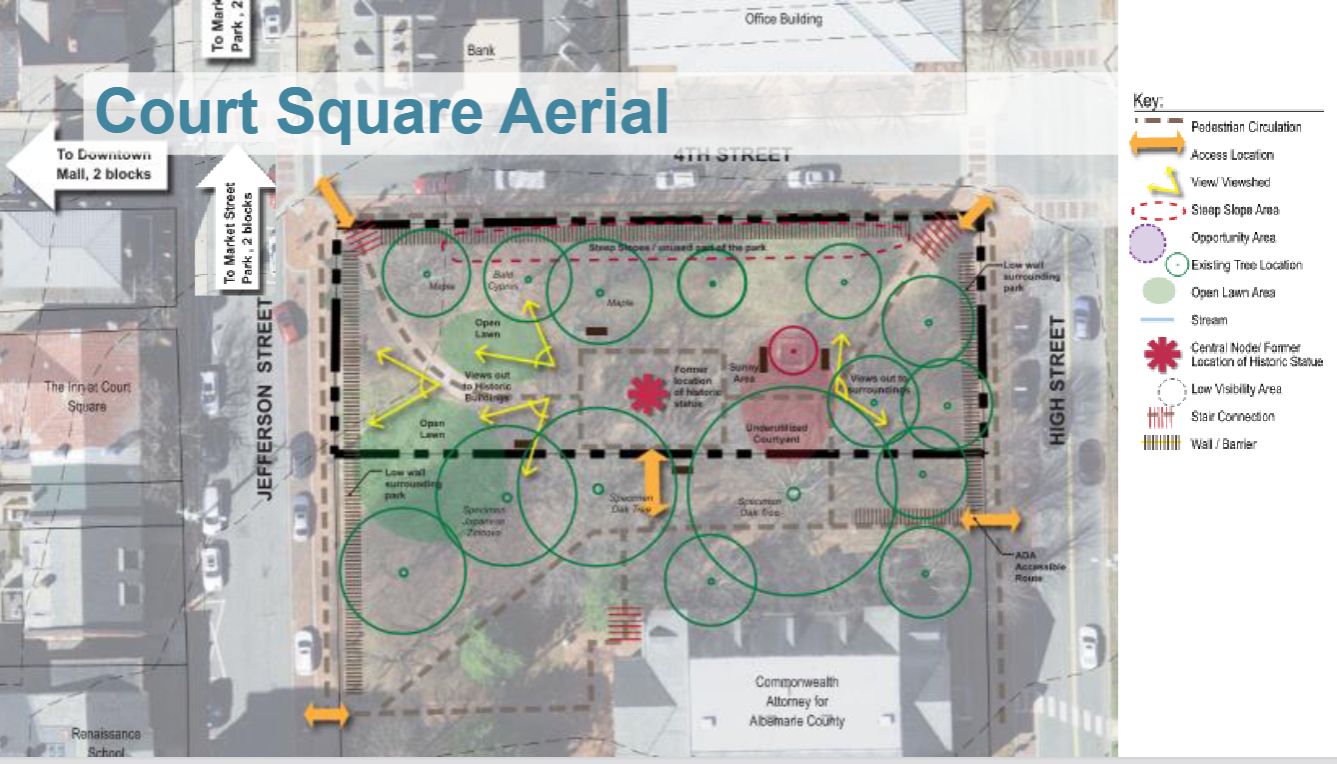
Schmidt will present the research from Albemarle County Court between 1830 and 1865 to document all mentions of the sale of human beings.
“These enslaved people were sold in Court Square, very likely on an auction block, though Chancery records rarely mention a specific place of sale,” reads the staff report.
The two-page report included in the report describes the role the court played in determining what happened to enslaved people when the person who legally owned them as property died. Sometimes ownership would pass to the next of kin but other times court commissioners would order their sale, dividing families in the name of liquidating their monetary value.
“In summation, this report argues that any effort to commemorate and memorialize enslaved people at Court Square must take into account that the County Court of Albemarle adopted an active role in enslaving and trafficking people of African descent,” reads the two-page report.
The second work session item is a presentation on a management plan for trees on the Downtown Mall. The firm Wolf/Josey Landscape Architects was hired in 2023 to create those guidelines and to make recommendations.
In addition to a high level of detail about the impact tree grates have on different specimens, the recommendations also recommend changes to seating areas for the downtown mall to share trees with the public.
“Cafe zones generate economic revenue but declare the trees as private,” reads a slide on page 23 of the presentation.
A theme in the document is how to restore the Downtown Mall with some of the elements in the original design by Lawrence Halprin. That includes making the existing fountains more visible. There are specifics about how to rearrange café space at several locations.

Before you go: The time to write and research of this article is covered by paid subscribers to Charlottesville Community Engagement. In fact, this particular installment is from the September 2, 2024 Week Ahead edition of the newsletter.
Discover more from Information Charlottesville
Subscribe to get the latest posts sent to your email.