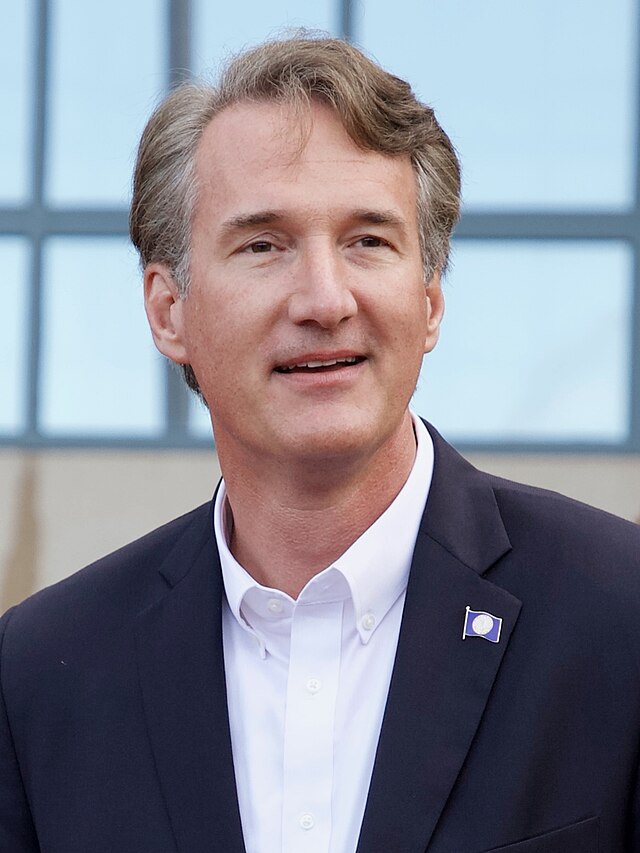
In the latest attempt to roll back legislation to reduce greenhouse gas emissions in Virginia through executive means, Governor Glenn Youngkin has announced the Commonwealth will no longer follow another state’s guidance on the requirement of low-emission or zero-emission vehicles.
“The idea that government should tell people what kind of car they can or can’t purchase is fundamentally wrong,” said Youngkin in a press release. “Virginians deserve the freedom to choose which vehicles best fit the needs of their families and businesses.”
The General Assembly passed legislation in a special session in 2021 that directed the State Air Pollution Control Board to establish a low-emissions and zero-emissions vehicle program for cars built after 2025.
“The bill requires that the regulations adopted by the Board will allow any motor vehicle manufacturer to establish a Virginia-specific zero-emission vehicle credit account and to make an initial deposit into its account,” reads a summary for HB1965 which passed the Senate on a 21 to 15 vote on February 19 of that year and the House of Delegates 53 to 44 on February 23. Governor Ralph Northam signed the legislation on March 18, 2021.

Republicans have tried to undo the legislation via the General Assembly in 2022, 2023, and 2024 but failed to overcome the Democratic majority. The bill directs the Air Pollution Control Board to tie the standards to the Advanced Clean Cars Program established by the California Air Resources Board. The first Advanced Clean Cars program was put in place in 2012 establishing a credit system. A second version was put in place in 2022 to govern cars built between 2026 and 2035. It sets a target year of 2035 for all new vehicles to be emissions free.
In December 2021, the State Air Control Pollution Board adopted the regulations which mirrored the first version which expires on December 31 of this year. So far the board has not adopted standards and regulations based on the second.
Having failed to overturn the legislation, Senate Republican Leader Ryan McDougle and Youngkin asked Attorney General Jason Miyares to officially weigh in.
“It is my opinion that the Board is not required to adopt California’s Advanced Clean Cars Program II, including those regulations establishing standards related to low- and zero-emission vehicles,” Miyares wrote in the nine-page opinion.
Miyares said the U.S. Clean Air Act gives the federal government jurisdiction over emissions standards. He wrote that California has a waiver in place that allows it to set its own rules.“The effect of the new regulation is a ban of all sales of non-electric vehicles by 2035 and for subsequent years,” reads page three of the opinion.
Miyares noted that the U.S. Environmental Protection Agency also has standards that will encourage production and purchase of electric vehicles, but these will not phase out gasoline-fueled cars.
The opinion comes down to language in the 2021 legislation.
“The Board may adopt by regulation emissions standards controlling the release into the atmosphere of air pollutants from motor vehicles, only as provided in § 10.1-1307.04 and Article 22 (§ 46.2-1176 et seq.) of Chapter 10 of Title 46.2,” reads section 1.B of HB1965.
Miyares writes at some length about the difference between the word “may” and “shall” before making his conclusion.
“I conclude that ‘may’ as used in § 10.1-1307.05(B) to enable the Board to adopt LEV and ZEV standards identical to California’s under § 177 of the Clean Air Act is discretionary and not mandatory,” Miyares said.
Miyares noted that Virginia’s participation in the program will end on December 31 when California’s Advanced Clean Cars Program I expires.
This is the second time that the Youngkin administration has planned to exit a program created at the legal direction of the General Assembly. On his first day in office, Youngkin signed an executive directive to remove Virginia from the Regional Greenhouse Gas Initiative. After legislation to do so failed, Youngkin used the regulatory process to exit the interstate compact at the end of 2023. A lawsuit filed to stop that action is still alive in Floyd County Circuit Court.
Before you go: The time to write and research of this article is covered by paid subscribers to Charlottesville Community Engagement. In fact, this particular installment is from the June 5, 2024 edition of the newsletter. To ensure this research can be sustained, please consider becoming a paid subscriber or contributing monthly through Patreon.
Discover more from Information Charlottesville
Subscribe to get the latest posts sent to your email.