The director of Charlottesville Area Transit said earlier today that this is a good day for alternatives to driving a single-occupant vehicle.
“Today is a wonderful day for public transportation,” said Garland Williams. “Today, CAT officially launches a new mobility option, a new tool in our toolbox.”
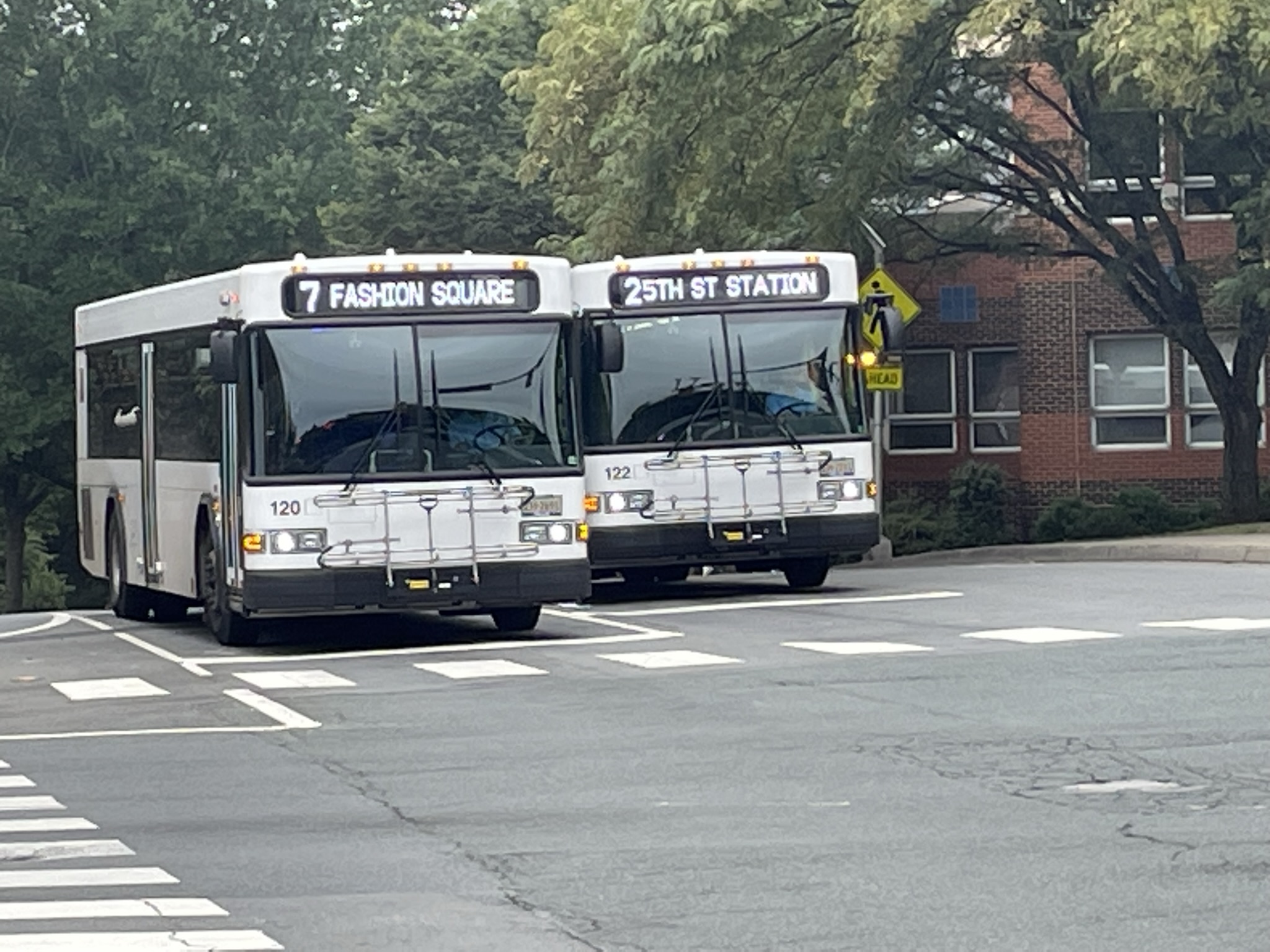
That tool is MicroCAT, an on-demand public transportation service that will feature four vehicles covering the Places29-North area and one covering the Pantops area. CAT has hired the firm Via to provide the software, vehicles, and drivers for the service which will operate for at least the next twelve months.
The idea stems from a series of previous plans intended to provide more options for people to get around the community. Williams said MicroCAT is intended to provide well-known service gaps.
“When properly designed and executed, flexible on-demand services like MicroCAT can eliminate transit deserts, create first and last mile connections, and can be the catalyst to get people out of their automobiles,” Williams said.

To use the fare free service, download the MicroCAT app from the Android or Apple IOS system. Or you can call 434-442-2466 to book a ride. The service operates Monday through Saturday from 6:30 a.m. to 9:30 p.m.
The majority of the funding for the one-year pilot comes from a $1.5 million grant from the Virginia Department of Rail and Public Transportation. The agency has been funding similar initiatives across the Commonwealth.
“We’re using microtransit around the state to close transportation gaps, to provide freedom for people to move throughout their community and access jobs, education, healthcare, and other essential services,” said Jennifer Debruhl, the director of DRPT. “We’re truly seeing microtransit and programs like MicroCAT change people’s lives.”
Albemarle County is paying just under $400,000 for one year of the service which is intended to meet strategic initiatives.
“MicroCAT, this new low emission pilot program, will improve public options in Albemarle County with technology to expand access to flexible, equitable, and sustainable transportation,” said Supervisor Chair Donna Price. “The expansion of environmentally beneficial transportation in Albemarle County is crucial for reducing pollution, mitigating climate change, and improving the well-being of our residents, workers, and visitors
Albemarle County’s urban ring is about 30 square miles compared to just over 10 for the entire City of Charlottesville. Price said that’s too large an area to expand fixed-route transit across but the on-demand MicroCAT is seen as a step in that direction.
“The county’s Pantops and U.S. 29 North areas do have sufficient increased density which while too small to support that fixed-route system, but is sufficient to support this on-demand service,” Price said.

The drivers and vehicles as well as the software that powers the on-demand journey all come from the firm VIA, which has deployed the technology all around the United States.
“It’s so simple once you’ve signed up,” said Aparna Paladugu, the director of policy and government affairs at Via. “All you do is enter your origin, your destination and then you’re on our way. We have wheelchair accessible vehicles in the fleet for those who need it. Accessibility is key and core to what we do.”
Paladugu said the software’s matches passengers with drivers who may be heading in that direction anyway. Unlike Uber or Lyft, passengers will share vehicles with each other.
“Our algorithms pair riders together who are headed in the same direction and we direct each rider to a virtual bus stop which is a short walk away from where you request your ride,” Paladugu said. “This makes for a very efficient shared-ride service.”

After a ribbon-cutting, reporters were able to go on a quick ride-along. Driver Peter Lafford was keen to show off the Toyota Sienna he was driving.
“I’m an independent contractor like a rideshare driver for Via and they have me get this vehicle from them to drive on the shifts that they assign me via the app and it directs me to which zone they want to send me me to, either Pantops or the 29 corridor,” Lafford said. “I might end up at the Fashion Square Mall at the side of Belk where the bus routes come and probably by the time I get up there there will be a ride assigned to me to pick somebody up on the way and take them to the bus stop to get on the regular route to carry on. They can get on a bus to get downtown, do their shopping, do an errand, whatever. They can take a bus back to the same location and then on the app they could take a Microcat ride back to their home, you know. That last mile.”

Before you go: The time to write and research of this article is covered by paid subscribers to Charlottesville Community Engagement. In fact, this particular installment comes from the October 30, 2023 edition.
To ensure this research can be sustained, please consider becoming a paid subscriber or contributing monthly through Patreon.
Discover more from Information Charlottesville
Subscribe to get the latest posts sent to your email.