The next session of the Virginia General Assembly begins in six weeks leaving plenty of time for legislators to craft new bills suggested by their constituents.
That includes officials elected at the local level and on December 1, Albemarle County had the chance to discuss priorities with Delegate Amy Laufer (D-54), Delegate Katrina Callsen (D-55) and a representative from the office of Senator Creigh Deeds (D-11). (view the presentation)
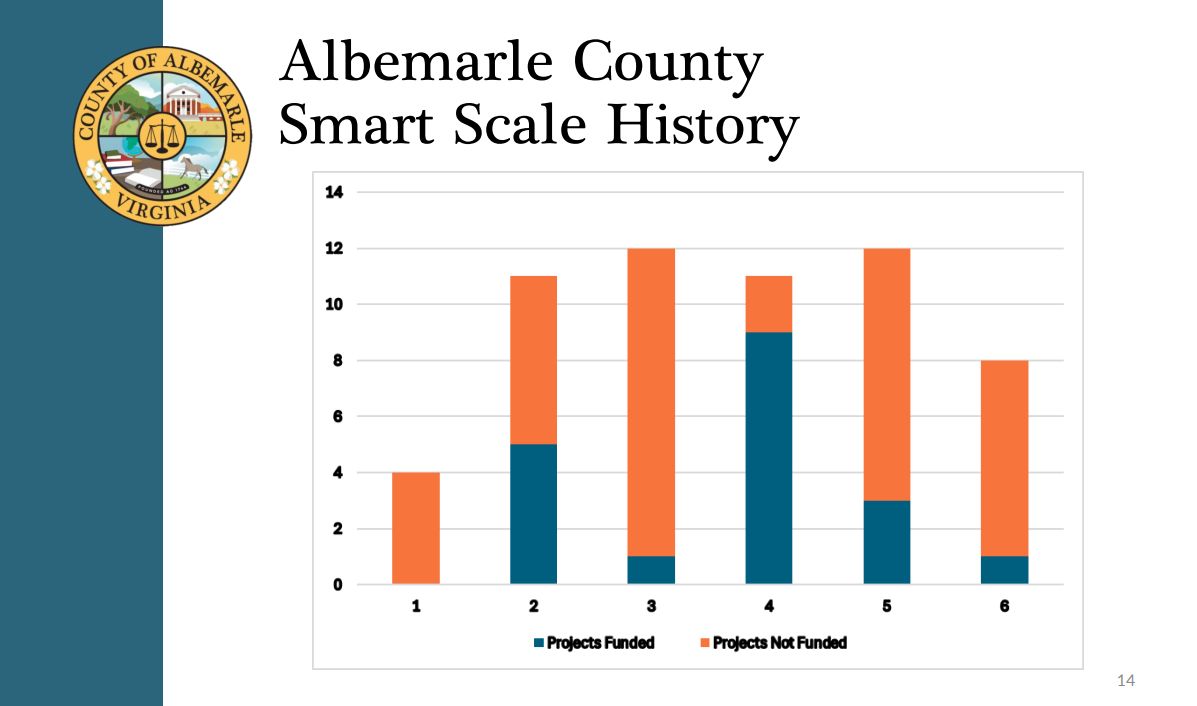
Albemarle Supervisors want assistance in securing more funding for transportation projects through the Smart Scale process.
“That’s where we get the significant amount of funding that we rely on for our transportation projects,” said Kevin McDermott, the county’s deputy planning director. “All the major projects come out of that program.”
So far there have been six rounds where qualified applications are scored on how they would meet certain criteria with funding recommendations based on ranking. In the first round for FY2017, there were 321 applications and 163 were funded. In the sixth round there were 277 applications and only 53 were funded.
“One of the reasons we’ve seen these numbers go down is because maintenance costs have gone up,” McDermott said. “And so that maintenance comes out first and then they divide all the others, all the other money up among all the different construction programs they have.”
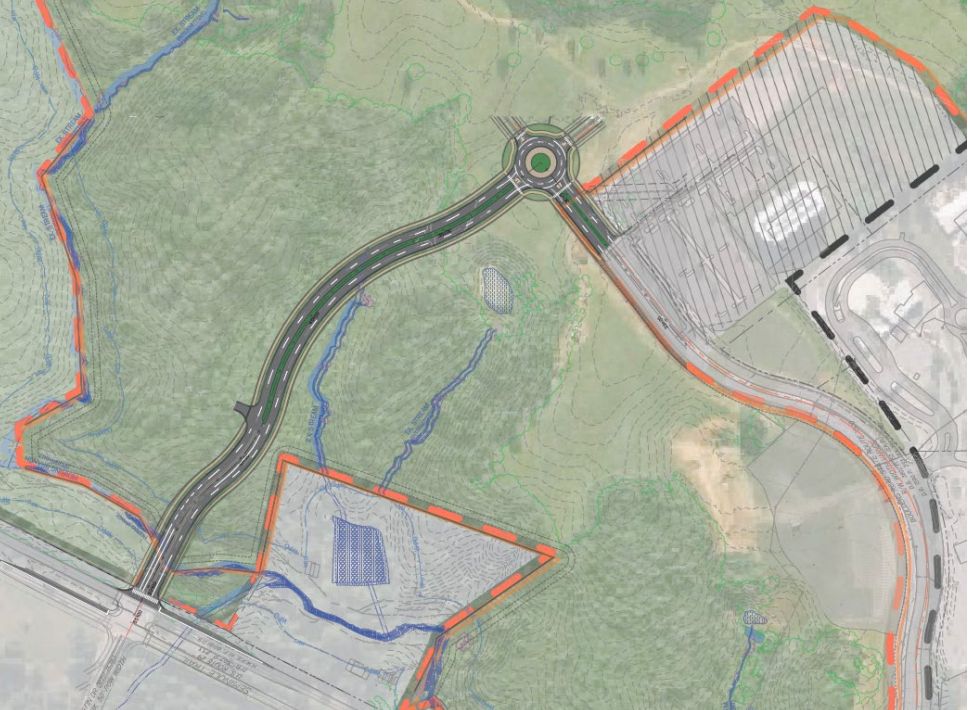
McDermott said cost estimates for projects continue to escalate. For instance, when the county submitted a project in 2022 to build a roundabout at the intersection of Old Trail Drive and U.S. 250 West, the cost was nearly $12 million. The application was not successful.
When the county tried again two years later, the cost estimate increased to $16.7 million. This application was also not successful.

The other major funding source is VDOT’s Revenue-Sharing program where localities can ask for up to $10 million provided they make an equivalent match. McDermott said the budget cap of $200 million statewide is not enough and has not kept up with inflation.
Supervisor Ned Gallaway is on the Charlottesville-Albemarle Metropolitan Planning Organization, a body mandated by the federal government to make decisions on transportation projects and policy. He said Virginia needs to spend more on infrastructure regardless of what party is in power.
“This is an issue where these projects aren’t going to get less, maintenance isn’t going to go down, costs aren’t going to go down,” Gallaway said. “It’s my opinion that we have to find a way to increase the portions and figure out what we’re going to do about transportation funding, or else the state’s really going to languish with unmaintained, maintained roads, poorly operating roads, and no way to improve situations that are now critically a problem.”
Delegate Amy Laufer said there are lots of conversations happening about how to increase funds and become more efficient. She said part of the issue is structural as more consumers choose vehicles with alternative fuel sources.
“The way we fund transportation is through a fuel tax, but most of the cars are way more fuel efficient than they were when we started this,” Laufer said. “And then compound that to the electric vehicles, which is part of why there is an electric vehicle tax, because we’re trying to get money for the transportation.”
Laufer said she would like VDOT to consider recycling asphalt which she said could save millions of dollars.
Delegate Katrina Callsen said she appreciated the legislative forum because she had never heard these concerns directly before. She said there might be opportunity with a new administration about to begin.
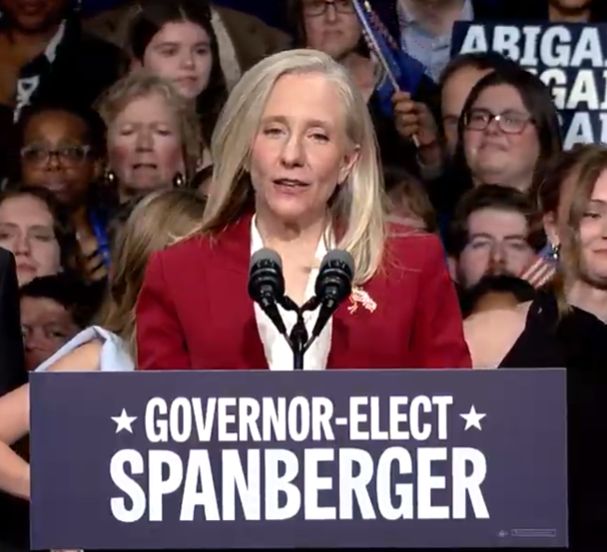
“It’s new to me,” Callsen said. “I hope conversations like this will make their way to Governor Spanberger and her team.”
Callsen said both she and Laufer serve on the House Finance Committee and may be able to have a perspective to share with their colleagues in the future.
“There’s things that can be done to kind of right size the taxation in Virginia that could make it so that people, regular people, are not necessarily being taxed more, but we are having more revenue generated,” Callsen said.
Economic Development Director Emily Kilroy took the opportunity to thank legislators for their support of Albemarle’s efforts to raise the profile of county-owned land around the Rivanna Station. The local government is taking the lead on developing a business park known as Rivanna Futures that has so far landed one big tenant.
“We have been successful in getting $11 million in site readiness funding from the state… which [has] really enabled us to advance the work for property development that again has positioned us really well for the AstraZeneca opportunity,” Kilroy said.
AstraZeneca has announced a $4.5 billion investment in Albemarle.

Before you go: Paid subscribers cover the cost of conducting research for this article which was originally published in the December 3, 2025 edition of Charlottesville Community Engagement. You can either subscribe through Substack, make a monthly contribution through Patreon, or consider becoming a sponsor. The goal of Town Crier Productions is to increase awareness about what is happening at the local, regional, state, and federal government levels. Please share the work with others if you want people to know things.
Discover more from Information Charlottesville
Subscribe to get the latest posts sent to your email.